
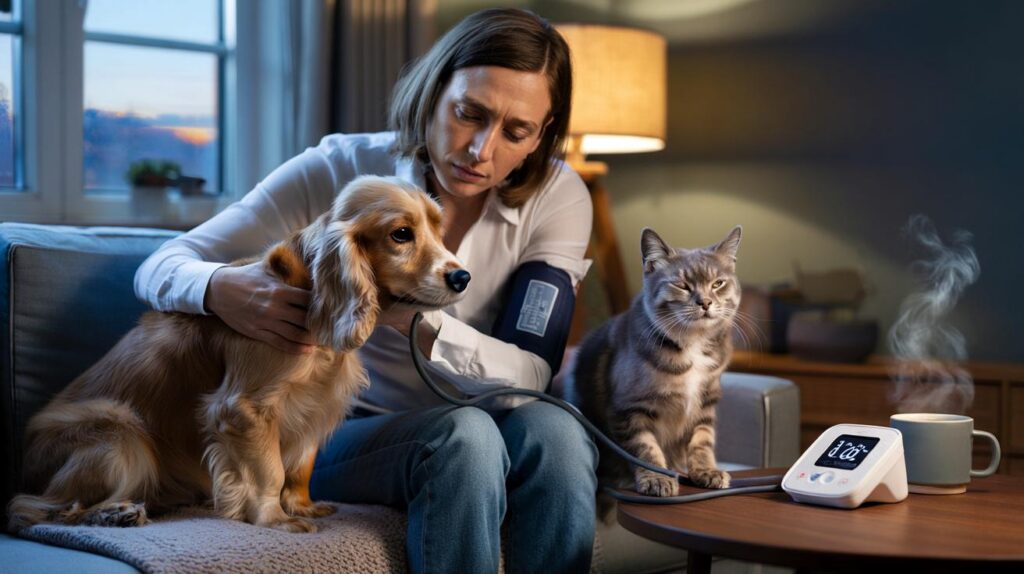
Across Britain, blood pressure monitors hum on kitchen tables and silent flats echo at dusk. Hypertension climbs, loneliness lingers, and GP appointments fill faster than diaries. We’ve all had that moment when daylight fades and the room feels a size too big. A warm nose nudges your palm, a small weight lands beside you, and something inside loosens its grip.
The evening I noticed it, the kettle had just clicked off. The cuff on my arm squeezed, numbers blinking red like a warning light. My neighbour’s spaniel, on loan while she was late, padded over and placed his chin on my knee. I started stroking that velvet head, absent-minded at first. The monitor beeped again. Lower.
He breathed out, a long, theatrical sigh, and I matched it without meaning to. The room softened around the edges. *It felt like the kind of help you don’t have to ask for.* Then the cuff went quiet.
The quiet science behind a warm nose
Pets change the weather inside the body. Stroke a dog or listen to a cat’s purr and the stress chemistry starts to shift. Cortisol dips, oxytocin rises, heart rate slows like a train easing into a station. That’s not poetry; it’s measurable. Researchers have recorded lower systolic numbers after just a few minutes of calm touch. **A companion animal is a portable pause button for your nervous system.** The effect is gentle, not a sledgehammer, which is why it fits into ordinary life without fuss.
Real people, real numbers. University labs have shown that 10 minutes of interacting with a dog can reduce cortisol in students under pressure. In cardiology circles, dog owners often show lower resting blood pressure and better recovery after stress. There’s also the older study of high-strung stockbrokers whose readings improved when they adopted cats or dogs, simply by having a steady presence at home. In a London tower block, a retired bus driver told me his rescue terrier “keeps the meter honest” by snoozing on his shins during the news.
What’s going on under the hood? Touch activates pressure receptors in the skin that send a “safe” signal to the brain. That boosts vagal tone, slowing the heart and easing blood vessels open. Meanwhile, the predictable rhythm of a purr or a dog’s breathing gives your own body a metronome to follow. There’s psychology too. A pet changes the narrative from “I’m alone with this” to “We’re in this together”. **Safety, routine and tiny bursts of joy nudge the needle in the right direction.**
Small rituals that act like medicine
Try the three-minute fur-and-breath drill. Sit where your pet already loves to settle. Lay one hand on their chest or flank and stroke with the other from neck to shoulder, slow and steady, three counts down, three counts up. Match your inhale to the down-stroke, exhale to the up. Do six cycles, pause, then switch to circular strokes behind the ears where many animals melt. Finish by counting five breaths together. It’s simple, repeatable and fits between emails.
Common trip-ups are easy to sidestep. Don’t flood the moment with chatter or screens; the whole point is rhythm. If your cat flicks an ear or steps away, stop and try later—respect builds trust, and trust builds effect. Keep sessions short rather than saintly-long. Soyons honnêtes : personne ne fait vraiment ça tous les jours. Walks count too, even 12 minutes round the block. Headphones off, phone away, eyes up. When your dog sniffs, you breathe.
On days that feel heavy, borrow stability from a small ritual and a warm body. The point isn’t perfection; it’s a repeated promise you keep to yourself and your animal.
“No app slows a racing pulse like a cat purring on your sternum or a dog leaning its full, ridiculous weight against your leg.”
- Micro-rituals: 90-second petting breaks before tough calls, after the commute, or right before bed.
- Walk anchors: same time, same route on weekdays; a curiosity route on weekends for novelty.
- Touch cues: two slow strokes mean “calm time”; a small mat signals “settle here”.
- Care kit: soft brush, washable throw, a treat you only use for quiet sessions.
- Allergy workaround: meet a friend’s pet outdoors, volunteer at a shelter in a ventilated space.
Beyond blood pressure: companionship in a lonely age
Loneliness doesn’t announce itself with a beep. It creeps, settles, and makes the day heavier by grams you barely feel. A pet cuts a window in that wall. There’s a reason people start conversations on the pavement when a terrier is involved, and why a cat on a windowsill can make a flat feel like a home. **Companionship isn’t a grand cure; it’s a string of small, repeatable moments that reassure the nervous system you belong.** Walks become encounters. Feeding becomes a sunrise ritual. A purr at 2am turns worry into white noise. You’ll still need people. You’ll still have off days. But the presence of a creature who doesn’t judge your to-do list can tilt the mood of a Wednesday. The cuff might not cheer, yet your chest will know.
| Key points | Details | Interest for reader |
|---|---|---|
| Touch calms the body | Petting dogs and cats reduces cortisol, supports oxytocin, and can lower systolic blood pressure within minutes | Quick, natural relief you can access at home, no prescription |
| Routine builds resilience | Regular walks and predictable cuddle rituals improve vagal tone, sleep quality and daily structure | Simple habits that stack up to better heart health and steadier moods |
| Connection eases loneliness | Pets provide non-judgemental companionship and spark social contact in public spaces | Fewer empty evenings, more human moments started by a wag or a purr |
FAQ :
- Do pets really lower blood pressure, or is it a placebo?Multiple studies show small but real drops in blood pressure and stress markers after interacting with animals. It’s not magic—touch, rhythm and routine are doing the heavy lifting.
- How long does it take to feel calmer with a pet?Often minutes. A focused 3–10 minute session of calm stroking or a short walk can nudge heart rate and breathing into steadier ranges.
- What if I can’t own a pet?Borrow one from a friend, volunteer at a shelter, or visit community pet-therapy events. Even short, regular contact brings benefits.
- Are some breeds better for reducing stress?Temperament matters more than breed. Choose animals who enjoy gentle touch and a predictable routine; calm, well-socialised pets tend to soothe best.
- Could my pet’s needs add stress instead?They can if you overcommit. Start small, set simple routines, and get help with walks or vet visits when needed. It should feel supportive, not a burden.



Beautifully written and surprisingly practical. I tried the three-minute fur-and-breath drill with my anxious rescue and felt my shoulders drop before the timer ended. The “portable pause button” line nails it. I’d love a printable card of those micro-rituals to keep by the kettle. Also appreciate the reminder that routine, not heroics, builds vagal tone. Thank you for this.