
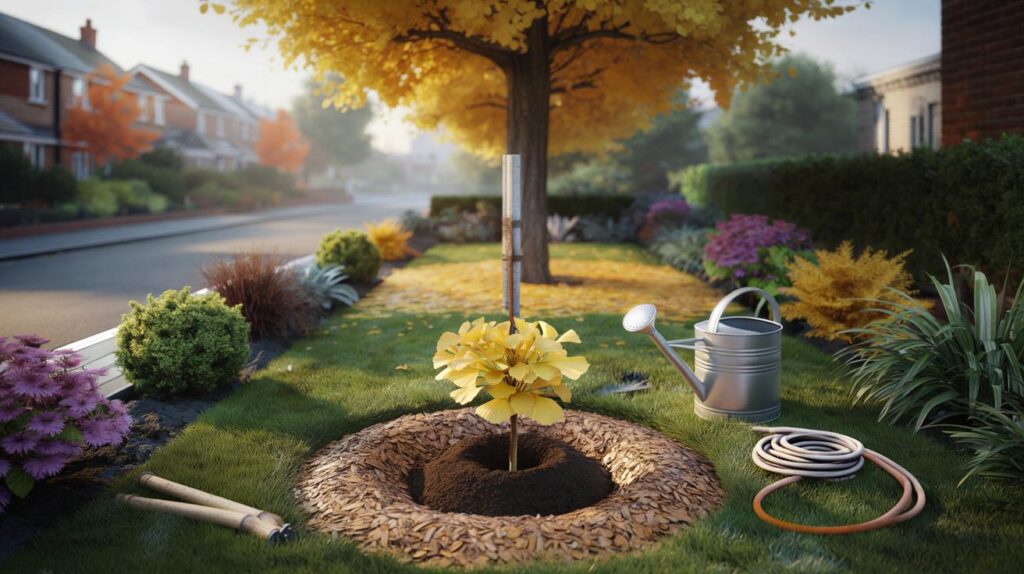
Autumn tightens budgets and shortens days. Gardeners still crave drama, shade and calm. One hardy choice quietly ticks every box.
You want colour that stops the eye, shade that cools pavements, and a tree that shrugs off stress. The ginkgo biloba, a prehistoric survivor, offers a low‑maintenance route to golden leaves and long-lived structure, right when the soil stays warm and planting pays off fastest.
A prehistoric survivor made for modern streets
From temple courtyards to city pavements
Ginkgo biloba has been cultivated for centuries in East Asia and now lines avenues from Berlin to Birmingham. It carries fan-shaped leaves, a tall, clean trunk and a calm outline that suits formal and informal schemes alike. Archaeologists call it a living fossil. Urban planners call it dependable.
Planted in October, ginkgo roots keep growing for 6 to 8 weeks while the soil holds summer warmth, banking strength for spring.
Why it handles heat, cold and fumes
This species tolerates air pollution, compacted ground and road salt better than many broadleaf trees. It copes with summer heat once established and withstands winter lows near −25°C. Leaves resist most leaf-chewing pests. Trunks rarely suffer cankers. A thick cuticle reduces water loss, which helps in dry spells.
October is the prime window: how to get it right first time
Site, soil and sun
Pick full sun for the richest autumn colour. The tree accepts clay, loam or sandy soil from slightly acid to slightly alkaline. Avoid waterlogging. Choose a spot with room above and below: large forms can exceed 18 m; columnar forms stay narrow for tight streets and terraces.
Six steps that make planting smooth
- Dig a hole twice the width of the pot and no deeper than the root ball.
- Loosen the base and sides so young roots can push into native soil.
- Blend backfill 80% site soil with 20% compost; avoid strong fertiliser.
- Set the collar level with the final soil line; do not bury the trunk.
- Backfill, heel in gently, then water with 10–15 litres to settle soil.
- Stake on the windward side for 12 months; tie low and flexible to avoid rubbing.
A 5–7 cm mulch of leaves, wood chips or straw locks in moisture and steadies soil temperatures. Keep mulch a hand’s width away from the stem to prevent rot.
Gold every autumn without fuss
How to coax the colour
Sunlight drives the yellow pigments that light up October and November. Water in dry spells during the first summer, then cut back. Avoid high-nitrogen feeds, which push soft growth that colours poorly. The tree forms a neat crown unpruned; remove only damaged or crossing branches in late winter.
Pairings that make it pop
Contrast the gold with dark purples and bronzes. Heuchera, asters, sedums and smoke bush make strong partners. Underplant with spring bulbs for a late-winter lift that doesn’t compete later, when the canopy thickens.
Expect a sudden leaf fall after the first sharp frost: a one-day pivot from green to a bright, even carpet of gold.
Biodiversity benefits that fit small plots and big schemes
Shade, shelter and a living mulch
Ginkgo is wind-pollinated, so it is not a nectar source, yet it still adds value. Its canopy cools hard surfaces, lowers heat stress and creates perches and shelter for birds. Leaf litter feeds soil invertebrates and fungi, boosting the ground food web. In compact gardens, these micro-habitats matter.
Simple ground-layer tactics
- Leave a ring of autumn leaves to break down naturally and feed the soil.
- Sow a light mix of native annuals around the dripline to support insects.
- Add a shallow water tray nearby for birds during dry periods.
Buyer’s notes: what to choose, what to avoid
Male versus female trees
Female trees set seeds encased in a fleshy coat that can smell strongly once fallen. Many urban plantings use male selections to avoid mess on paths. If your garden sits away from seating areas, a female is perfectly serviceable. Nurseries label sex for named cultivars; seedlings are uncertain for years.
Pick a cultivar that fits your space
| Name | Height x spread (m) | Form | Notes |
|---|---|---|---|
| ‘Princeton Sentry’ (male) | 12 x 4 | Columnar | Good for drives and narrow streets; tidy drop of leaves. |
| ‘Autumn Gold’ (male) | 15 x 8 | Broad pyramidal | Reliable colour; classic avenue look. |
| ‘Mariken’ | 2 x 2 | Dwarf, mounded | Suited to small courtyards and large containers. |
| ‘Fastigiata’ (male) | 18 x 5 | Tight upright | Strong vertical accent; minimal spread. |
Spacing, roots and neighbours
Plant large forms 6–8 m from buildings and 4 m from boundaries. Keep 3 m clear of overhead lines. Roots are firm but not especially aggressive compared with poplars or willows. Avoid planting directly above light, shallow services. Use porous paving near the trunk, not solid concrete collars.
Care in the first two years, then almost nothing
Watering, feeding and pruning
- Water 10–12 litres weekly in the first summer if rainfall is under 25 mm.
- No feed at planting; in spring year two, a light, balanced, slow-release feed is enough on poor soils.
- Prune only for structure in late winter; leave the natural leader intact.
Expect slow growth in year one while roots anchor. Growth often lifts to 30–40 cm annually from year three, depending on cultivar and soil.
Autumn 2025 price check and quick maths for your bill
What you should pay and what you might save
Container-grown ginkgos in 5–7 litre pots typically retail between £25 and £45. Taller, 10–12 litre specimens run £60–£90. A single tree can shade 15–25 m² of hard surface when mature, cutting irrigation for adjacent beds and reducing summer glare. If you currently water a small lawn with 60 litres per week across 10 weeks of hot weather, a ginkgo providing afternoon shade can trim demand by 20–30%, or 120–180 litres a season.
Design ideas you can use this weekend
Small gardens, courtyards and balconies
Choose ‘Mariken’ in a 45–60 cm container with free-draining mix and a saucer to protect paving. Turn the pot a quarter each month for even growth. Underplant with thyme or creeping Jenny for a soft edge. On a terrace, a columnar male cultivar in a large trough frames a doorway without blocking light.
Slopes, drives and front gardens
On banks, ginkgo’s strong roots stabilise soil while the canopy filters wind. Along drives, columnar forms keep mirrors safe. Pair with lavender, sage and perovskia for a dry border that needs little water and hums with texture from April to October.
Extra know-how for a long, calm life
Timing, tools and a simple checklist
- Plant between mid-October and late November while the soil is workable.
- Use a single stake and a soft tie fixed below the lowest scaffold branch.
- Mulch to the dripline and top up annually to 5–7 cm depth.
- Record the cultivar and rootstock on a tag; this avoids guesswork later.
Windbreaks matter on exposed sites. A simple mesh fence on the windward side protects young trees and reduces rocking that breaks new roots. If frost arrives early, a deep mulch and one thorough watering protect against heave on bare, light soils.
Thinking longer term helps. Order a male cultivar if planting near seating or entrances. Schedule one structural check each late winter for split crotches or rubbing branches. Keep turf back 50 cm from the trunk to prevent mower damage and to protect surface roots. These small habits set the tree up for decades of easy care and reliable autumn gold.



Planted one last October and it dropped a perfect carpet of gold in one day—magical. The step-by-step planting tips are spot on. For £29, this beats another bag of lawn feed 🙂