
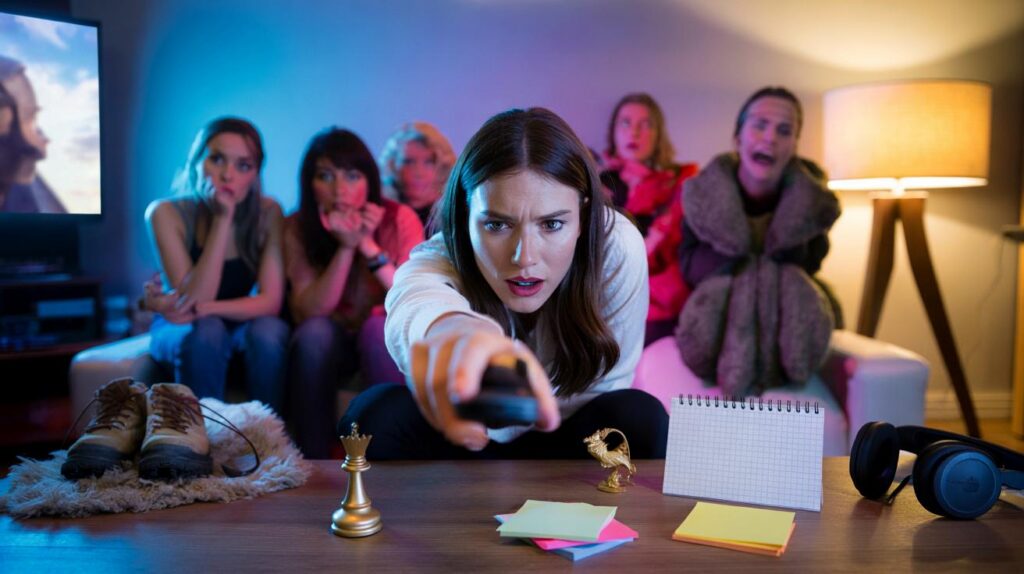
The feeds are loud and the living room is louder. Across TikTok loops and Sunday-night group chats, one thing keeps rising to the surface: women at the centre of television, not as symbols, but as the engine. We’re past the era of “strong female character” as a label slapped on to sell a poster. The appetite is for arcs that bruise, change, and push back. The question isn’t whether it’s happening. It’s what this shift is doing to us as viewers, and how we talk about it without flattening it into a slogan.
The kettle clicked off as the episode credits rolled, and someone on the sofa whispered, “Play that again.” We’d just watched a heroine take a breath — a real, shaky, human breath — before making a choice that would cost her. The room went quiet, not because it was tidy or triumphant, but because it felt true. We’ve all had that moment when a character does the thing we’ve been too scared to do, and it lands somewhere tender. In recent months, that feeling has arrived in flurries: Rhaenyra at the Painted Table in House of the Dragon, Shauna holding herself together in Yellowjackets, Jodie Foster’s Liz Danvers staring down the dark in True Detective: Night Country. Something shifted.
The new centre of gravity on TV
Scroll through Discover and the pattern is there: shows with women not just surviving the plot, but steering it. Bridgerton lets Penelope claim the pen and the gaze. The Morning Show lets ambition, friendship and fallout sit in the same frame. House of the Dragon asks what leadership looks like when the costs are counted in blood and daughters. These aren’t “message episodes”. They’re lives, messy and moving, written with the belief that the audience can handle quiet beats and contradictory impulses.
At a late-night screening in a packed Shoreditch bar, the cheer wasn’t for a sword swing. It was for a line: “I will not be threatened.” Phones went up, not to meme the moment but to capture faces around the room mouthing along. That’s what keeps happening with series like Yellowjackets and The Wheel of Time. The viral clip isn’t always the biggest set-piece; it’s often the decision, the boundary, the glance that refuses to blink. These micro-shocks spread because they’re recognisable on a Monday morning.
There’s a practical engine behind this cultural mood. Streamers need sticky worlds; sticky worlds need characters with agency that flexes over time. Writers’ rooms have widened, which changes the questions asked on the whiteboard. Audiences—especially younger women—have grown bored of storylines where trauma is a shortcut and consequence evaporates by the credits. **This is not about “strong women”; it’s about complete women.** When completeness is the target, the plot can stop sprinting and start listening. That’s when a show creates a conversation rather than a detour.
How to deep-dive without losing the joy
Start with one lens per episode. Pick a woman on screen and track three beats: agency (what choice is actually made), consequence (who pays and how), community (who shows up). Note them on your phone in plain words, not academic jargon. Rewatch one scene, not the whole thing, and ask what changes if the camera moves from gaze to intent. It takes five minutes. Let the rest be pleasure.
Common pitfalls? Turning every moment into a litmus test. Sometimes a character’s power is in her silence, and sometimes that silence is a cage. Both can be true. Don’t reduce rage to a hashtag or resilience to a costume. And if you fall into plot-hole policing every week, step back. Let’s be honest: nobody really does that every day. Keep the human in the analysis, or you’ll miss the bit that made you gasp.
Give yourself permission to disagree with the timeline. You can love Ahsoka’s steadiness and still crave the chaos of Fleabag; you can defend Galadriel’s stubbornness and still roll your eyes at a clumsy subplot. **The culture is listening because audiences have stopped whispering.** Bring that energy to your threads and WhatsApp chats, but keep it grounded in scenes, not vibes.
“Power that never risks anything isn’t power — it’s posture. Watch who pays the bill.”
- Three quick prompts: What does she refuse? Who tells her no? What changes because of her choice?
- Smart tools: episode scripts, showrunner podcasts, disability and race sensitivity reads.
- Red flags: trauma as wallpaper, redemption without repair, jokes that punch down.
Where this goes next
The next wave is already humming in the background: ensemble dramas where power is a relay, not a throne. Think of Gen V folding friendship into fury, or The Morning Show weighing ambition against accountability in real time. Expect more stories where a woman’s arc isn’t an island but a tide that lifts or flips the boat. Expect more genre shows where the fantasy isn’t the dragon, it’s the room that finally listens when a woman speaks. **Power looks different when it is shared on screen.** And maybe that’s the point: our conversations don’t have to end at the closing shot. They can roll into the week, through messy agree-to-disagree debates, into the everyday choices that feel small until they don’t. Share the clip if you must. Share the context too. That’s how culture moves, inch by inch, scene by scene.
| Point clé | Détail | Intérêt pour le lecteur |
|---|---|---|
| Why these shows hook us | Female leads with agency, consequence and community at the core | Gives a simple lens to read complex plots without losing the fun |
| How to deep-dive | One-lens method, five-minute notes, scene-focused rewatching | Makes analysis doable on a busy weeknight |
| What to watch for | Authenticity over posture, repair over neat redemption, shared power | Helps spot meaningful representation versus marketing gloss |
FAQ :
- What counts as an “empowering” female lead?Not perfection. Look for choices that alter outcomes, relationships that evolve, and arcs where consequence isn’t dodged.
- Where should I start if I’m new to this?Try House of the Dragon for slow-burn leadership, Yellowjackets for messy coming-of-age, and True Detective: Night Country for grit with heart.
- Isn’t this all a bit serious for telly?It can be playful and profound at once. Swap essays for five-minute scene notes and keep the joy front and centre.
- Do male-led shows fit into this conversation?Yes. The point isn’t exclusion; it’s balance. Mixed ensembles often surface the sharpest shifts.
- How do I discuss this online without starting a fight?Quote scenes, not people. Ask questions, don’t declare verdicts. When in doubt, rewatch the moment together.



Loved the shift from “strong” to “complete” — that line definitly lands. When the plot slows down to actually listen, the choices hit harder. I felt that with Penelope and Liz Danvers. Less posture, more consequence, please.