
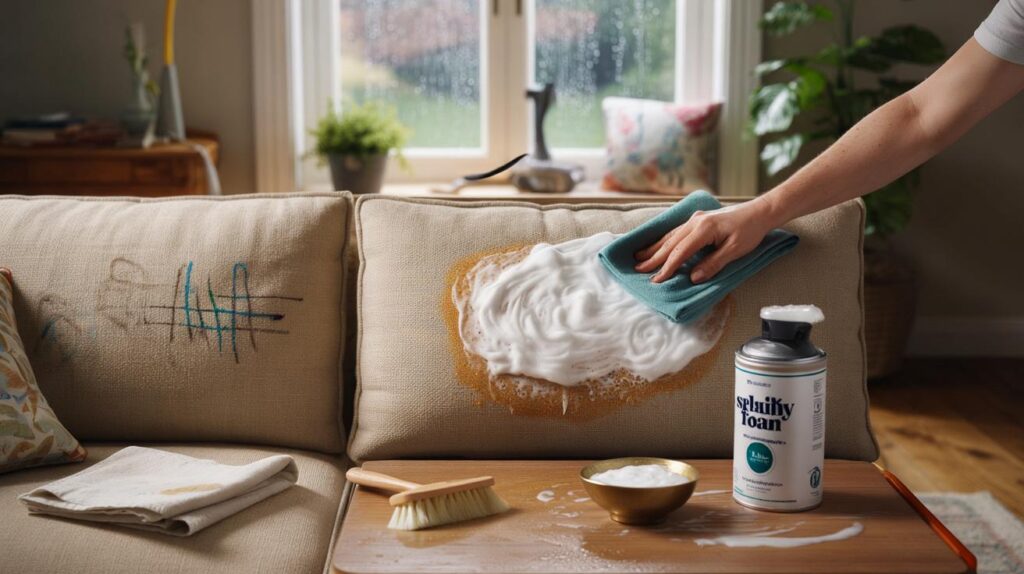
Every sofa has a story: tea rings from late-night telly, a smear of ice cream that beat the spoon, that faint shadow where the dog decided the rules didn’t apply. The big question at 7pm on a Tuesday is not “Should I call a professional?” It’s “Is there a way to make this look new without spending half my weekend and the price of a small holiday?”
The first time I saw the trick, it was in a neighbour’s front room in Birmingham. Rain on the windows. A wet dog shaking like a pogo stick. She disappeared to the bathroom, came back with a cheap white can, and spread a cloud over the cushion like she was icing a Victoria sponge. Ten minutes later, the blotchy patch was gone. Just… gone.
She handed me the can. £2.79 from the chemist. Not a specialist cleaner. Shaving foam. A simple idea with a quietly massive payoff. And I couldn’t stop thinking about it.
What else in the bathroom cabinet is hiding in plain sight?
The living-room problem, solved in the bathroom
Upholstery is where real life lands. It’s the stage for crisps, coffee, sticky fingers, and a head doze during the Sunday film. Professional cleaning works, yes. It’s also pricey, and you usually need to book and wait. The genius of the **£3 shaving-foam hack** is that it feels like cheating. You skip the industrial juggernaut. You pick up a can that most of us already own. And you watch the grey film lift like fog on a spring morning.
We’ve all had that moment when company is due in an hour and the sofa suddenly looks audition-ready for a crime drama. A reader in Leeds sent me a photo of a biscuit-brown corner sofa after her twins went at it with markers. She dotted white shaving foam over the scribbles, left it, then worked a microfibre cloth in small circles. The ink faded to a whisper. Not perfect, but miles better, and without that harsh chemical smell. The cost? Less than a bus fare.
Why it works is less magic than chemistry. Plain white shaving foam is a mild surfactant cocktail with stabilisers that cling to fibres. Think airy soap that sits on the fabric long enough to break bonds between grime and fibre, and hold dirt in its bubbles. A touch of glycerin helps lift oily residues. For water-safe fabrics, it’s a Goldilocks balance: wet enough to clean, not so wet that you soak the padding. That controlled moisture is the difference between a fresh sofa and a musty regret.
The method that keeps pros on their toes
Reach for unscented, plain white shaving foam. Not gel, not coloured, not menthol. Vacuum the sofa thoroughly to lift grit. Lightly mist a clean microfibre cloth with warm water. Shake the can and dispense foam into your hand, then dab a thin, even layer onto a small section. Let it sit 5–10 minutes. Work it gently with a soft brush in short strokes, then wipe away with the damp cloth. Rinse the cloth often. Blot with a dry towel. Open a window and let air do the rest. Repeat only where shadows linger.
The common misstep is drowning the fabric. Slow down. Treat sections the size of a dinner plate. Patch-test behind a cushion zip or on the underside first, especially with bright or delicate fibres. Avoid suede, velvet, silk, and leather. For structured linen and wool blends, keep moisture minimal and dwell time shorter. Let’s be honest: nobody actually does that every day. Still, fifteen minutes of care beats months of side-eye at a stain that refuses to move.
Some readers swear by denture tablets for odours on cushion inners, others sprinkle bicarbonate for freshness before the foam stage. Both have a place if you match them to your fabric and go light-handed. The goal is revival, not a full-on science experiment.
“People assume pros have secret potions,” says Anna, a London upholstery tech. “Mostly, it’s patience, the right pH, and not soaking the life out of the fabric.”
- Check your label: **fabric codes (W, S, WS, X)** matter.
- Do a quick **patch test**. Thirty seconds now saves a headache later.
- Work small, blot often, and let it dry fully between passes.
Proof, not promises
The idea that cheap equals inferior is hard to shake. Yet the shaving-foam trick wins because it respects how upholstery lives. It’s easy to reach, friendly to most water-cleanable fabrics, and light enough not to flood foam cushions or warp seams. It breaks the stalemate between “call the van” and “pretend it’s not there”. So you clean more often, for less, and your sofa looks alive again. That ripple effect—tidy room, calmer mind—hits faster than a delivery slot.
One council flat in Bristol, four kids, and a beige two-seater that had seen it all. The owner tried professional cleaning once a year, then spent eleven months watching the clock. Shaving foam let her wipe off pen in real time, mop up curry drips before they set, and freshen tired armrests each month. She says the room smells like laundry day, not an industrial unit. That’s the kind of small domestic win that sticks.
On numbers, it stacks up. A mid-range pro clean can sit between £60 and £120 for a three-seater, sometimes more. A can of foam, a soft brush, two cloths: under £6. Use it five times and your cost per clean is coins. You keep control of the schedule. You avoid harsh solvents on everyday spills. You make a ritual out of maintenance rather than an emergency out of mess. Tiny changes, big outcome.
How to do it like a pro at home
Start with the label. “W” or “WS” are your green lights. Remove cushions if you can. Vacuum seams and creases; grit is sandpaper in disguise. Spritz the area with a fine mist of warm water. Lay a thin veil of shaving foam across the stain and its halo. Wait 5–10 minutes while bubbles do the heavy lifting. Agitate gently with a soft brush, following the grain. Wipe with a damp microfibre cloth, flip it, and wipe again. Blot dry with a towel. Repeat once if needed, then let air and time finish the job.
Skip gel foams—they melt into liquid and oversoak. Don’t rub hard; you’ll raise pilling or distort the weave. Keep heat away; hairdryers can set marks or shrink fibres. If a mark laughs at foam—wine, curry, ink—pre-treat it with a drop of mild washing-up liquid diluted 1:10, then foam. For odours, lift the cover if possible and air the cushion core in daylight. Sprinkle a little bicarbonate overnight, vacuum in the morning. I get the urge to blitz everything, but pace wins here.
This isn’t about perfection. It’s about control that lives in a cupboard you already own. The bathroom can really rescue the sofa in the lounge.
“Think of foam as a sponge made of bubbles,” says textile chemist Priya Rao. “It traps soil, holds it away from fibres, and wipes out clean without oversoaking.”
- White, unscented shaving foam only. No dyes, no gels.
- Ventilate the room and rotate cushions as they dry.
- If your fabric says “S” or “X”, call a specialist or use solvent-safe methods.
What this small hack says about the way we live
There’s something quietly liberating about a cheap, friendly fix that makes a room feel new. It lowers the barrier to action. You don’t need to wait, explain, schedule, or move half your furniture. You tap a can, take a breath, and make a small corner of life better in twenty minutes. That spreads. It nudges you to fix the wobbly leg, to clear the side table, to reclaim the space you actually use. People love solutions that respect reality. The best hacks don’t judge. They help.
| Key points | Details | Interest for reader |
|---|---|---|
| Use plain shaving foam as a cleaner | White, unscented foam acts like a mild, stable surfactant | Costs around £3 and tackles everyday stains fast |
| Method matters more than muscle | Vacuum, apply thinly, short dwell, gentle agitation, blot | Professional-looking results without damaging fabric |
| Know your fabric codes | W and WS are foam-friendly; S and X need different care | Keeps colours true and avoids costly mistakes |
FAQ :
- Can shaving foam remove old stains?It can soften and lighten them. Work in stages, and stop if colour lifts. Fresh stains respond best.
- Will it leave a soapy residue?If you wipe with a damp cloth and blot dry, residue is minimal. A second wipe with clean water helps.
- Is this safe for velvet or suede?No. These pile and nap fabrics mark easily. Use a specialist cleaner or a professional.
- What about smells trapped in cushions?Air the cushion cores, sprinkle bicarbonate overnight, then vacuum. For deep odours, consider enzyme sprays made for textiles.
- Can I use menthol or coloured foam?Avoid it. Menthol and dyes can irritate skin or tint fabric. Stick to plain white foam.



Tried this tonight on a tea ring and I’m gobsmacked—plain white foam actually worked 🙂 Vacuum, dab, wait, wipe—boom. Sofa looks newish without that harsh cleaner pong. Cheers for the W/WS reminder, nearly went at my velvet cushions like a muppet. Definately adding this to my Sunday reset.