
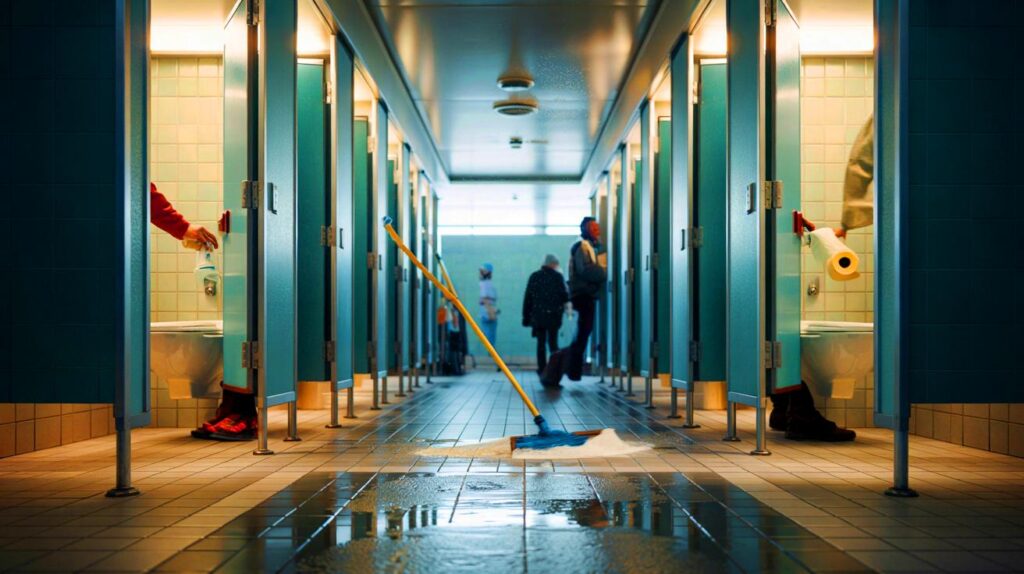
Airports, cinemas and stations share a small design quirk you have noticed. It shapes queues, cleaning rounds and your comfort.
Once you spot the gap under cubicle doors, you clock it everywhere. The choice is not accidental. Operators use it to keep people moving, keep spaces safer, and keep costs in check.
Why cubicle doors float above the floor
The open strip at the bottom of a public loo door does practical work. It helps staff act fast in emergencies. It makes cleaning quicker. It improves airflow. It trims material use. It even nudges people to spend less time inside. Small detail, big effect in busy venues.
Faster cleaning, safer cubicles, fresher air: the gap under the door is a workload tool, not a design afterthought.
Safety you can see
Visibility deters misuse and supports a quick response. Staff can check if a cubicle is occupied without knocking. You can see feet under the door, which helps you judge whether to wait or move on. If someone feels faint or locks themselves in by mistake, the opening gives helpers a way to communicate, pass a latch tool or slide in a hand to release a bolt. In tight spaces, you can even crawl in to assist without taking the whole partition down.
That same line of sight reduces hidden corners. Venues with heavy footfall value this. Clear sightlines make secluded behaviour less tempting and less risky.
Cleaning in fewer steps
That gap keeps mops and squeegees moving. Staff can sweep, scrub and push water through without opening every door. Fewer door touches mean fewer cross-contamination points. On a long cleaning round, shaving seconds off each cubicle adds up fast.
- Staff reach edges and corners without disturbing users.
- Water and spills drain to the aisle, not pool inside cubicles.
- Floors dry faster when air can circulate across the whole row.
As a simple example, saving just 20 seconds per cubicle across 20 cubicles removes six to seven minutes from a round. In peak hours, that time matters.
Air that keeps moving
Washrooms need constant ventilation. A gap below each door allows extract fans to pull air across every stall, not just the corridor. Odours disperse more quickly. Moisture has a route out, so surfaces stay drier. That helps the space smell better and reduces the conditions mould likes.
Costs that stay under control
Shorter doors use less material. If a standard panel stands at 1.8 metres, trimming 18 centimetres removes about 10 percent of the height. Multiply that across dozens of cubicles and you buy fewer sheets, less edging and lighter hardware. Lighter panels also arrive, carry and install more easily, which reduces labour time.
Trim a panel by 18cm across 40 doors and you cut a whole door’s worth of surface area from the order.
Savings do not stop at purchase. Parts break less because there are fewer hinges and braces under constant stress. Floors clean faster. Ventilation works with the layout. Each small gain lowers the lifetime cost per visit.
Privacy, pressure and queue speed
The design trades a little privacy for a lot of flow. You do not feel fully sealed off, so you take care of business and leave. In busy places, that social nudge keeps the queue moving. Research backs up the discomfort many of us feel: a 2021 IFOP survey reported that 61% of women and 47% of men had felt uneasy using public loos. That discomfort shortens dwell time, which means shorter lines for everyone behind you.
There is another practical win. If you run out of paper, you do not have to open the door. A neighbour can pass a roll under. The gap keeps small problems small.
What it changes for you and for operators
| Reason | What you notice | What operators gain |
|---|---|---|
| Safety | Visible feet, quicker help in a wobble | Fewer incidents, faster responses |
| Cleaning | Drier floors, fewer chemical smells | Shorter rounds, less disruption |
| Ventilation | Less lingering odour | Airflow across every stall |
| Cost | More cubicles for the same budget | Lower material and labour bills |
| Queue speed | Shorter waits at peak times | Higher throughput with the same footprint |
Design choices and where full-height still wins
Not every washroom uses the same approach. Some premium venues choose full-height cubicles for privacy and acoustics. That choice suits offices, hotels and small bars where queue pressure is light and cleaning teams have time. In mixed spaces, you often see a blend: standard cubicles with a gap for the main bank, plus a few higher-spec cubicles for those who want more cover.
Accessibility matters too. A clear floor edge can help a carer communicate with someone inside. It can also give wheelchair users visual reassurance that a space is free. That said, accessible WCs follow their own layout rules for turning circles, grab rails and doors that swing clear. Operators often pair an accessible room with standard gapped cubicles in the same facility.
Numbers that frame the choice
You can model the impact in minutes and metres rather than tastes. Take a venue with 100 users per hour across ten cubicles. If the design trims average dwell time by just 5 percent, you free up five user-minutes each hour. That buffer is often the difference between a steady flow and a line out the door after a film ends. On the build side, cutting 10 percent of panel height across, say, 30 doors reduces material by the equivalent area of three full doors. Fewer sheets shipped, fewer offcuts, fewer fixings.
Small edges of time and material compound. The gap under the door multiplies tiny wins until they affect the whole queue.
How operators soften the trade-off
Managers can keep the benefits while easing the awkwardness. They add privacy strips along vertical edges to shrink sight gaps. They choose closer floor clearances in family areas, often around 15–20cm rather than larger gaps. They add white noise or better extraction fans to mask sound and smell. They improve lighting so people feel safer without feeling watched. These tweaks keep the flow advantages and reduce the unease that many users report.
Tips for your next visit
- Pick the side cubicle if you prefer fewer passers-by outside your door.
- If a stall looks free but you are unsure, glance for feet rather than rattling the lock.
- Need help or paper? Ask and pass items under the partition without opening up.
Thinking longer term, the same logic applies beyond loos. Trains, stadiums and festivals rely on designs that cut seconds and steps. Designers aim for circulation, not perfection. A small gap, a smarter latch or a lighter panel can unlock a smoother day for thousands of people. When you see those floating doors again, read them as a set of choices about safety, speed and shared space.
If you manage facilities, test different clearances before you invest. Time a cleaning round with and without floor gaps opened by wedges. Measure queue length before and after a layout change. Run a simple simulation: reduce average dwell time by two seconds and watch peak queues shrink on paper. These practical checks guide budgets better than instinct, and they show where a few centimetres can buy you breathing room.



Never thought trimming 18cm could change queues so much. The emergency acces point makes total sense—I’ve seen it help once at a cinema.
Smart, but still awkard.