
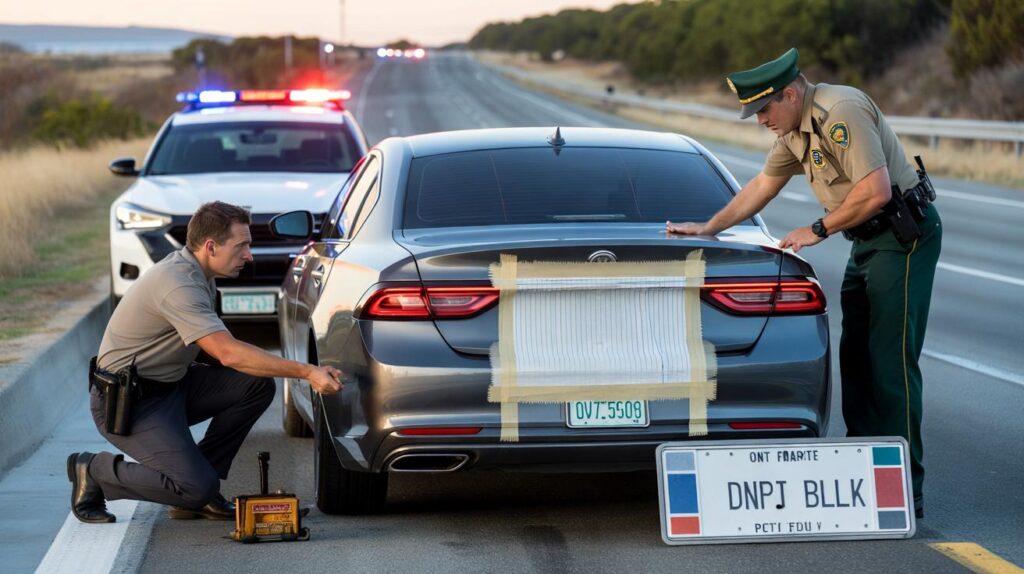
One Californian’s crafty fix drew highway attention, prompting a stop and a reminder that quick solutions can carry lasting consequences.
A motorist in Merced, California tried to replace a missing rear number plate with a handmade version. A California Highway Patrol officer noticed, pulled the vehicle over, and delivered a lesson that applies to every driver: when a plate goes missing, only state-issued replacements keep you on the right side of the law.
A stop in Merced that started with a glance
According to CHP Merced, an officer spotted a rear plate that wasn’t standard. The letters and layout looked improvised, and the surface lacked the reflective qualities of a genuine issue. The driver admitted they were trying to stay compliant after the original plate went missing. Officers praised the effort, yet made the position plain: a homemade plate isn’t lawful on California roads.
California requires properly issued plates from the Department of Motor Vehicles. Anything hand-drawn, printed or improvised can trigger a stop.
The incident underscores a point many motorists only face after a theft, a knock in a car park, or a move: a number plate is not a DIY project. It’s a controlled identifier tied to a vehicle’s registration, tax status and insurance records.
Why homemade plates fall foul of California law
California’s vehicle code demands that cars display the plates assigned to them by the state, typically one at the front and one at the rear. These plates use specific fonts, reflective materials, serial formats and mounting rules. They also carry validation decals and are designed to be readable by traffic officers and automated cameras.
Temporary paper tags do exist in California, but they are not homemade. Dealers issue them through a regulated system with printed barcodes, assigned numbers and expiration dates that match the vehicle’s record. A hand-cut piece of cardboard, a printout or a sketch can look convincing from a few metres away, yet it holds no legal standing and may invite a citation.
Creativity doesn’t substitute legality: plates must be state-issued, or you must display an authorised temporary tag or permit.
Lost or stolen plates: what to do next
If you realise your plate has gone, treat it like a lost ID. Move quickly and leave a paper trail that shows you acted in good faith.
- Report theft to the police if you suspect it was taken. Ask for an incident number to protect yourself from future toll or parking notices.
- Locate your registration and proof of identity. You’ll need them for a replacement request.
- Apply to the DMV for replacement plates and decals. Use the official forms (such as REG 156) and follow the instructions for your vehicle type.
- Ask about a temporary operating permit if you can’t fit proper plates immediately. Keep the permit visible and carry the receipt.
- When your replacements arrive, fit them securely, install the new decals and update any toll accounts.
These steps help you avoid roadside stops, fines and the risk of someone cloning your vehicle identity with your missing plate.
What you should not do
- Don’t draw, print or cut your own plate. Officers spot the differences quickly.
- Don’t photocopy a real plate or reuse someone else’s. That can escalate to a criminal investigation.
- Don’t cover your plate with tinted plastic or reflective films. Obstruction laws can apply, and cameras may not read it.
- Don’t keep driving “to the shop” hoping for the best. Get a permit or park the car until you have proper plates.
| Option | What it involves | Legal risk | Likely outcome |
|---|---|---|---|
| Homemade plate | Cardboard/printed plate with guessed numbers | High | Traffic stop, citation, possible towing if other issues appear |
| Drive with no plate, no permit | Rear or both plates missing; no official paperwork | High | Stop and fine; suspicion of theft or cloning |
| DMV replacement | Form, ID, fee, record updates | Low | Valid plates assigned to your vehicle |
| Temporary permit/tag | Authorised document displayed while waiting | Low | Legal cover until permanent plates fitted |
What officers look for at a glance
Frontline checks are swift. Officers look for the correct plate size, reflective surface, state design, validation decals in the right corner and a readable serial in the official font. They also notice mismatches between the plate and the vehicle’s make or colour and whether the number returns the proper record on their system.
Most cases involving a missing plate lead to a “fix-it” style citation that requires you to correct the issue and show proof by a deadline. Delay can mean higher penalties or additional scrutiny if the car appears in camera systems with an invalid or missing plate.
Reduce your chances of a stop
- Use anti-theft screws or locking fasteners on both plates.
- Check your plate lights work and the plates remain unobstructed and clean.
- Keep a copy of your replacement request and any permit in the glovebox.
- If a dealer issues a temporary tag, mount it in the prescribed position and ensure it’s legible.
Why thieves target plates and what cloning means for you
Number plate theft fuels toll evasion, petrol drive-offs and parking scams. A thief can fit your plate to a similar vehicle and let the penalties land on your doormat. The first sign you notice may be a sudden wave of toll invoices or camera notices from roads you never drove.
Act fast if plates vanish or appear altered. File a report, notify toll providers and the DMV, and keep proof of the time and place you noticed the loss. That paperwork can save hours later when disputing mischarges tied to your stolen plate.
Paper tags versus DIY: know the difference
California’s legitimate paper tags come from registered dealers and print with barcodes, a unique identifier and an expiry date. They sit in a holder or mount in the plate area and scan on enforcement systems. A DIY plate lacks those features and breaks the rules from the moment you drive off.
If your plate is gone, your legal options number just two: request replacements or obtain an authorised temporary permit.
Extra guidance for travellers and new residents
Hiring a car? Check it has proper plates or a dealer-issued temporary tag before you leave the lot. If a plate falls off or you spot damage, contact the rental firm immediately and get a written note. New to California? Confirm whether your vehicle needs both front and rear plates, and schedule your DMV appointment early if you’ve just arrived with out-of-state registration.
A quick personal checklist you can use today
- Take a photo of your current plates and decals; store it on your phone for reference.
- Add anti-theft bolts this weekend; it takes 10 minutes and reduces risk.
- Record your VIN and plate details in a secure note in case you need to report a loss.
- If you park on the street, choose well-lit spots and aim your rear plate away from easy reach.
The Merced stop began with a glance and ended with a reminder many forget until it’s too late. If your plate disappears, resist the urge to improvise. Use the DMV process, carry proof of your application, and keep your vehicle’s identity official from bumper to bumper.



If my rear plate falls off on a road trip at night, what am I supposed to show until the DMV opens? Will a printed confirmation email + ID be sufficent, or do I need a temporary operating permit?
So a cardboard plate + Sharpie isn’t “reflective technology”? 🙂 Kudos to the officer for the polite lesson, and to you for explaining the diff between dealer paper tags and DIY.