
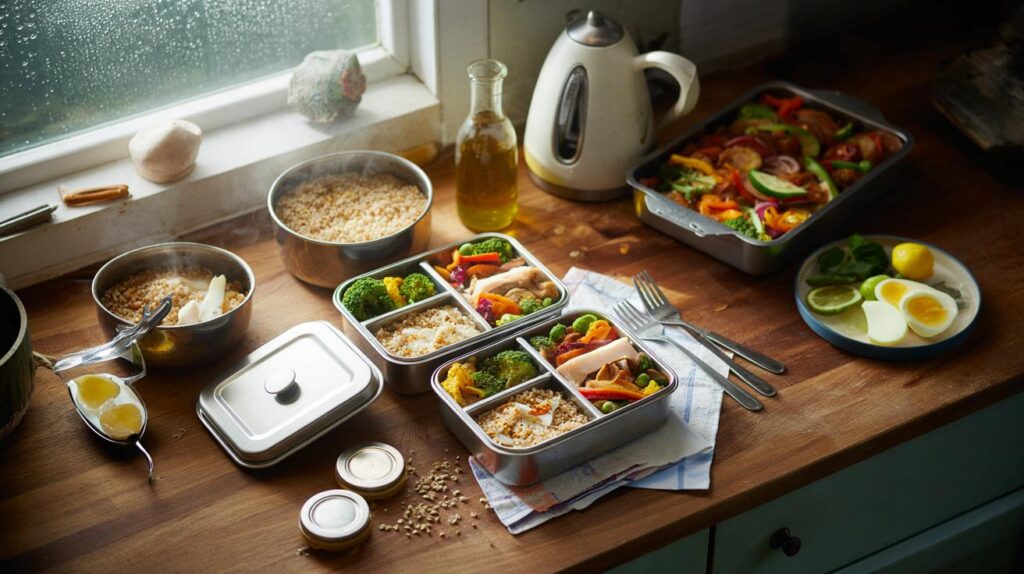
We’ve all had that moment when the school run swallows the morning whole: one child can’t find their shoe, the other wants toast in triangles, and your lunch plan is a vague hope. Healthy, cheap, quick lunches feel like a riddle you’re meant to solve without clues. Here’s the quiet trick: tiny, repeatable kitchen moves that work when real life is messy.
The kettle clicks on at 7:01. The rain is needling the window, and a PE kit is still tumbling in the dryer. You open the fridge with half a minute to spare and wish for a small miracle. A box of roasted veg winks back, a jar of punchy dressing, a tub of barley glistening like pebbles after tide. You tip, toss, lid. The lunchbox looks like care, not chaos. The clock says 7:06, and you haven’t spent a penny this morning. What if lunch half-made itself?
Rethink lunch prep: components over recipes
Forget the one-big-recipe Sunday that hijacks your afternoon. Think components: one tray of roasted veg, one pot of grains, a protein you can slice, and a sauce that does heavy lifting. You’re not meal prepping dinner-party plates; you’re stocking a mini deli. The goal isn’t perfection. It’s momentum.
Take Sam in Leeds. She buys a £6 whole chicken, roasts it once, and gets eight lunch portions at roughly 75p each. Add 40p of roasted carrots and onions, 30p of peas and herbs, and a slick of lemony yoghurt. Lunch lands at about £1.50 a head, and there’s still stock from the carcass for soup “pucks” in the freezer. The maths is friendly. The flavour sticks around.
Prepping this way dodges two traps: boredom and bulk. Components stretch into combinations, not repeats. Think barley + greens + chicken + harissa one day; couscous + roasted peppers + feta crumbs + olives the next. Label three fridge zones—protein, veg, carb—and let your hand do a quick supermarket sweep. Your fridge becomes a menu, not a museum.
Speed hacks for real-school mornings
Boil-the-kettle couscous in a flask turns into tabbouleh by the door. Roast veg while reading out spellings, then cool on the windowsill. Micro-steam broccoli in a lidded bowl with a splash of water for 90 seconds, shock with cold, and toss with olive oil. Whizz a dressing once—mustard, lemon, honey, oil—and store in a jam jar. Freeze soup in muffin tins, pop out the pucks, then reheat as needed. Chop once, eat four times.
Common pitfalls? Wet lettuce and soggy sandwiches. Keep leaves dry and dress at the table or pack dressing in a tiny pot. Don’t pre-slice tomatoes if you want crunch. Warm rice straight into a cold box is a condensation trap; cool it first. Build lunches in layers—sturdy on the bottom, delicate on top—and tuck a napkin in to absorb moisture. Let’s be honest: no one really does that every day. Aim for most days, most weeks.
Make a “Power-20” on Sunday evening: 20 minutes, one tray, one pot, one jar. Set a playlist. Move like you’re late for a train. Roast mixed veg with cumin, simmer a grain, blitz a dressing. Tomorrow’s lunches will almost make themselves when you’re bleary and negotiating socks. The trick is rhythm, not heroics.
“Pretend it’s sport,” laughs Priya, a PE teacher and mum of two. “Set a timer. When it dings, you’re done. Good enough feeds people.”
- Tray: peppers, onions, courgette, chickpeas, olive oil, spice.
- Pot: quinoa or barley with a stock cube and a bay leaf.
- Jar: lemon, Dijon, honey, olive oil, pinch of salt.
- Protein: eggs boiled in the same pot; peel under cold water.
- Extras: nuts, seeds, or crumbled cheese for texture.
Make it stick when mornings go feral
Your future self is less fussy, more grateful. Put the lunch bits where your hand lands: eye-level shelf for the staples, door shelf for the sauces, left-hand drawer for veg. Prep cards can help—three little prompts on the fridge: “Grain + Green + Protein,” “Colour + Crunch + Creamy,” “Saucy + Savoury + Fresh.” It’s not about willpower. It’s about removing friction at 7:12 when someone asks for a different spoon. Batch cook once, remix three times, buy odds and ends on yellow-sticker markdowns, and let Tuesday be “leftovers plus something crunchy.” Share your best swaps with a friend on the same route to school. Tiny systems beat heroic effort.
| Point clé | Détail | Intérêt pour le lecteur |
|---|---|---|
| Prep components, not full meals | Roast veg, cook a grain, add a protein, shake a dressing | Quicker prep and endless lunch combos |
| Use the “Power-20” routine | One tray, one pot, one jar while a timer runs | Reliable results on busy weeks |
| Pack to avoid sogginess | Layer sturdy-to-delicate, keep dressings separate, cool hot foods | Fresher lunches, fewer complaints |
FAQ :
- How long do cooked grains last in the fridge?Three to four days in a sealed box. Fluff before using and refresh with a squeeze of lemon or a tiny splash of olive oil.
- What if the school is nut-free?Lean on seeds for crunch—pumpkin or sunflower—and swap nut butters for seed butter or hummus. Tahini dressings add richness without risk.
- How do I keep lunches cold without a faff?Freeze a small sponge in a zip bag or use a flat ice pack. Chill boxes overnight and pack from the fridge, not the counter.
- Can I freeze salads?Leafy salads don’t freeze well. Freeze components instead: cooked beans, roasted veg, cooked chicken, and dressings. Thaw overnight and assemble in the morning.
- How do I stop the “again?” lunch boredom?Rotate one element each day—new dressing, different herb, a pickled something. Keep a “flavour shelf”: olives, capers, kimchi, chutneys, and crunchy seeds.



Love the Power-20 idea—timer on, stress off. The “mini deli” mindset finally clicks. Also, soup pucks are genius; my freezer looks organised for once!