
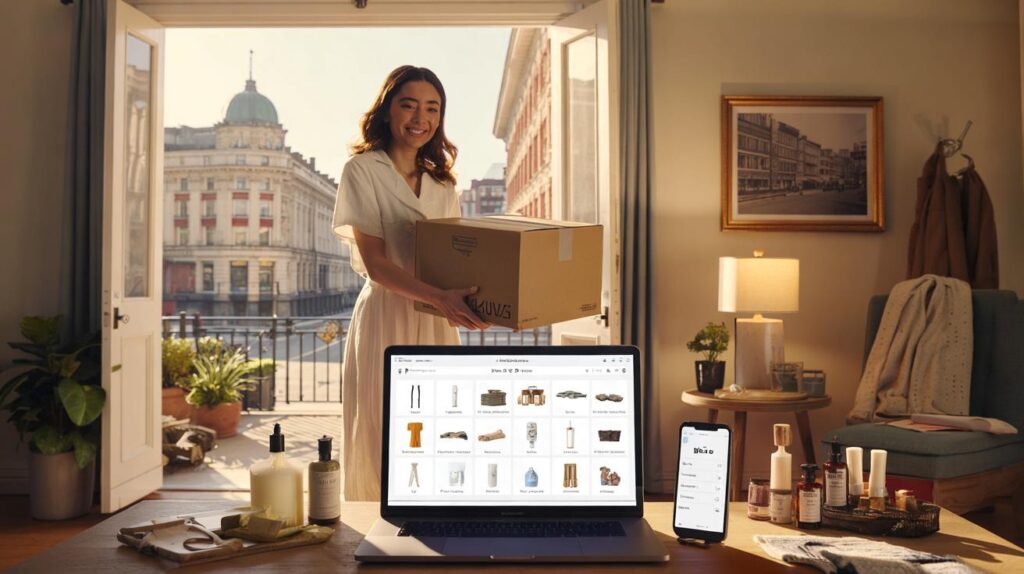
A century-old name from Birmingham is whispering back into British shopping habits, shaped by clicks, convenience and a dash of nostalgia.
The Rackhams brand, once a Saturday staple for West Midlands families, is returning not with window displays and escalators, but as an online-only marketplace offering free delivery and a broad sweep of categories. The relaunch leans on heritage and modern logistics in equal measure.
A storied name, recast for a digital age
Founded in Birmingham in 1881, Rackhams grew into a byword for department store shopping across the Midlands and beyond. Harrods took ownership in the 1950s before selling to House of Fraser, which used the Rackhams name for multiple regional branches in the 1970s. In 2000 the badge disappeared as stores were rebranded, ending more than a century of trading under the Rackhams banner.
The revival arrives 25 years later, with a pivot that reflects how Britons now shop. Instead of shop floors and sale rails, the business will operate as a curated online marketplace. It promises free deliveries and a product mix that ranges from home and garden to fashion and beauty, blending premium labels with everyday favourites.
The Rackhams name returns as an online-only marketplace with free delivery, not as a network of physical stores.
From Birmingham to the nation
The historic connection to Birmingham will matter to many, but the new model reaches nationwide from day one. The relaunch taps into the trust built by legacy names while removing the costs that sunk many large-format retailers. A marketplace-first approach also lets the company expand its catalogue quickly without owning all the stock.
What shoppers can expect right now
For customers, the proposition is built around convenience and breadth, with the retailer positioning itself as a home for both well-known brands and smaller sellers. Free delivery aims to lower the threshold for a first purchase and to compete with fast-moving online rivals.
- Free delivery across the site to reduce basket friction.
- Categories spanning home, garden, fashion and beauty, with more to follow.
- A curated marketplace model that hosts partner brands alongside in-house picks.
- Pre- and post-sales support positioned as a core service, not an add-on.
Management describes the business as “marketplace-first,” built from the ground up rather than bolted onto a legacy store. The leadership team highlights past experience scaling online retail into nine figures, signalling ambition to grow quickly while maintaining service standards.
A marketplace-first build can widen choice fast, but the test will be curation, delivery performance and customer care.
Marketplace-first: what that means for you
In a marketplace, many items are supplied by partner brands or specialist merchants. That creates breadth and competitive pricing, but it also makes clarity vital. Before you buy, check who fulfils the order, expected delivery times and how returns are handled. A well-run marketplace coordinates these moving parts so the experience feels seamless to the customer.
In the UK, consumer protections apply regardless of the sales model, but policies can vary by partner. A single customer service channel and transparent returns terms will help Rackhams turn first-time buyers into regulars.
Why heritage brands keep coming back
Britain’s department store sector has been reshaped by online habits and rising costs. The share of retail spending that happens online now hovers around a quarter of total sales in the UK, up from the low teens a decade ago. Large store estates carrying high rents and energy bills have struggled as footfall has shifted and discretionary spending has tightened.
Legacy names still carry weight with shoppers. That recognition can cut through search results, social feeds and email inboxes in ways a new brand cannot. We have seen similar returns: Debenhams has lived on as a digital-only business, while BHS traded online for a period after stores closed. These relaunches succeed when they combine trusted branding with a slick web experience and reliable aftercare.
The high street reality check
Thousands of shopfronts have gone dark in recent years, from fashion chains to catalogues reborn as apps. Against that backdrop, Rackhams’ online revival looks pragmatic. It avoids capital-heavy leases, focuses spend on technology and marketing, and adapts inventory via partners rather than warehouses full of slow-moving stock.
How the relaunch could affect brands, partners and jobs
For suppliers, a curated marketplace can open up national reach without the cost of standalone sites and paid traffic. Smaller labels gain access to a customer base under a familiar name. For logistics and customer service providers, the model generates demand for fulfilment, delivery and returns processing rather than shop-floor roles.
The trade-off is clear: fewer local retail jobs tied to physical premises, more roles in e-commerce operations, merchandising, data analysis and partner management. If Rackhams chooses seasonal pop-ups or experiential events later, it could blend both worlds, but the core strategy is firmly digital.
What to watch as Rackhams scales
Shoppers care about three things: price, speed and trust. The first two are straightforward to advertise. The third is earned when the basics run smoothly, especially when something goes wrong. Keep an eye on the following checkpoints as the new site grows.
| Question | Why it matters | What to check |
|---|---|---|
| Who fulfils my order? | Impacts delivery speed and returns route | Merchant name at checkout and in confirmation emails |
| How fast is delivery? | Sets expectations and reduces churn | Estimated dates before you pay, tracking after dispatch |
| What is the returns policy? | Determines your cost and convenience | Return window, pre-paid labels, refund timescale |
| How are products curated? | Quality and relevance of the range | Brand mix, editorial guidance, customer reviews |
Practical tips for your first order
Use the free delivery to test the experience with a lower-risk item such as home accessories or skincare. Check the seller details, read sizing guides where relevant and keep the packaging until you are sure you will keep the product. Photograph any faults on arrival to speed up support.
Under UK Consumer Contracts Regulations, most online purchases can be cancelled within 14 days of delivery, with a further 14 days to return the item. Some categories, such as personalised goods or hygiene-sealed cosmetics once opened, are exempt. If the seller is a marketplace partner, the same legal protections apply, but processes may differ slightly, so read the specific instructions for that item.
What this means for the British high street
Not every heritage brand revival aims to reopen doors on the high street. Some will, via flagships or pop-ups, to build a sense of occasion. Others will stay online and compete on service, speed and selection. For shoppers, the gain is choice under names they recognise. For town centres, the challenge is to shift towards experiences and services that give people reasons to visit beyond pure retail.
If Rackhams can combine careful curation with responsive support and reliable fulfilment, the old name could resonate with a new generation. The promise is simple: familiar taste, digital convenience and £0 delivery. The proof will come in repeat baskets and word of mouth.



My nan used to take me to Rackhams on Saturdays—perfume counters, escalators, the whole thing. Seeing the name back online is oddly comforting. I’m up for £0 delivery, but the magic was always the curation and service. If the marketplace keeps standards high and customer care actually answers, it could work. Any plans for occasional Birmingham pop-ups or click-and-collect hubs to keep a local touch?
Free delivery sounds great, but “marketplace-first” often means mixed quality and returns handled seperately by sellers. Will there be one support channel and prepaid labels, or am I chasing five merchants? Also, publish real delivery ETAs up-front—no vague “3–10 days”, please.