
Autumn brings warmth back indoors, and with it a surge of fine debris that coats heaters, drifts airborne and stings sinuses.
Across the country, people are switching on radiators and noticing the same thing: grey fluff building up in fins and vents, then swirling through rooms at the first swipe of a duster. A low-cost trick, built on old-fashioned common sense, is reshaping how households tackle it.
Why radiator dust keeps winning
Radiators pull cool air from the floor, warm it, then push it back into the room. That airflow lifts fibres, pet hair and skin flakes into the metal fins, where they bake, bind and form a felt-like layer. The layer looks harmless. It is not. It traps odours, irritates airways and muffles heat transfer, which means longer boiler run times and higher bills.
Traditional methods push the problem around. A vacuum on full blast stirs a plume. A feather duster sprays particles into sunbeams. Even a long-handled brush can send clouds floating towards curtains, carpets and lungs. The result is a tidy-looking radiator and a room that feels stuffier than before.
Dust on fins works like a jumper on a hot plate: it insulates, slows heat transfer and nudges your thermostat higher.
The three-minute fix that stops dust in its tracks
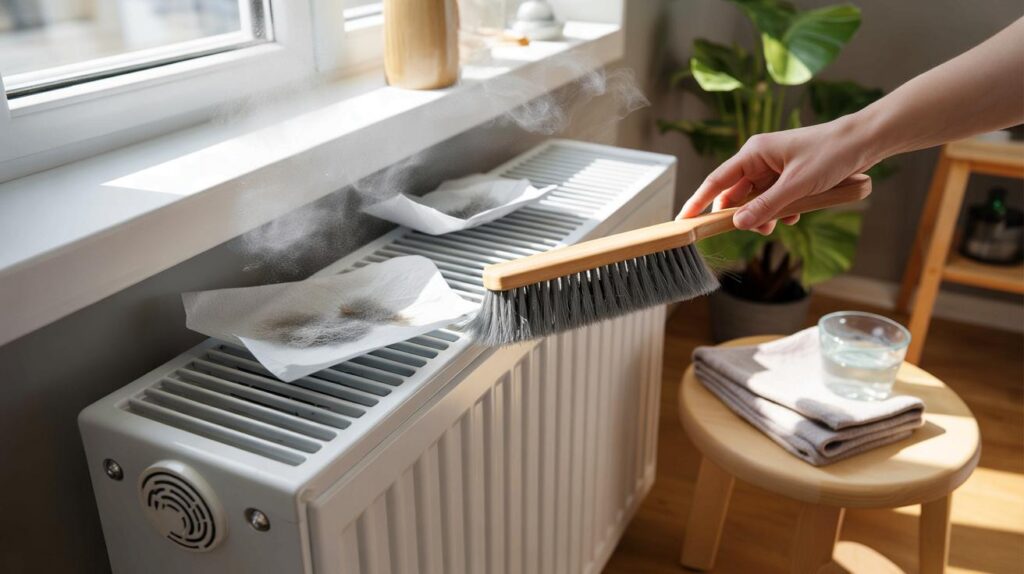
The trick is disarmingly simple: use moisture as a dust trap. Lay a damp sheet of kitchen towel along the top of the radiator, then coax the fluff downwards with a soft brush or clean paintbrush. The towel grabs the debris on contact, instead of letting it go airborne.
How to do it, step by step
- Switch the radiator off and let it cool. Unplug electric heaters before you begin.
- Fold one or two sheets of thick kitchen towel, dampen with clean water and wring well. You want moist, not dripping.
- Lay the towel flat along the top grille or across the top edge, covering the length.
- Use a soft brush, makeup brush or clean pastry brush to sweep dust from the fins towards the towel. Work from the back to the front, top to bottom.
- Lift the towel away, fold the debris inside, and bin it. Wipe any remaining specks with a lightly damp microfibre cloth.
Two sheets, one soft brush, three minutes per radiator. Cost: pence. Mess: none.
Why it works better than your duster
Moist fibres in the paper create a tacky surface that dust sticks to on contact. Instead of blasting particles into the room, you bring them to a controlled landing. There are no aerosols, no perfumed sprays and no need for high suction. The method suits panel radiators, column radiators and convectors with removable grilles.
| Method | Time | Airborne dust | Cost | Notes |
|---|---|---|---|---|
| Damp towel + soft brush | ≈ 3 mins | Low | Under 5p | Captures debris at source, no chemicals |
| Vacuum on high | ≈ 4 mins | High | Free (if owned) | Stirs plumes; use only with a HEPA tool on low |
| Feather duster | ≈ 2 mins | Very high | Low | Looks clean, sends dust into the room |
Health, comfort and cash: what you stand to gain
Cleaner fins move heat faster into the room, so the boiler or element runs for less time. Building services engineers often warn that grime on heat-exchange surfaces can trim efficiency by several percentage points. On a £1,400 annual gas bill, a 5–10% loss equates to £70–£140. Keeping fins clear helps claw that back and reduces the musty odours that set in when fibres scorch.
Asthma sufferers and allergy-prone children notice the difference first. Fewer particles take flight, so fewer irritants end up in noses, throats and bedding. The room feels easier to breathe in, especially in small bedrooms where convectors sit close to beds and soft furnishings.
Keep fins clear and you lower run times, cut odours and ease breathing — without scent sprays or harsh detergents.
How often should you do it?
During autumn start-up, aim for one to two sessions per month while dust burns off and settles. In peak winter, check high-use rooms weekly and give children’s rooms a light sweep as a matter of routine. Small, regular sessions beat a spring clean that arrives after months of baked-on fluff.
What to avoid if you want clean air
- Do not blast with compressed air or run a vacuum at maximum power. You will redeposit dust across shelves and fabrics.
- Avoid abrasive pads, metal brushes and solvent cleaners. They damage paint, invite rust and make future dust stick faster.
- Do not drench the towel. Drips can enter electrics and cause staining on walls or floors.
- Never cover vents on an operating heater. Heat build-up can trigger cut-outs or warping.
Make it part of a five-minute room routine
Keep a soft brush with your cleaning caddy and store a kitchen towel roll near the hallway or utility. When you wipe skirting boards, add a quick radiator pass. Follow with a vertical wipe of the fins using a barely damp microfibre cloth. The move catches the last specks that the brush may have missed.
Different heaters, small tweaks
- Panel radiators: remove the top grille if it unclips. Work through the gaps with the brush and replace the grille after drying.
- Column radiators: thread the brush between columns, working downwards. Place the damp towel on the floor beside the skirting to catch the fall.
- Electric convectors: switch off at the wall and let them cool. Keep moisture away from the control panel and power lead.
For dust-prone homes: go a step further
If pets shed heavily or you live near a busy road, cut down the sources. Fit good doormats at entrances, change vacuum bags before they bulge, and use a HEPA-equipped vacuum on its lowest setting around carpets and curtains. Wash or replace radiator grilles that trap lint. Consider a low-cost PM2.5 monitor to see how cleaning choices affect indoor air.
A quick cost check you can run today
Count your radiators. If you have ten, a full round with the towel method takes about thirty minutes. Assume it prevents a modest 5% drop in heat output from dust build-up. On a typical autumn month with £120 spent on gas and electricity for heating, that is roughly £6 saved — for the price of a few sheets of paper and a cup of water. Not headline money, but it adds up over a season and makes rooms feel fresher.
Small extras that make the job easier
- Use a head torch to see buried fluff in dim alcoves.
- Keep a spare, clean makeup brush for tight fins and valves.
- Slip a large baking sheet or old magazine under wall-hung radiators to catch stray specks.
- Add a calendar reminder for the start of October and the first week of January.
Moisture traps the mess where you want it — on the towel, not in your air. Once tried, it becomes habit.
Safety notes worth following
Always let heaters cool before you start. Avoid chemicals that release perfume or volatile compounds when warmed. Keep liquids away from thermostatic valves and electrical controls. If paint is flaking, test a tiny area with a barely damp cloth first and consider a professional repaint to seal the surface.
The method is simple, cheap and quick. It pairs well with regular vacuuming and sensible ventilation, gives you cleaner air and steadier warmth, and saves a little on bills at a time when every pound matters.



Tried this this morning: two paper towels and a soft makeup brush. Took about 3–4 minutes per radiator and the burnt-dust smell vanished. Air felt cleaner right away. Didn’t think something so low-tech would work this well.