
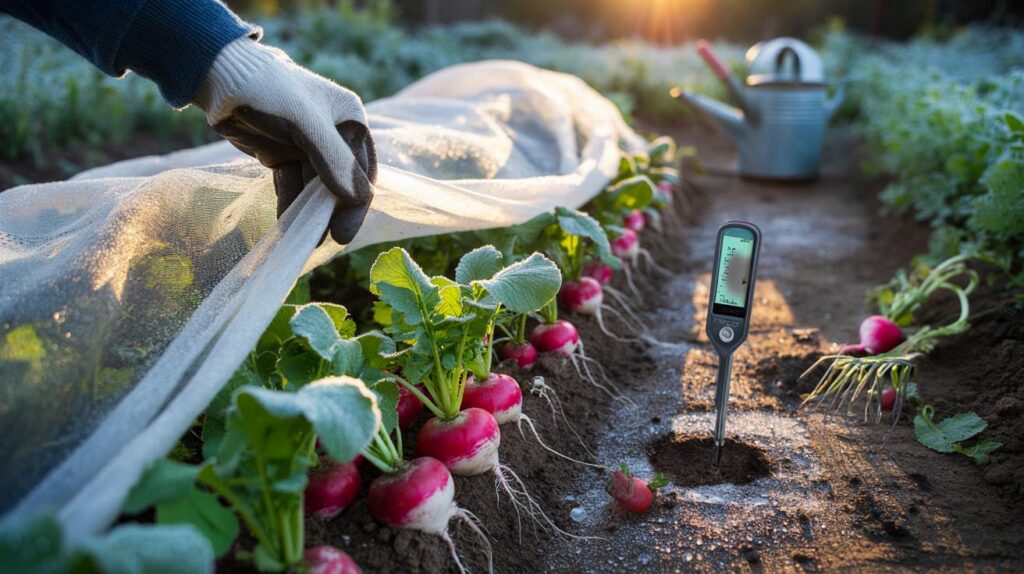
October bites, shop shelves thin, and gardens slow. Yet a quiet, simple routine can keep your plates bright and crunchy.
As the first frosts creep towards zero, many give up on quick salads and home-grown crunch. A small shift in timing and technique, used by seasoned growers, can tip the odds back in your favour and put snappy, peppery radishes on your table before winter clamps down.
The expert move behind crisp winter radishes
Gardeners talk about miracles, but this is a method. It hinges on three things: sow early enough, prepare a stone‑free, airy bed, and trap a little warmth and moisture over the row. Get those right and short-season radishes swell fast, even as daylight fades.
Sow before mid‑October into a fine, stone‑free tilth at 1–2 cm; thin to 3–4 cm; use fleece to add 2–3°C.
Why autumn radishes make sense for you
They stay crisp in cool weather, grow quickly, and punch above their weight nutritionally with vitamin C, potassium and fibre. At a time when food prices rise and variety shrinks, a strip of ground can supply several bowls of salad in a fortnight of mild spells. One short row often replaces two shop trips.
Timing that beats the first frosts
What the calendar and the soil are telling you
In most of the UK, aim to sow before the middle of October, while the soil still holds summer heat. Watch soil temperature as well as the forecast: radish seeds pop fastest at 8–15°C. They will germinate at 5–7°C, but every degree shaved off slows them. A simple digital probe gives the truth in 10 seconds.
Plan backwards from your area’s first likely frost. If your average first frost falls around late October, you need 14–21 days’ growth for baby roots or 21–35 days for full bulbs. A low fleece tunnel buys you 2–3°C and several extra days of growth when nights nip to 0°C.
Rule of thumb: if nights dip below 2°C for a week, fleece the row; if hard frosts below −3°C are forecast, harvest.
Preparing the bed like a pro
One-minute tilth test and the three-step setup
Radishes hate compaction and stones. They want a seedbed that crumbles in your hand. Spend five minutes on ground work and the rest becomes easy.
- Loosen 20 cm deep with a fork, lifting rather than flipping. Break clods with a rake.
- Riddle out stones where roots will swell. Add a Litre of sharp sand per metre in heavy clay.
- Rake in a thin layer of mature compost (about 1–2 litres per square metre). Avoid fresh manure.
- Water the bed the day before sowing so moisture sits in the top 3 cm.
Follow legumes if you can. Beds that grew peas or beans carry a gentle nitrogen bonus that fattens roots without making them leafy and hollow.
Seed to sprout in days, not weeks
How to sow for a rapid, even stand
Draw a straight, shallow drill 1–2 cm deep. Sow thinly—about one seed every 1–2 cm. Cover with fine soil, then firm the row with the rake’s back to secure contact. Water using a fine rose so you don’t wash seeds together. Lay fleece or an insect mesh immediately; it traps warmth, limits flea beetle damage, and keeps cats off the bed.
Keep the top 2 cm of soil evenly moist for the first 10 days. No crust, no drought, no puddles.
Thinning, watering and gentle protection
When the first true leaf appears, thin to 3–4 cm spacing. Crowding makes tails and spindles. Water consistently—aim for 10–15 mm twice a week in dry spells; far less if rain is regular. A light mulch of crumbly leafmould or sieved compost stabilises moisture and guards the crown against a sharp night.
Ventilate fleece or tunnels at midday to prevent damp tops and fungal issues. If slugs patrol, set shallow beer traps outside the row or lift fleece edges each morning to patrol by hand. For flea beetle, keep the mesh on and avoid letting the bed dry out; tiny beetles prefer dusty soil.
From first crunch to bigger roots
Harvest windows and taste on the clock
Under fleece in a mild spell, you can pull baby radishes at 14–18 days. Full‑sized bulbs usually follow at 21–35 days, depending on variety and temperature. Lift before a hard freeze; light frost won’t hurt the flavour, but repeated freezes turn texture spongy. Twist off leaves at harvest to stop them wicking moisture from the root. Store unwashed in a lidded box in the fridge for up to 10 days, or bury in just‑damp sand in a shed for longer keeping.
| Day | Soil temperature | Action | What you should see |
|---|---|---|---|
| 0 | 8–15°C | Sow 1–2 cm deep; cover; water; fleece on | Straight, labelled rows; moist surface |
| 3–5 | 8–12°C | Check moisture morning and evening | Germination begins along the line |
| 7–10 | 6–10°C | Thin to 3–4 cm; keep mesh on | Sturdy seedlings with true leaves |
| 14–18 | 6–9°C | Pull baby roots selectively | 1–2 cm crisp bulbs, strong colour |
| 21–35 | 5–9°C | Lift the main crop before hard frost | Full‑bodied, juicy roots |
Common slips and fast fixes
If roots split, hollow or stay spindly
Hollow cores usually signal erratic watering or over‑mature roots. Water little and often, and harvest sooner. Spindly roots often come from poor thinning, stones or a crusted surface; thin early, remove stones, and keep the top layer moist. Hot, woody flavours point to stress—heat spikes under plastic, drought or a feed too rich in nitrogen.
- Hollow centres: even moisture and earlier picking.
- Small, stringy roots: improve tilth; thin to 3–4 cm; avoid shade.
- Scars and holes: keep insect mesh on; avoid letting soil dry to dust.
Thin once, water well and keep the seedbed friable—this single routine sharpens flavour and texture.
Extra gains for keen gardeners
Smart variety picks, clever spacing and space savers
Choose quick, cool‑tolerant varieties for late sowings: classic ‘Scarlet Globe’ and ‘French Breakfast 3’ bulk reliably at low temperatures. For bigger winter types, ‘Black Spanish’ and daikon strains will push on under fleece but need a longer window. Mix short rows every seven days for staggered harvests.
Radishes interplant neatly with slow growers. Slot a line between autumn lettuces or carrots; you’ll harvest the radishes before neighbours need the room. In containers, use a trough at least 15 cm deep, a peat‑free mix with 20% sharp sand, and the same shallow sowing. Direct sowing beats transplanting; moved radishes often fork or sulk.
Health checks, soil care and a winter carry-over
Clubroot risk rises in brassica‑heavy plots. Keep a three‑year gap between radishes and other brassicas, lime to pH 6.5–7 on acidic soils, and avoid waterlogging. Damping‑off hits in still, clammy air; ventilate fleece at midday and water in the morning at the base. If a severe cold snap looms, lift what you can and store; the rest can sit under a double fleece with hoops for a week or two.
The winning numbers: sow by mid‑October, depth 1–2 cm, spacing 3–4 cm, moisture steady, fleece for +2–3°C.
If you want to push the season, trial a mini‑tunnel with two layers of fleece separated by hoops. The air gap adds roughly another 1–2°C at night, often enough to keep growth ticking when outside drops to −2°C. Keep notes on sowing dates, soil temperatures and first harvests; by matching this year’s timings to next autumn’s forecast, you can repeat that crisp, peppery hit exactly when you need it most.



Just tried a fleece tunnel this week and wow—the extra +2–3°C really kept seedlings moving. The day-by-day table is gold. Quick Q: do you ever double up mesh and fleece, or is that overkilll at ~5°C nights?