
Every autumn, the same debate rustles across suburbia: rake it all, or leave some? We’ve all had that moment when the garden looks chaotic and you fear the neighbours will judge. Here’s the twist: stripping your lawn bare can quietly harm the very grass you’re trying to protect.
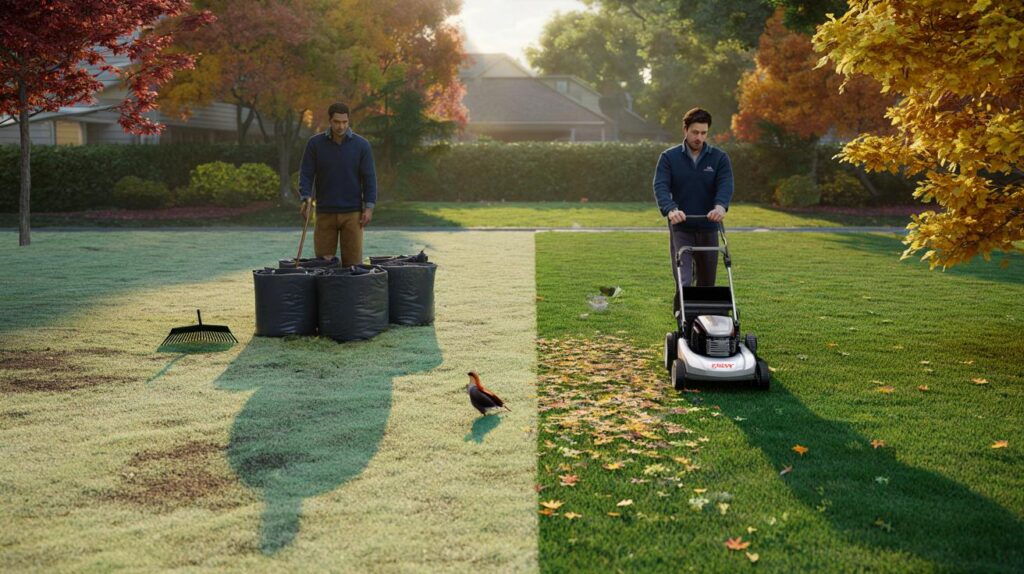
The wind lifted the first crisp leaves along my street just after breakfast. A man in a navy fleece fired up a leaf blower, herding colour into plastic sacks while a robin hopped behind him, hopeful and confused. Two doors down, a woman took a slower route, pushing a mower on a high setting, letting shredded leaves fall like confetti into the grass. The lawn doesn’t need rescuing. Not from autumn, anyway. What if less is better?
Leaves are not litter: they’re quiet armour for your grass
Look closely and a thin scatter of leaves does a trade with your turf. They soften cold nights, keep soil from drying, and slow down the yo-yo of frost and thaw that stresses roots. They trap dew so water seeps rather than runs. Beneath, the soil stays calmer, a few degrees kinder. Microbes wake. Worms pull fragments underground. Your lawn, which spends winter storing energy rather than growing, gets a duvet made by the trees it lives under.
I visited a small park in Surrey where the groundskeeper swears by leaving a light cover. In spring, the grass rose early, thick and shamelessly green, while the path edges that were stripped bare looked tired. Turf trials from university extension teams back this up, showing improved spring colour when leaves are mulched into the sward. A thin quilt of leaf mulch can feed a lawn better than any quick-fix fertiliser. Not a dump. Just a quilt.
Here’s the logic. Leaves carry minerals that trees pulled up all summer; when shredded, those minerals cycle back into the topsoil. Shredding matters because big mats block light and trap too much moisture against blades. Aim for a layer you can still see grass through, like freckles, not a blanket. As those pieces break down, fungi and bacteria convert them into humus, releasing slow nutrients and building the crumbly structure roots love. The lawn gets food, insulation, and fewer bare patches come March.
How to do the “lighter rake” without wrecking your weekend
Pick a dry afternoon and set your mower one notch higher than usual. Run over the leaves so they shred and sift down between blades, then make a second pass at right angles to spread them. If you’ve got heaps, gather the extras onto beds and under shrubs where they’ll smother weeds and keep soil lively. Mulch-mowing is the single easiest autumn habit that makes grass greener in spring.
Common pitfalls are easy to dodge. Don’t let heavy, wet clumps sit in shady hollows; break them up or move them to borders. Keep paths and drains clear so you don’t create slicks or block gullies. If your lawn is weak or new, go lighter and favour borders until it’s stronger. We’re all busy. Let’s be honest: nobody actually does that every day.
When in doubt, think “see the grass, feed the soil.”
“I stopped chasing every leaf and started chopping them into the turf,” says Tom, a greenkeeper in Kent. “It looks tidy enough, the worms do the rest, and our spring moss problem halved.”
- Shred, don’t sack: two mower passes beat ten bags.
- Target a dapple, not a blanket: you should still see green.
- Move excess to beds, hedges, or a leaf-mould heap.
- Keep steps and drains leaf-free for safety and runoff.
- In deep shade or wet spots, thin the layer to avoid smothering.
Rethink “tidy”: a lawn that breathes through winter
There’s a difference between a cared-for garden and a sterile one. A little leaf life invites birds to forage, hedgehogs to hunt, and soil to quietly repair itself while you’re inside with a mug of tea. Leaving some leaves is not laziness; it’s smart stewardship. It’s a small act of trust in the systems under our feet. Share the work with the season. Your spring lawn will tell you you were right.
| Key points | Details | Interest for reader |
|---|---|---|
| Leaves protect and feed turf | Shredded leaves insulate soil, retain moisture, and release slow nutrients | Healthier, greener lawn with fewer bare patches in spring |
| Mulch-mowing beats bagging | Two passes on a high setting create a light, beneficial leaf confetti | Less work, fewer bags, better soil |
| Know when to thin | Avoid thick, wet mats; move extras to beds and keep drains clear | Prevents smothering and slippery paths, keeps lawn resilient |
FAQ :
- Should I ever clear all the leaves off the lawn?If you’ve got a thick, wet carpet or a very young lawn, yes, thin it right back. Move the surplus to beds or a leaf-mould heap rather than binning it.
- Will leaves cause disease in the grass?A heavy, soggy mat can trap moisture and invite trouble. Light, shredded mulch breathes, breaks down, and helps the turf resist issues.
- What mower setting works best for mulching leaves?Go one notch higher than your summer cut and make two criss-cross passes. The goal is confetti, not dust.
- Is a leaf blower okay for this?Use a blower to move big drifts off the lawn and into beds, then mow to shred what’s left. Don’t blow into the street or down drains.
- What if I want a very neat look?Mulch-mow until you can still see green between flecks of leaf. It reads tidy to the eye, but keeps the soil alive under the surface.



Tried this last year—two mower passes, higher setting—and the spring color was insanely good. Definately keeping the leaf “quilt” approach.