
Your towels look clean, yet they smell a bit… lived-in. They dry slower, feel scratchy, and you wonder what’s lurking in those loops of cotton. Between cooler wash programmes and heavy detergents, residue builds up and traps odours. Lemon juice — humble, bright, cheap — has a trick up its sleeve. It cuts through minerals and grime, lifts that musty veil, and helps your towels bounce back. Not magic. Just smart chemistry you can do in your kitchen.
The other morning I reached for a towel after a hot shower and caught that faint whiff of damp — the scent that says not dirty, not fresh, but something in between. I tossed it in the laundry basket, then paused, staring at the lemons in a blue bowl by the sink. My grandmother swore by lemons for laundry. The idea felt almost old-fashioned and oddly modern at the same time. What if a lemon could fix it?
Why towels turn musty — and how lemon cuts through the build-up
Towels are like sponges for real life: skin oils, soap residue, hard-water minerals, and lingering moisture. They look fine on the line, yet those loops can hide a lot. Add a cool wash and a splash of fabric softener, and you’ve basically gift-wrapped odours and invisible grime inside the fibres.
A launderette owner in Brighton told me she can spot a “softener family” at ten paces: towels that feel fluffy but drink water slowly. She once soaked a stack of hotel towels in a tub spiked with lemon juice and watched the water turn cloudy in minutes. No gimmick — just gunk that finally let go.
Here’s what’s actually happening. Lemon juice is rich in citric acid, a weak organic acid that lowers pH, dissolves mineral deposits from hard water, and helps release embedded detergent film. That film is what catches smells and slows absorbency. When you strip it back, cotton can breathe again, which also makes drying quicker and less hospitable to microbes. Wash at 60°C if you want a proper hygiene boost.
The lemon method: simple steps, better towels
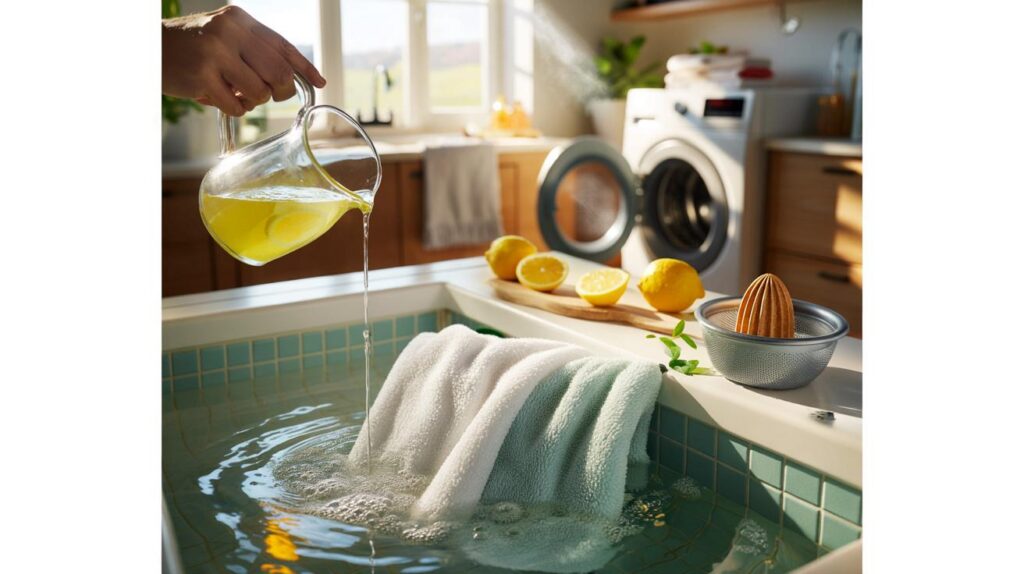
For a deep refresh, fill a clean tub or sink with very hot water (about 6–8 litres) and stir in 120–180 ml of strained lemon juice. Submerge 2–3 towels, press out air, and soak for 30–60 minutes. Then machine-wash on a hot cotton programme with a small dose of detergent, followed by an extra rinse to carry off loosened residue.
Prefer to go straight to the machine? Add 120 ml lemon juice directly into the drum with your towels, run a 60°C cycle with a normal detergent dose, and finish with a thorough dry, ideally in a tumble dryer or on a sunny line. Never mix lemon juice with bleach. If your water is very hard, a lemon soak first makes a huge difference because it softens the mineral crust that clings to the fibres.
Colour care matters. Lemon is gentle, but it’s still acidic; on brand-new or highly saturated dyes, do a quick spot test, or try your first run on older towels. Skip fabric softener on towel day — it’s like coating your cotton in clingfilm. We’ve all had that moment when a towel looks plush and then behaves like a raincoat. Let’s be honest: nobody actually does this every day.
There’s a reason people keep coming back to this ritual. It’s fast, it’s kitchen-friendly, and it taps into something that feels both thrifty and fresh.
“When towels stop absorbing, you don’t need more product — you need less. Strip the build-up, and cotton does the rest.”
- Use 120–180 ml lemon juice per load or soak; strain out pulp to avoid spots.
- Run 60°C for towels when fabric care labels allow; dry completely after.
- Avoid pairing lemon with chlorine bleach or products that contain it.
- Rotate: lemon refresh monthly; regular mild wash the rest of the time.
- Skip softener; if you want fluff, a short tumble dry works better.
A habit you can keep — and share
The charm of the lemon trick is its simplicity: a small citrus reset that slots into your weekend wash without turning cleaning into a second job. It breaks the cycle of adding more and more product, then wondering why towels feel heavy and smell like the cupboard.
Try it once, and you’ll likely notice your towels drink faster and dry quicker, which means less must, fewer mystery smells, and a bathroom that feels fresher all week. Dry them fully — damp equals musty. You might even start keeping a lemon by the machine, next to the pegs and the odd sock that lost its partner. It’s the kind of tip you pass to a friend over tea, half practical, half cosy, and entirely doable.
| Key points | Details | Interest for reader |
|---|---|---|
| Lemon lifts residue and odours | Citric acid dissolves minerals and detergent film that trap smells | Fresher towels without harsh chemicals |
| Simple method, real results | Soak or machine-wash with 120–180 ml lemon juice, hot cycle, extra rinse | Step-by-step you can try today |
| Safety and limits | Spot test colours, don’t mix with bleach, aim for 60°C when labels allow | Confident, safe cleaning that actually works |
FAQ :
- Does lemon juice actually disinfect towels?It helps reduce odours and residue, but it isn’t a hospital-grade disinfectant. Pair it with a 60°C wash and thorough drying for a proper hygiene lift.
- Will lemon juice fade coloured towels?Usually no with normal use, yet very bright or new dyes can be sensitive. Test on a corner first, and keep soaks shorter for bold colours.
- Can I mix lemon with vinegar or bicarbonate of soda?You can use them in separate stages, but mixing acids and alkalis can neutralise both. Keep it simple: lemon stage, rinse, then wash.
- How often should I do a lemon refresh?About once a month for regular households. If towels see heavy gym or family use, every 2–3 weeks works well.
- Does it work in cold water?You’ll still cut some build-up, but heat improves results. If you must go cool, extend the soak and dry thoroughly afterwards.



Just tried this todya with two funky gym towels—wow. Softer, faster-drying, smell gone. Kitchen chemistry wins.