
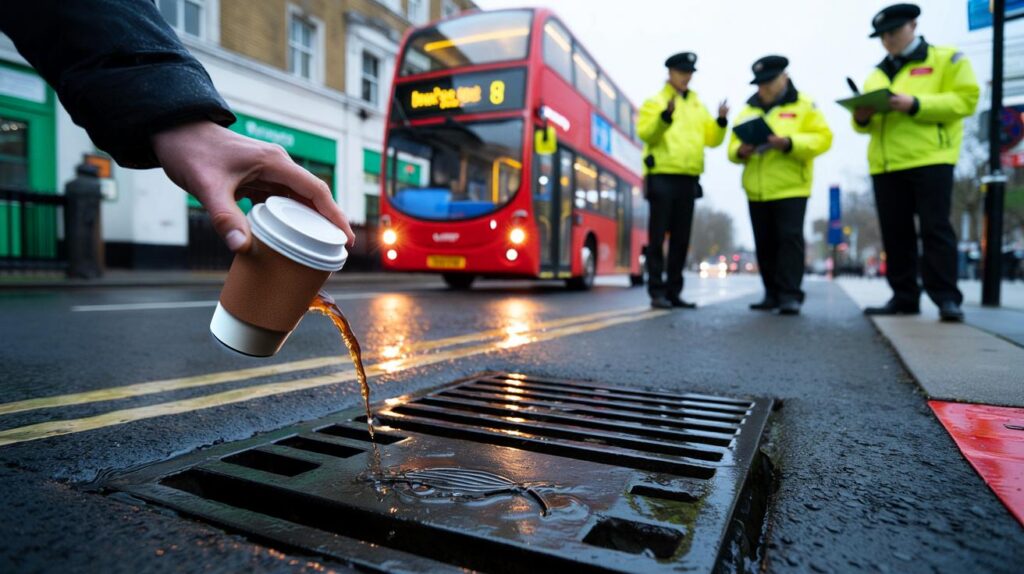
A quick pour at a Richmond bus stop sparked a flurry of questions about drains, fines and what counts as waste.
What began as a split-second decision by a commuter has turned into a discussion about green rules, street drains and common sense. A £150 fixed penalty notice landed, headlines followed, and now the council has backed down. The case leaves a bigger question for every traveller with a half-finished drink.
How a quick pour became a flashpoint
Burcu Yesilyurt, who lives in Kew, says she tipped the last splash of coffee from her reusable cup into a road gully near Richmond station. Her bus was arriving. She wanted to avoid spillage on the journey to work. Moments later, three enforcement officers stopped her and issued a £150 fixed penalty notice.
The notice cited Section 33 of the Environmental Protection Act 1990. That law bans disposing of waste in ways likely to pollute land or water. Many people think of paint, oil or chemicals. Few imagine a small amount of coffee counts. Ms Yesilyurt says she left the encounter shaken and confused. She asked where the drink should have gone. An officer reportedly advised using a nearby bin.
After a review, Richmond upon Thames Council cancelled the fine. The authority says the contravention was minor and that an appeal would likely have succeeded. It also says officers acted appropriately and that body-worn video supports their account.
Key facts: the £150 notice was cancelled after review; the incident was deemed minor; Section 33 was cited; body-worn footage was checked.
What the law says
Section 33 focuses on preventing pollution and unlawful waste disposal. On streets, the rule captures tipping liquids into gullies because those openings often drain straight to rivers. Street gullies are not sinks. They bypass treatment works and carry runoff to local waterways. That is why councils take even small pours seriously. Coffee and milk can add nutrients and reduce oxygen in water. Oils and detergents can create films and harm wildlife.
Councils can issue fixed penalties to deal with low-level offences quickly. The size of a fine, and which offence it covers, varies by authority and circumstances. This case shows how a minor act can fall within a broad pollution rule. It also shows that context matters when councils decide whether to proceed or step back.
- Coffee, tea and sugary drinks can affect river chemistry in volume.
- Milk, cream and oils create films and deplete oxygen in water.
- Detergents, paint and solvents cause direct harm to aquatic life.
- Food particles encourage vermin and block gullies.
Why councils care about gullies
Street drains keep roads clear of surface water. Leaves, silt and food waste can block them. Blocked gullies raise flood risk and increase maintenance costs. Many areas use separate systems for foul water and surface water. Surface water pipes discharge into rivers and streams. That means even everyday liquids matter when poured from the kerb.
Environmental messaging often focuses on bottles, wrappers and cigarette ends. Liquids can seem harmless by comparison. Yet a steady trickle adds up, especially in busy locations like stations and high streets. Councils say they want to protect waterways and keep streets flowing during heavy rain. Consistent rules support that aim. Clear guidance helps people follow the rules without friction.
Public reaction and the signage debate
Ms Yesilyurt says few people know that pouring liquids into gullies can be an offence. She has called for signs near bins and bus stops to explain the rules simply. The story drew a strong reaction as commuters pictured their own rushed decisions. Many asked how to dispose of a leftover drink when no sink is in sight. Others argued that strict enforcement without clear guidance feels unfair.
Street gullies are not sinks. If in doubt, carry the liquid to a proper drain or keep the lid on until one is available.
Practical guide: what to do with leftover drinks
You can avoid both spills and fines with a few small habits. These steps work whether you carry a reusable cup or a takeaway lid.
- Keep the lid on and carry the drink to your destination sink or a public toilet.
- Ask a café to take the remainder and pour it safely if you are nearby.
- If you must bin it, ensure the container is sealed to stop leakage in street bins.
- At home, pour liquids into a sink and rinse containers before recycling.
- Tip coffee grounds (not milky liquid) into food waste where collections allow.
| Scenario | Risky action | Safer alternative |
|---|---|---|
| Bus arriving, drink not finished | Poured into street gully | Seal lid, carry on board, dispose at sink later |
| Sticky soft drink remains | Emptied into gutter | Keep in bottle; empty at sink; recycle bottle |
| Oily or milky leftovers | Dumped into drain | Pour into sink at home; wipe cup; dispose towels in bin |
The council’s u-turn and what it signals
Richmond upon Thames Council says it wants to protect local waterways while applying proportionate enforcement. The authority reviewed body-worn footage and cancelled the penalty. The message is that minor cases can be handled with discretion. The council also points to the appeal route set out on fixed penalty notices. That route exists for anyone who believes a notice was wrongly issued or disproportionate.
This case also highlights a gap in public understanding. Many people assume street drains connect to treatment works. Many do not. Clearer, simpler signage at busy points could prevent similar clashes. A short line on a bin or a bus stop—“Do not pour liquids into street drains”—would help.
Fixed penalty notices: your options
If you receive a fixed penalty notice, you can pay it or challenge it by following the instructions on the notice. Councils set their own processes and deadlines. An early response window often applies. Keep any evidence that supports your case. Body-worn video, location details and the exact wording of the offence matter. Ask for clarification if the offence cited does not match what happened. You can also seek advice before you decide.
Why this case matters beyond Richmond
Enforcement in public spaces sits at the junction of environmental goals and day-to-day life. People want clean rivers and clear roads. They also want rules that feel fair when moments are rushed. This incident shows both sides. Officers saw a prohibited act at a drain. A commuter thought she was avoiding a mess. The council used discretion after review and applied a proportionate outcome.
The practical takeaway is simple. Treat street gullies as off-limits for liquids. Move the drink, not the rule. A sealed lid and a sink solve most problems. For councils, a short message on bins, bus shelters and drain covers could cut confusion. For commuters, a little planning prevents a stressful stop and a costly notice.
A few words on a sign could stop a costly mistake. “No liquids in street drains” would save time, money and river health.
If you often travel with a reusable cup, test it for leak resistance and carry a spare lid gasket. A reliable seal turns a risky pour into a safe carry. If your route passes a café, note which ones accept leftover drinks for safe disposal. Small changes help you avoid fines and keep local waterways cleaner.



Three officers for a splash of coffee? Espresso SWAT team vibes.
Street gullys often drain straight to rivers; the u-turn seems proportionate, but clearer signage at bus stops and on bins would prevent repeats and spare everyone the admin.