
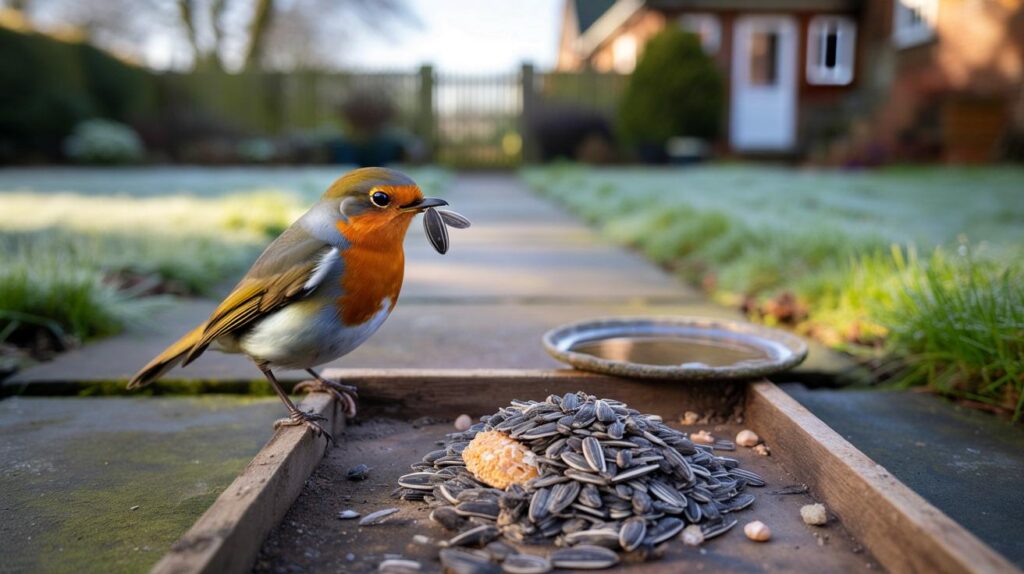
As colder mornings creep in, gardens grow quiet. Yet a modest tweak to your routine can spark a daily burst of birdsong.
Across the UK, households are reporting a simple, repeatable way to tempt robins into view. It hinges on one natural food, served low and plain, that fits the birds’ habits and keeps them fuelled when days shorten.
The one natural item robins raid trays for
Sunflower hearts sit at the top of a robin’s wish list. They are hulled, energy-dense, and easy to grip with a fine bill. Unlike whole seeds, hearts waste no energy on shelling, which matters for a small bird burning calories to stay warm.
Put a shallow tray on the ground and add 30g of sunflower hearts in the morning. Keep it simple, visible and calm.
That small pile gives several short visits across the day rather than one frantic scramble. It also mirrors how robins feed in the wild, hopping, pausing, and picking from open ground or low perches.
How to serve it so birds feel safe
Robins prefer to feed at ground level. They like clear sightlines and swift escape routes. A platform set directly on the lawn or patio suits them better than a tall tube feeder.
- Choose a flat tray with a lip so the hearts don’t scatter.
- Place it 2–3 metres from dense shrubs to reduce ambush risks.
- Stand back. Robins approach fast if humans step away by 5–6 metres.
- Offer fresh water in a shallow dish nearby for drinking and bathing.
- Lift the tray at dusk and brush off leftovers to deter rats.
Ground-level trays work because they match robin behaviour: short hops, open space, quick exits, frequent checks for danger.
What to add when the temperature drops
When cold weather bites, fat becomes crucial. Suet—sold as pellets, balls or cakes—pairs well with sunflower hearts and helps robins maintain body heat on frosty mornings.
Mix that keeps energy up
Scatter a handful of suet pellets with the hearts on the same tray. The soft texture suits a robin’s bill, and the high fat content offsets overnight energy loss. Replace damp or mushy suet after rain to avoid mould.
How much to put out, and when
Start modestly and adjust to demand. A simple routine builds trust and reduces waste.
| Time of day | Portion | Why it works |
|---|---|---|
| Early morning | 20–30g sunflower hearts | Replenishes energy after the coldest hours |
| Mid-afternoon | 10–15g sunflower hearts + small handful suet | Top-up before dusk, supports evening thermoregulation |
| Breeding season | Small, frequent portions | Better for adults making repeat trips to the nest |
If hearts vanish within minutes, increase by 5–10g. If you find leftovers at dusk, reduce the next day. Regular timing helps robins predict safe feeding windows and return confidently.
Common mistakes that send robins away
- Burying trays in shrubbery, which encourages surprise attacks by cats.
- Using deep bowls; robins prefer open, shallow feeding surfaces.
- Leaving soggy mix to spoil; damp food grows mould that birds avoid.
- Putting out salted or flavoured foods; stick to plain, natural ingredients.
Costs and quick numbers that matter
Sunflower hearts come in bags from 1kg to 12.75kg. For a small garden, a 1kg bag can last 3–5 weeks if you offer 25–40g per day for a few visiting robins. That spread covers days when the weather sends activity up or down. Store the bag in a dry box to protect the oils and keep the aroma fresh.
Suet products keep well if cool and sealed. Break larger cakes into thumb-sized chunks to reduce theft by larger birds and to make portion control easier.
Signs your set-up works
Robins appear singly at first, often landing on a fence or low post to scan the area. Within days, they begin making multiple short visits, usually at first light and again before sunset. You may notice a second bird waiting nearby; territorial nudges are normal. Keep two small trays two metres apart to reduce squabbles.
Food add-ons that fit robin diets
While sunflower hearts remain the star, variety supports different seasons and behaviours. Keep add-ons occasional and small.
- Softened raisins: soak briefly, then drain; use in tiny amounts.
- Mealworms: live or dried (re-hydrate dried with warm water); ideal during breeding.
- Crushed peanuts: only ground finely to avoid choking; never salted.
Hygiene and safety that protect birds
Wash trays weekly with hot water and a mild, bird-safe disinfectant. Rinse and dry fully. Move the tray a metre or two every few days to disrupt droppings build-up and break parasite cycles. Fit bell collars to roaming cats and avoid feeding dense cover where surprise pounces occur.
Why sunflower hearts beat whole seed for robins
Hearts remove the shell barrier. That saves time and energy, two currencies that small birds trade minute by minute. The high oil content supports basal metabolism in cold air. The clean, pale kernels also signal freshness; grey, dusty or rancid hearts deter visitors and can cause illness, so check for smell and colour before serving.
If you want visits daily, add routine
Set a two-minute ritual: scatter, step back, note what’s left at dusk. Keep a small notebook. After a week, you will see patterns by hour and weather. Adjust servings by 5g increments and log the change. This quiet habit trims waste, saves money and stabilises bird traffic.
Extra tips for a richer garden moment
Pair the tray with a low perch—an old branch or short stake—about half a metre away. Robins often land, scan, then hop to feed. Offer a shallow bath no deeper than 3cm, refreshed daily; birds drink first, then bathe if the coast stays clear. On icy mornings, add a ping-pong ball to the water so a patch keeps moving and stays unfrozen.
If you have children at home, turn feeding into a five-minute nature check: count visits in ten-minute slots, rate the weather, and draw the best moment of the day. These small observations keep interest alive and teach careful stewardship—one tray, a handful of hearts, and the familiar flash of red returning, again and again.



Worked! Two days and a robin on the patio—30g on a flat tray did the trick.
Genuine question: doesn’t ground feeding just invite rats and neighborhood cats? The piece says lift the tray at dusk and keep it 2–3 metres from shrubs, but is that really sufficient in a dense urban yard?