
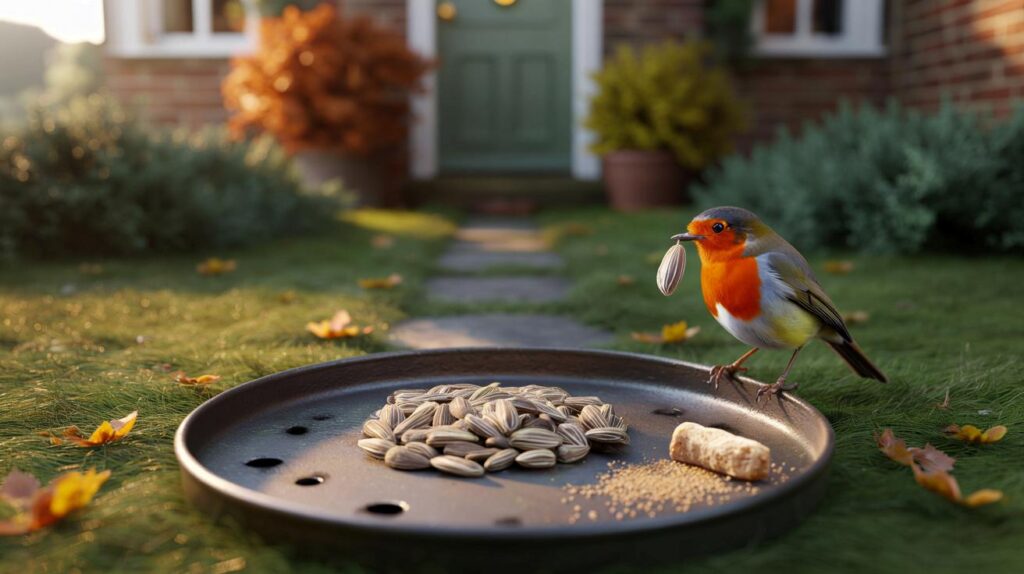
Autumn hedges rustle, mornings sharpen, and your lawn suddenly feels watched. Small changes outdoors can trigger daily visits.
Across Britain, gardeners report a surge of red-breasted guests as temperatures dip and daylight shortens. Food grows scarce in leaf litter and turf, so quick, reliable calories decide where robins spend their daylight hours. With one simple change to how you feed, you can turn fleeting sightings into regular drop-ins.
Why robins appear when the weather turns
Robins defend small territories year-round and hunt close to the ground. They need frequent, energy-dense mouthfuls to stay warm and alert. As worms retreat and insects slow, birds switch to safe, high-value foods they can grab fast, then retreat to cover. Your garden can provide that pit stop.
Unlike many finches, robins avoid hanging feeders. They prefer flat, open surfaces at ankle height where they can snatch and dash. That single trait explains why some gardens brim with visits while neighbours see none.
The 1 natural tray item that flips the switch
Sunflower hearts — the shell-less kernels — are the simplest, natural trigger for repeat robin visits. They pack fats and proteins, they’re soft enough for a robin’s fine bill, and they require no cracking or fiddling. Birds can grab a seed and vanish to a perch in under two seconds. Keep them dry and accessible, and you create a dependable refuelling point.
Place a low, open tray on the ground and offer 30–50 g of sunflower hearts daily; top up in two small servings.
Consistency matters. Feed at roughly the same times, early morning and late afternoon. Within a week, a territorial robin will learn your schedule and patrol the spot.
How to present it so robins feel safe
- Use a shallow tray 2–5 cm deep with drainage holes to keep kernels dry.
- Set it at ground level within 1–2 metres of dense shrubs for a quick bolt-hole.
- Rake away fallen leaves beneath the tray so birds can see approaching predators.
- Offer a small pinch first; once visited, increase to a level tablespoon per feed.
- Clear leftovers at dusk to deter rodents and foxes.
Robins choose ground or platform feeding over hanging tubes; match their behaviour and your success rate jumps.
What to add when frost bites
On very cold days, boost the mix with suet pellets. Suet delivers fast-burning fat that keeps birds active through chilly mornings. Scatter a modest handful on the same tray, not mixed into the hearts, so shy visitors can pick their preferred bite and leave quickly.
Costs, quantities and a simple 7‑day plan
Small changes can feel expensive, yet this routine stays modest if you buy smart and feed little and often.
| Feed | Typical cost (UK, per kg) | Best use | Notes |
|---|---|---|---|
| Sunflower hearts | £3–£6 | Daily staple | Soft, high-energy; store airtight to prevent damp clumping. |
| Suet pellets | £2–£4 | Cold snaps | Offer sparingly; breaks easily for quick grabs. |
| Dried mealworms | £10–£18 | Treats | Soak briefly to soften; use as an occasional lure. |
Seven-day starter routine:
- Day 1–2: Put 1 tablespoon of sunflower hearts out at dawn; remove any leftovers by dusk.
- Day 3–4: Add a second tablespoon at 3–4 pm; keep the tray in the same spot.
- Day 5–6: Scatter three or four suet pellets beside the hearts during colder afternoons.
- Day 7: Hold steady. If kernels vanish in minutes, add an extra teaspoon next day; avoid overloading.
Common mistakes that push robins away
- Hanging-only feeding: robins rarely cling to tubes; provide a platform or ground tray instead.
- Exposed sites: trays in open lawns leave birds nervous; place near cover without burying it in shade.
- Big piles of food: large heaps attract pigeons and rats; offer small, timed servings.
- Stale, damp seed: wet hearts grow mould; use drainage and refresh daily.
- Wrong foods: avoid salted peanuts, bread, milk, and desiccated coconut; they harm or dehydrate birds.
Hygiene, health and pet safety
Clean the tray twice a week with a mild, bird-safe disinfectant and rinse thoroughly. Rotate the feeding spot by a metre every fortnight to prevent a build-up of droppings under favoured perches. Wash hands after handling feeders. If you spot sick birds — fluffed plumage, lethargy, swollen eyes — pause feeding for a few days and clean the area before resuming.
House cats complicate ground feeding. Fit a quick bell collar on outdoor cats, and position the tray where cats cannot hide within pouncing distance. A metre of open ground in front of the tray gives robins vital reaction time. Raise the tray to 30–40 cm on a low platform if cats patrol your borders, while keeping the open, flat surface they prefer.
How to time your feeding to the robin’s clock
Robins sing before dawn and feed first light. A small early serving captures that hunger window. A second serving two hours before sunset suits their last burst of activity. Winter daylight can be as short as eight hours in parts of the UK, so a clear schedule helps birds budget their energy.
Extra ideas for keen garden watchers
Trial a two-tray layout
Place a “quiet” tray near shrubs and a “public” tray nearer the path. Note which gets visited more over a week. Many robins pick the quiet tray, while bold birds sample both. Move the less-used tray by 50 cm every two days until visits balance.
Stretch your budget with smart buying
Smaller bags cost more per kilo. If storage allows, a 10–12.5 kg sack of sunflower hearts often halves the unit price. Decant into sealed tubs with silica gel packets to keep moisture out. At 40 g per day, a 10 kg sack lasts about 250 days for one robin territory.
Bring water into the mix
A shallow dish with 2–3 cm of fresh water near the tray increases stopover time. Change it daily in winter, and in freezing spells float a ping‑pong ball to slow ice forming. Keep the water dish two metres away from food to reduce contamination.
One low tray, a handful of sunflower hearts, and a steady routine can turn chance encounters into daily visits.
Once a robin trusts your garden, you may spot courtship feeding in late winter, juvenile birds by early summer, and even brief dusk visits after rain. Keep portions small, keep the routine steady, and your visitors will keep coming, whatever the forecast says.



Followed the dawn/late‑afternoon schedule with sunflower hearts on a low tray—got a resident within 4 days. Consistency was definately the key. Nice touch on clearing leftovers at dusk; reduced the pigeon mob here. Thanks for the practical, no‑fluff adivce.