
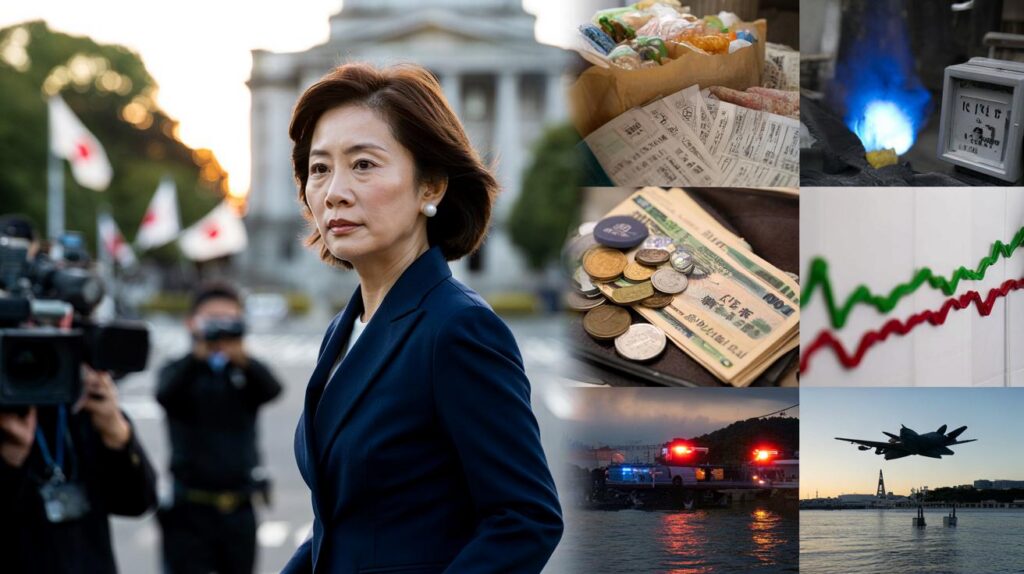
Markets jumped, allies leaned in and rivals recalculated as Tokyo prepared for a rapid handover and a bruising first week.
That mood now turns into a daunting to‑do list, with cabinet picks, a budget fight and a big visit from the White House looming.
Historic vote and what it means
Sanae Takaichi secured the premiership with 237 votes in Japan’s Lower House and 125 in the Upper House, clearing the majorities in both chambers. Parliament’s choice makes her the country’s 104th prime minister and the first woman to hold the post. She is also the fourth leader in five years, underscoring a period of churn at the top.
362 parliamentary votes ended a 150‑year wait for a woman in Japan’s top job, but they also hand her a blistering in‑tray.
She is expected to be sworn in on Tuesday evening, after naming a cabinet that will travel to the Imperial Palace for the formal attestation ceremony. The ruling Liberal Democratic Party (LDP) wants her to project unity after funding scandals and slumping trust damaged its brand.
Cabinet choices signal the economic fight ahead
Local reporting points to a line‑up designed to calm markets and manage Washington. Satsuki Katayama is tipped for finance minister, which would be another first for women in Japan’s economic establishment. Shinjiro Koizumi is floated for defence, while Ryosei Akazawa is expected to continue at trade, a sign that tariff negotiations with the United States will press on.
- Satsuki Katayama: poised to be the first female finance minister, already chairs the LDP’s finance and banking commission.
- Shinjiro Koizumi: likely defence chief, a 44‑year‑old rising face tasked with alliance management in a prickly era.
- Ryosei Akazawa: continuity at trade, after repeated trips to Washington to shape a tariff deal.
Personnel choices double as policy signals: continuity on trade, a steadier hand on the budget and a young face in defence.
Abenomics is back in the spotlight
Takaichi backs the late Shinzo Abe’s playbook: government spending to support demand, tax cuts to ease pressure on households and pro‑growth reforms. She has criticised recent interest rate hikes by the Bank of Japan, arguing higher borrowing costs raise prices for consumers by forcing businesses to pass on higher financing costs. Japan’s debt remains among the highest in the developed world, so new spending will invite scrutiny even as voters demand relief from rising prices.
Inflation has gnawed at pay packets and household confidence. A supplementary budget for the 2025 fiscal year is near the top of her agenda, alongside measures to tackle weak demographics and to stabilise energy bills.
| Issue | Immediate step | Biggest risk |
|---|---|---|
| Cost of living | Targeted tax cuts and price support in a 2025 extra budget | Debt sustainability and a weaker yen if credibility wobbles |
| Trade with the US | Lock in a tariff deal acceptable to manufacturers | Demands to spend more on defence or curb Russian energy purchases |
| Political trust | Transparent cabinet, disciplinary action on fundraising scandals | Voter drift to hard‑right protest parties |
| Electoral reform | Advance a bill to reduce Lower House seats by 10% | Internal LDP resistance and coalition tensions |
Washington first, but watch Beijing and Seoul
A visit by US President Donald Trump later this month will test the new leader within days. Trump values personal rapport and has bristled at the security treaty’s burden‑sharing. Takaichi’s instincts are hawkish and pro‑alliance, and she has already been praised by Trump online. She will need to tick off trade, defence spending and technology cooperation without giving away leverage needed at home.
China’s foreign ministry “noted” her election and called it an internal matter for Japan, while pressing Tokyo to honour positions on history and Taiwan. Takaichi has described Taiwan as a cherished friend and earlier this year avoided a personal visit to the controversial Yasukuni Shrine, sending an offering instead. That move telegraphed caution to neighbours without softening her stance on security.
First impressions abroad will shape room for manoeuvre at home: one misstep on tariffs or Taiwan could drain political capital fast.
Gender politics, representation and scepticism
Japan ranks 118th of 148 countries in the latest global gender parity survey. Leadership remains male‑dominated, and targets for women in senior roles have slipped beyond their original deadlines. Many young women welcome the symbolism of a female prime minister, yet question whether Takaichi’s conservatism will change their daily reality.
She has supported male‑only imperial succession, opposed separate surnames for married couples and rejected same‑sex marriage. Students interviewed in Tokyo voiced admiration for the trailblazing moment yet warned against treating gender as a shield from scrutiny. Representation matters; policy will determine whether it moves the dial.
Trust, scandal and the map to survival
This was a parliamentary handover, not a direct vote by 120 million citizens. Public anger over fundraising scandals still smoulders. Takaichi must show accountability inside the LDP and deliver near‑term relief on prices to prevent further defections to fringe parties. She has also signalled outreach across party factions by offering roles to rivals from the leadership race, a unity play that could lower internal sniping as tough bills move through Diet committees.
The person behind the podium
The new premier brings an unusual backstory to Nagatacho. A former television host and heavy metal drummer, she once packed extra sticks because she broke them mid‑set. She scuba dives, and her cherished Toyota Supra now sits in a Nara museum. Denied university funding by parents who believed higher education wasn’t for girls, she paid her own way. She has helped raise three stepchildren and recently cared for a husband recovering from a stroke. Allies say those experiences hardened her resolve and keep her focused on practical outcomes.
What this could mean for your wallet
If inflation cools by just 2 percentage points from current levels, a household spending ¥30,000 a month on groceries would keep roughly ¥600 in its pocket. A temporary energy rebate could take more off winter bills, although that relief depends on the shape of the 2025 package and the yen’s path. If interest rates stay higher, mortgage holders may face steeper monthly repayments, even as savers earn a little more on deposits. The balance Takaichi strikes between support and discipline will decide which side of that ledger wins.
How the next 100 days might unfold
- Week 1: cabinet named, attestation ceremony at the Imperial Palace, first cabinet meeting sets budget markers.
- Weeks 2–4: Washington visit, tariff wording finalised, signals on defence outlays and technology controls.
- Month 2: submission of a supplementary budget aimed at price relief and demographic measures.
- Month 3: electoral reform bill to trim Lower House seats, discipline actions on LDP scandals if probes conclude.
Japan chooses its prime minister through parliamentary votes: the Lower House nominates, the Upper House concurs or contests, and a joint session resolves differences. This time, both chambers provided clear majorities, smoothing the path to a swift handover. The attestation ceremony formalises cabinet authority before policy work begins in earnest.
For readers weighing household decisions, consider a simple rule of thumb. If wages rise below price growth, shift savings towards short‑term liquidity and reduce variable‑rate debt where possible. If the new budget caps energy costs or offers targeted tax relief, re‑allocate those gains to an emergency fund first, then to high‑interest liabilities. The political headlines are dramatic; the practical gains will arrive in increments, measured in the monthly sums that either squeeze or spare your budget.



Does a parliamentary handover with 362 votes actually give her a mandate from citizens, or just from factions? Show me grocery prices falling before the slogans, pls.