
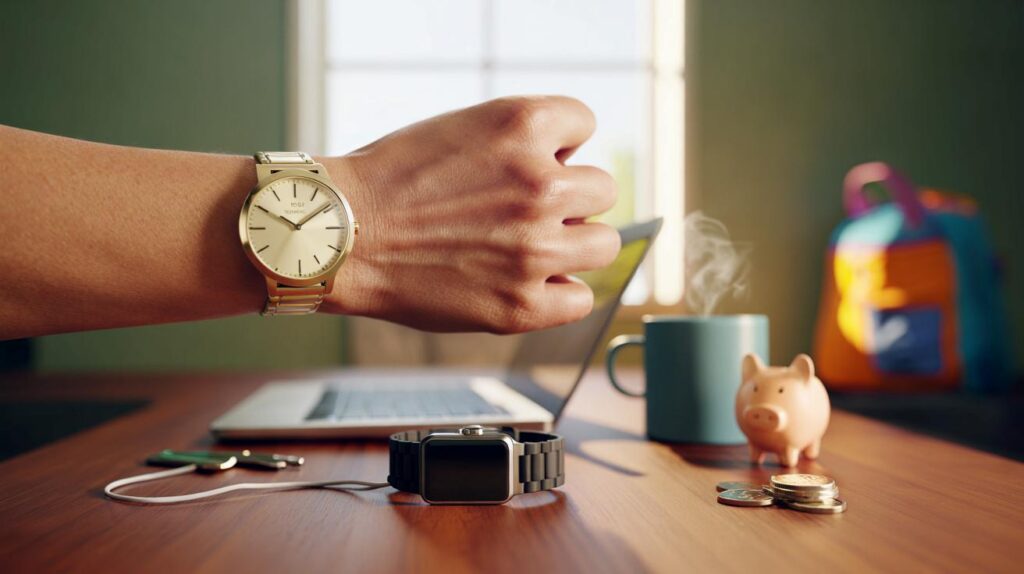
Rising bills and notification fatigue are nudging people to rethink timekeeping, trading buzzing screens for quiet wristwear that simply works.
If you’ve ever wondered whether a smartwatch is solving problems you don’t really have, a £42 gold‑tone bracelet watch from Next is making that question harder to ignore. It promises everyday practicality, smart looks, and zero nightly charging—precisely the mix many busy people say they want right now.
The £42 proposition
Next’s gold‑tone round‑dial bracelet watch targets the sweet spot between cost, convenience and style. For less than the price of a replacement smartwatch strap, you get a piece that tells the time at a glance, pairs with jeans or a blazer, and doesn’t demand software updates or app permissions. The bracelet sits flat against the wrist, so it won’t snag on sleeves or feel cumbersome during school runs, commutes or supermarket dashes.
One price, one purpose: a £42 quartz watch you can wear daily without charging, syncing or babysitting.
Gold‑tone finishes flatter most skin tones and play nicely with mixed jewellery, so you won’t spend mornings swapping accessories. The silhouette is deliberately classic—neither oversized nor fiddly—so it reads clearly in low light and doesn’t feel tied to a micro‑trend you’ll regret by Christmas.
Style that looks right everywhere
School run to desk
For people juggling children, work and home, consistency matters. A clean dial and bracelet keep things polished without shouting for attention. It’s the kind of watch you can wear to a meeting, then straight to the playground, and still feel put together.
Why gold‑tone works
Polished gold finishes bounce warmer light than silver, which can look stark under LEDs or on overcast days. That warmth photographs well—useful for graduations, weddings or the odd family selfie. There’s also no leather strap to stain with hand‑washing, rain, or spilled coffee.
What you gain by losing the screen
Battery life you forget about
Quartz watches typically run for years on a single coin‑cell battery. When it’s time, high‑street repairers can swap it in minutes for the price of a takeaway. No cables, no chargers, no bedtime routine for your wrist.
Fewer nudges, calmer days
Notifications pull attention dozens of times a day. A straightforward watch helps you check the time without falling into messages, reminders and calories. For many parents and professionals, that calmer cadence matters more than another bar chart.
Time on tap, silence by default: a traditional watch gives you the hours without hijacking your headspace.
Durability built for family life
Bracelet links handle hand‑washing and showers better than untreated leather. Metal also shrugs off the bumps of daily life—door frames, prams, rucksacks—far better than polished screens with edge‑to‑edge glass.
What you give up without a smartwatch
This isn’t a miracle. You lose wrist‑based payments, detailed fitness tracking, and guided workouts. If you need GPS mapping from your wrist, ECGs, or fall detection, a smartwatch still wins. But if you mostly want the time, a date check and a reliable accessory, the simpler choice can be the better tool.
If you live by heart‑rate zones, tap‑to‑pay, and wrist‑first texts, stick with a smartwatch. If you live by a diary and a to‑do list, a £42 analogue may be all you need.
Real‑world costs compared
Prices vary by model and retailer, but typical UK figures show the gap many households feel.
| Up‑front price | £42 (Next gold‑tone bracelet watch) | ~£220–£800 (Apple Watch range, depending on model and finish) |
| Charging | Not required | Daily or near‑daily |
| Battery replacement | Coin‑cell, ~£5–£15 via high‑street repairers | Battery service from around £85+ when capacity degrades |
| Longevity | Years with occasional battery changes | Tied to software support and battery health |
| Strap wear | Bracelet links; inexpensive link or pin replacements | Straps often £40–£100+ for official options |
None of this says a smartwatch is bad value; it says the value depends on how you use it. If you charge nightly, replace straps annually, and pay for repairs, the three‑year bill can dwarf a simple analogue alternative.
Fit and care tips for a bracelet watch
- Size the bracelet properly. Ask an in‑store colleague to remove links so it sits snug but not tight—one finger should slide under.
- Keep it dry after hand‑washing. Pat with a towel to protect plating and stop residue sitting between links.
- Avoid spraying perfume or hair products directly on the metal; apply first, then put the watch on.
- Wipe with a soft microfibre cloth weekly. For tougher grime, use a lightly damp cloth and dry straight away.
- Plan a battery swap every few years. Keep a note of the battery type inside the case for quick replacements.
Who this suits
People who want a dependable, good‑looking timepiece without digital overheads will feel the benefit immediately. Parents who bounce between nursery runs and meetings get clarity at a glance and hardware that tolerates constant motion. Anyone reassessing screen time may appreciate the quiet focus a traditional watch brings.
Who should still pick a smartwatch
If you train with structured zones, need wrist‑based payments in gyms or on runs, or rely on safety features like fall detection, a smartwatch remains the sensible pick. Medical guidance features and deep ecosystem integrations are strengths analogue watches don’t try to match.
A small shift with big knock‑ons
Switching from a smartwatch to a simple watch can change your daily rhythm. People often report fewer reflex checks of messages, sharper attention in meetings, and a gentle reduction in screen time. That shift can free a surprising amount of mental bandwidth, especially for those already time‑poor.
Extra context if you’re deciding
Right to repair and waste
Analogue watches are easy to keep alive: a new battery and an occasional gasket or pin. That simplicity reduces electronic waste and avoids retiring a device just because software support ended. It’s also kinder to budgets during cost‑of‑living pressures.
Plating, wear and expectations
Gold‑tone plating isn’t solid gold. It will last longer if you avoid abrasives and chlorinated pools. If you wear it hard every day next to metal bangles, expect micro‑scuffs over time. The trade‑off is obvious: you pay £42, not hundreds, and you get a look that carries across outfits without fuss.
A quick self‑test
Ask yourself three questions before you buy. One: how often do you actually use advanced smartwatch features? Two: would you miss contactless payments on your wrist if your phone is in your pocket anyway? Three: would a calmer, charge‑free routine feel like relief? If you answered yes to the last one, Next’s gold‑tone bracelet watch makes a compelling case.



Honestly, this is the nudge I needed. My Apple Watch became a notification sprinkler—useful, but exhausting. A £42 bracelet watch that I never charge and that doesn’t demand updates sounds blissfully low‑maintenance. I don’t track VO2 max or need wrist‑pay; I mostly check the time between meetings and nursery pick‑ups. If the bracelet sits flat and the dial’s clear, that’s 90% of my use‑case. Fewer notifcations, fewer rabbit holes, more focus. Tempted.
Legit question: what’s the actual water resistance and how does the gold‑tone plating hold up after a year? I’ve seen some high‑street pieces fade fast. Also, can any repair shop swap the coin‑cell without voiding anything?