
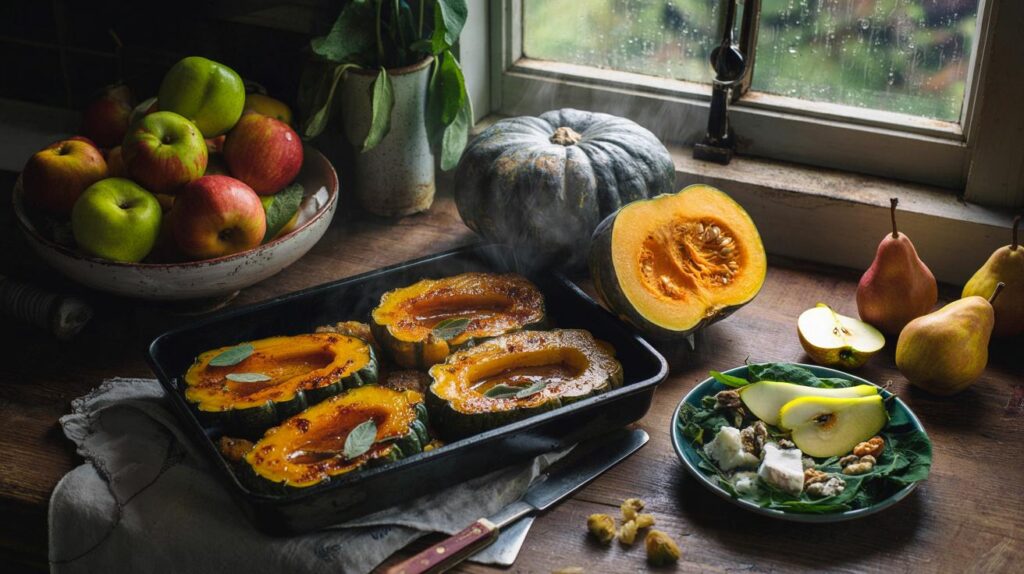
Dark coats come out, clocks edge back, and the weekly shop shifts from tomatoes to things with heft. Autumn in Britain asks a simple question: what’s for dinner when the rain is polite but persistent and the heating clicks on at 6pm? Markets are full of squash shaped like lanterns, apples in bruised reds, pears that smell like flowers and butter. The timing is kind. So is the price. The trick is turning that kindness into meals that feel like a hug, without fuss.
I walked through the Saturday market with a hot tea, breath fogging, the fishmonger clattering ice into trays. The greengrocer had stacked Crown Prince squash like grey-green moons, and a crate of Cox apples winked in the weak sun. A kid picked the biggest pear and weighed it in his hand, as if it might float. I lifted a knobbly Delicata and it felt dense, promising. The air smelled of damp leaves, fried bacon from a van, a hint of hay.
On days like this, cooking feels more like keeping company than a task. Back home the oven door thudded shut and the radiators ticked. A handful of sage, a slab of butter, that’s enough to turn a squash sweet and glossy. The apples would find their own story. One pan, one tray, one bowl. What happens next is dinner.
Squash season: the low-effort, high-comfort anchor
Squash is the autumn workhorse, the ingredient that behaves even when you don’t. Halve it, scoop the seeds, and roast cut-side down until the skin slumps and the edges caramelise. Inside you’ll find flesh that’s both silky and sturdy, ready to be spooned into soup, folded through pasta, or piled onto toast with ricotta and chilli oil.
On a Tuesday, I slice Delicata into half-moons, toss with rapeseed oil, salt, and a pinch of smoked paprika, then spread it on a hot tray. Twenty-five minutes at 220°C and it blisters in all the right places. A knob of butter, a few torn sage leaves, the last squeeze of lemon. I rake leftover feta through it and eat from the tray, standing. It tastes like I planned.
Varieties behave differently. Crown Prince roasts into velvet, Butternut stays neat and sweet, Kabocha flirts with chestnut. Roast hot and don’t crowd the tray, so steam has nowhere to hide. Salt early to draw out surface moisture; that’s how you get the **golden, nutty crust**. For soup, keep a few cubes back and drop them in at the end, so every spoonful has texture, not just puree. It’s a small thing that makes a pot feel like supper, not baby food.
Apples beyond crumble: tart, sweet, savoury, quick
Here’s a method that never lets me down: roast the apples before they meet the crumble. Peel and chunk Bramleys or a mix of Bramley and Cox, toss with a little sugar and lemon, then roast in a shallow dish until they start to slump. Spoon on an oat-and-flour rubble rubbed with cold butter and a sharp pinch of salt. Back into the oven until the top turns caramel-brown and the edges fizz.
We’ve all had that moment when a crumble sinks into a pale, wet blanket. It’s not you; it’s steam. Give the fruit a head start and you dodge the soggy middle. Try a savoury spin for Sunday lunch: thin apple slices under a pork loin roast, or a tray of sausages over cider-splashed apples and onions. Let’s be honest: nobody actually does that every day. But once this month? You’ll remember it.
Apples love contrast. They wake up cheese, cut through fat, and make ribbons of cabbage taste like more. Slice them into a celeriac remoulade, or fry them with thyme to top grilled toast with cheddar.
“Bramley is Britain’s quiet superpower,” a grower told me once. “It collapses exactly when you need it to.”
- Fast lunch: grated apple, lemon, and parsley folded into tinned mackerel.
- Five-minute snack: Cox slices with a smear of peanut butter and a drizzle of honey.
- Pan sauce: deglaze roast chicken bits with cider, add sliced apples, bubble until glossy.
- Breakfast jar: stewed apples with oats and yoghurt; a pinch of cinnamon, not a spoonful.
- Sweet finish: quick skillet “tatin” with puff pastry and caster sugar; serve warm with cream.
Pears with backbone: buttery, perfumed, weeknight-friendly
Pears can be shy, then suddenly perfect for about an hour. Catch them in that window and you barely need a recipe. Slice Conference pears into a pan with a touch of butter, a drip of maple, and a grind of pepper. Let them take colour, then tumble over bitter leaves, walnuts, and a little Stilton. Warm fruit, cold salad, the kind of balance that makes a plate feel grown-up.
Underripe pears are fine if you know the trick. Poach them gently in black tea with orange peel, star anise, and a spoon of sugar. The tea’s tannin gives structure while the heat coaxes out perfume. Or slide halves into the oven snug against a splash of white wine and a spoonful of quince or apricot jam. Twenty minutes later they’re spoonable and ready for yoghurt or ice cream. A paper bag on the counter ripens the rest while you sleep.
Pear desserts don’t need fuss. A thin sheet of puff pastry, fanned slices, a brush of melted butter and sugar, and you’ve got something smart without rolling pins and swearing. For weeknights, try a pan sauce: sear pork chops, set aside, cook pear wedges in the same pan, then deglaze with cider and a dab of Dijon. Bubble until syrupy and swipe everything back through the sauce. Call it grown-up gravy and watch plates come back clean.
A cook’s rhythm for darker days
Autumn cooking isn’t about big gestures. It’s a rhythm: roast something while you answer an email, simmer a pot while you fold laundry, build a bowl from things you’ve already made. Start with one tray of squash, then steal from it for days—into a farro salad with herbs, onto a pizza with red onion, into a soup with coconut milk and chilli. Apples and pears slide into the gaps, bright where the squash is deep, crisp where it’s soft. Cook once, eat thrice, and let good produce do most of the talking. The weather has a say, of course. So does your appetite. The point is that British autumn gives you range—sweet, savoury, sharp, mellow—and the confidence to cook like you live, not like a TV schedule.
| Point clé | Détail | Intérêt pour le lecteur |
|---|---|---|
| Choose by variety | Crown Prince for velvet soup, Delicata for quick roasting, Bramley for collapse, Cox for crunch, Conference for salads | Picks the right produce for flavour and texture without trial and error |
| Heat and space | Roast hot at 200–220°C and avoid crowding so edges caramelise, not steam | Delivers better browning, deeper taste, and fewer soggy trays |
| Cook once, use twice | Batch-roast squash; pre-roast apples; poach pears to keep in the fridge | Saves time midweek and turns leftovers into fast, satisfying meals |
FAQ :
- What squash is best for soup?Crown Prince or Kabocha blend silky and rich, with a deeper flavour than Butternut.
- Can I eat squash skin?Yes for Delicata and Kabocha when well roasted; peel tougher skins like Crown Prince after cooking.
- Which apples hold their shape when baked?Cox, Braeburn, and Russet keep definition; mix with Bramley for a soft-saucy finish.
- How do I ripen pears faster?Leave them at room temperature in a paper bag with a banana; chill once ripe to pause.
- Any savoury ways to use apples and pears?Try cider-pan sauces, cabbage and apple slaw, or pears with Stilton and walnuts on toast.



Loved the idea of roasting apples before crumble—it finally explains my soggy middles. Tried Bramley + Cox and it was bang-on. One quetion: if I pre-roast the fruit, how long should the oat topping bake so it stays crunchy without overdoing the apples?