
Charity shops are emptying faster than ever, and the UK’s feeds are full of “new to me” hauls. The thrill is real, but so are the traps: relisted fast fashion, blurry photos, “vintage” that isn’t. The boom is on. The game is finding the good stuff without getting played.
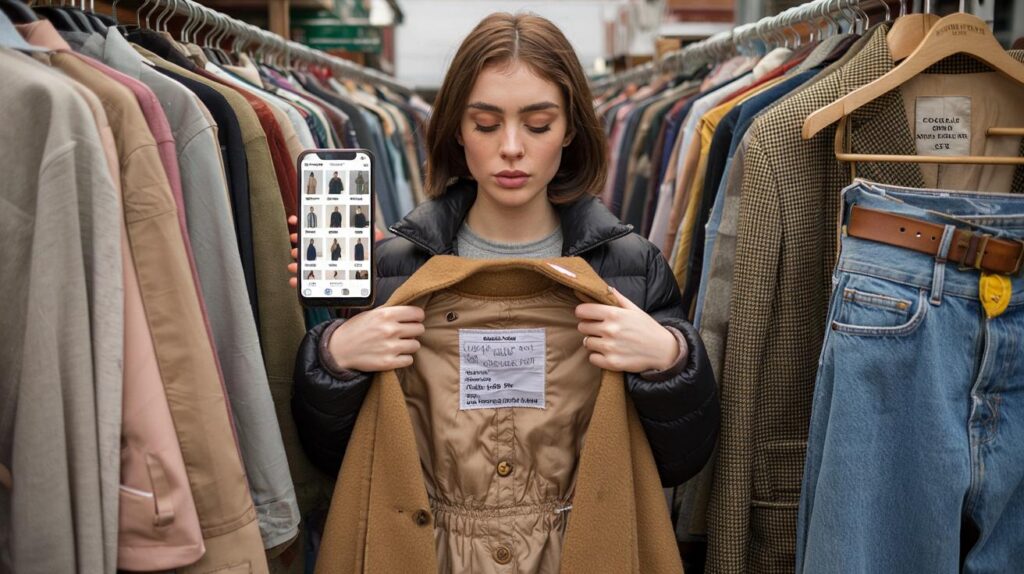
The queue outside a North London charity shop was already forming when the volunteer rolled up the shutter. I watched a student in a puffer pull out a camel coat, check the lining with quick fingers, and smile like she’d won something. On the bus back, three teenagers were swiping Vinted like it was TikTok, bouncing between a Barbour and a “Y2K” crop top that looked suspiciously new. You could feel the tempo of it — scroll, thrill, add to basket, second thoughts.
I’ve rarely seen fashion feel this communal yet this personal. Listings ping at 2 a.m. Sellers flip seasons like DJs. Prices move, mood moves, fingers hover. One small nudge and you’re in. The real treasure isn’t where you think.
Why Britain’s gone big on second-hand
Rising prices, climate worry, and a taste for individuality have turned resale into a daily habit. People want the story as much as the stuff. A Made in England label, an old care tag, a lining mended with neat stitches — these details read like honesty in a world of synthetics and slogans.
Platforms have made the hunt ridiculously convenient. Vinted, eBay, Depop, Facebook Marketplace, even brand-specific Facebook groups — the UK scrolls all of them. Charity retailers now list online as casually as they stack rails. Bargains do land. So do duds. The line between “thrifted gem” and “last season cast-off” is thin, and it shifts by the week.
There’s also a cultural reset happening. After years of uniform micro-trends, buyers are chasing pieces that feel lived-in and built to last. The metrics back it: resale listings have multiplied, and charity retail has kept pace with footfall and clicks alike. Less landfill, more longevity. That’s the ideal. Reality is messier, which is where smart shopping comes in.
How to actually snag real bargains online
Build saved searches like a pro and let alerts do the work while you sleep. Use brand + fabric + era, not just “vintage”. Think “Margaret Howell wool 2010s” or “Barbour Bedale 36 sage”. Misspellings are gold: “Arket/Arkett”, “Barbor”, “Levis 501s”. Add “repair”, “worn”, “hemmed” to find honest listings that scare others off — these can be simple fixes with a tailor and half the price.
Time your pounce. Early morning and late night uploads often slip under the radar. Ask for measurements, not sizes, and compare to a garment you already own. We’ve all had that moment when a “medium” arrives and fits like a children’s T-shirt. Negotiate kindly, bundle items to cut postage, and walk away if it smells wrong. Let’s be honest: nobody actually does that every day.
Spot the fast-fashion flips by reading fabric and finish, not adjectives. If a seller calls everything “vintage Y2K” and most tags say polyester, swipe on. Hunt original tags, care labels, and construction: French seams, horn buttons, bound buttonholes, metal zips, pattern matching at seams. That’s craft you can trust.
“I stopped chasing hype words and started searching for fabrics,” says Maya, a London reseller who lists at midnight. “Wool, linen, cotton twill. That’s when the keepers appear.”
- Check fibre content first. Natural blends age better and resell better.
- Zoom into stress points: elbows, crotch seams, pocket corners.
- Ask for side-on photos to spot bad tailoring or twisted hems.
- Use reverse image search to catch stock-photo dropshippers.
- Favour sellers who photograph flaws. That’s trust, not a drawback.
Dodging the traps without losing the thrill
Fast-fashion masquerades as “preloved” by piggybacking keywords. Look past the title into the bones of the garment. If a “heritage blazer” has weightless shoulder pads and plastic buttons with shiny mould lines, it’s theatre. Genuine older pieces carry their age in the lining, the label typography, the way the cloth falls. You’ll start to see it like a second language.
Beware micro-trend churn. Today it’s “blokette” or “quiet luxury”, tomorrow it’s something else with a vowel missing. Trend-led hauls tend to boomerang back to resale within a month. Treat your feed like a shop window, not a diary. A simple question helps: will I wear this 30 times, with shoes I already own? If the answer needs a new shoe, it’s probably a no.
Price anchoring can trick you. A blazer “RRP £280” sounds generous at £70, but if the cloth pills after two wears, the number meant nothing. Flip the maths to cost-per-wear and repair potential. *Can this piece earn its place?* Take a deep breath, read the fibres again, and if it doesn’t click, let it float back into the stream. Your best bargain is often the one you didn’t buy.
Back to the devices where the quiet victories happen. Curate your searches, prune your wishlists, learn the makers that actually fit your life: Arket trousers that hold a crease, an old Jaeger coat that shrugs off rain, a 90s leather belt with a brass buckle that softens with each month. This isn’t nostalgia. It’s a practical way to dress well without surrendering to the churn.
Talk to sellers like humans. Ask one clear question at a time. Thank them when they send extra photos. People remember kindness and often remember you when they list again. I’ve had sellers message first with “thought you’d like this” and nail my size and taste. That’s how real gems travel — through relationships, not algorithms.
And yes, charity shops are still alive and kicking, often cheaper than apps. Try the places with odd opening hours or wealth-adjacent postcodes. Bring cash for the till, measure with your eyes, and check the sleeves and hems. Some of the best finds won’t photograph well; they’ll just feel right when you touch them.
Where this goes next
The UK’s second-hand boom isn’t a fad. It’s a new baseline: budget meets values meets style with a bit of luck sprinkled in. The more we learn to read clothes — fibres, finish, provenance — the less we feed the machine that sells us novelty. Share your wins and missteps, trade tips in group chats, and keep a light grip. The hunt should stay fun. Maybe that’s the point: clothes that carry a story invite you to write your own, slowly, piece by piece.
| Key points | Details | Interest for reader |
|---|---|---|
| Search smarter, not harder | Use brand+fabric+era, misspellings, and saved alerts; ask for measurements | Faster access to underpriced listings and better fit outcomes |
| Quality beats hype | Check fibre content, construction, and labels; ignore trend-heavy buzzwords | Longer-lasting wardrobe and stronger value for money |
| Avoid fast-fashion flips | Reverse image search, spot plastic finishes, scrutinise seller patterns | Fewer disappointments, more genuine finds |
FAQ :
- What are the best times to nab deals online?Early morning and late-night uploads often face less competition, especially midweek. Save searches so alerts catch fresh listings while others sleep.
- How do I check if a “vintage” item is legit?Look at label typography, fibre content, and construction. Ask for close-ups of seams, zips, and lining; older pieces usually show sturdier finish.
- Are charity shops still worth it versus apps?Yes, and often cheaper. Try wealth-adjacent areas, odd hours, and smaller towns; rotate routes and go with a simple list.
- How can I avoid buying fast-fashion relisted as “preloved”?Ignore hype terms, read tags, and reverse image search. If every item in a shop looks brand new and polyester-heavy, move on.
- What’s the simplest way to decide on a purchase?Ask if you’ll wear it 30 times with items you own. If it needs extra buys to work, skip it and wait for something better.



Loved this! Already set alerts for “Barbor” and “Levis 501s” and snagged a wool jumper before breakfast 🙂 Any tips for spotting real horn buttons vs plastic when photos are meh?
Isn’t this just fuelling another kind of churn though? If everyone chases ‘Y2K’ and ‘quiet luxury’, the same landfill problem moves sideways. Show me data beyond anecdotes, pls.