
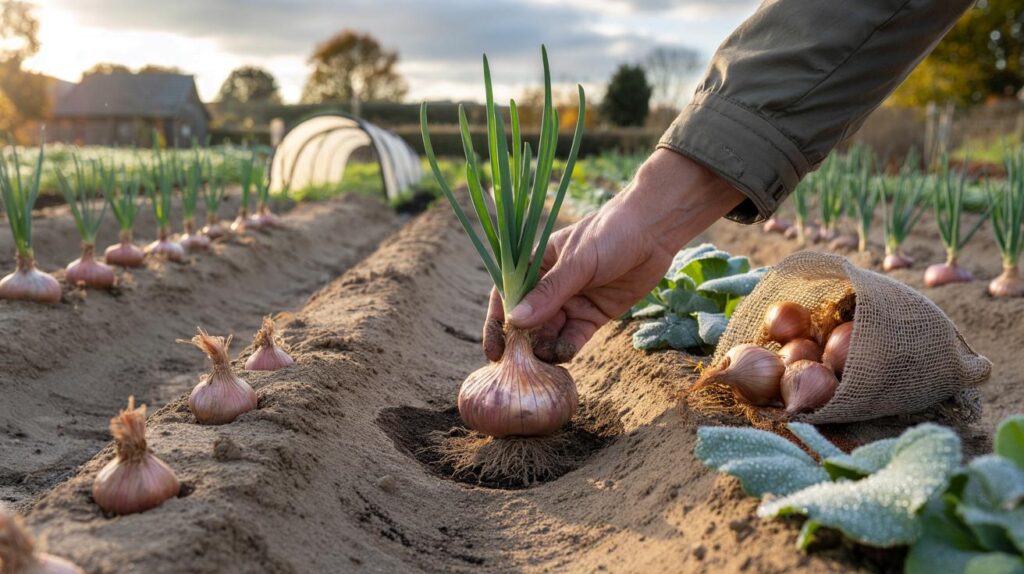
Autumn bites, kitchens crave warmth, and a small, aromatic bulb quietly sets up a delicious pay-off for patient gardeners.
A brief window remains to put grey shallots in the ground while the soil still holds a little warmth. Those extra days decide whether you lift a spring bounty or stare at an empty tray. Timing, drainage and shallow planting do the heavy lifting here.
A narrow window for grey shallots
Grey shallots, known for their silvery skins and complex, savoury aroma, need a head start before winter. Late October into early November often gives just enough mild weather for roots to anchor. Delay too long and cold, sodden ground slows growth and invites rot.
Plant while soil is workable and above roughly 7–8°C. Aim for a dry spell of two to three days after rain.
Grey types are rarer than the red or Dutch shallots you see in shops. They shine in sauces, vinaigrettes and slow-cooked dishes. Many UK gardeners grow them as sets because true seed is uncommon and unreliable for type.
Why this week matters more than you think
Grey shallots root slowly. Early rooting helps them ride out winter wet and burst away when daylight returns. With a short list of simple steps, you shift the odds firmly in your favour.
Site, soil and spacing
Drainage first, everything else second
Roots hate sitting in cold, waterlogged soil. Choose a sunny, airy bed that drains freely. Lighten heavy ground with sharp sand and mature compost. Raised rows or a shallow ridge lift the crown above winter wet and cut disease pressure.
Shallots prefer a neutral to slightly alkaline soil, pH 6.5–7.5. Avoid fresh manure; it pushes soft, disease-prone growth.
How to plant in ten minutes
- Rake the bed level and remove stones and weeds.
- Mark rows 25–30 cm apart.
- Place sets 10–15 cm apart, tip facing up.
- Set them shallow, with only 2–3 cm of soil over the shoulders.
- Firm gently with the palm to settle soil around the base.
- Water only if the bed is dry; leave damp soil alone.
Shallow planting is not a gimmick. Too deep and bulbs stall; too shallow and birds tug them out—firming prevents that.
Five pitfalls that wreck a promising row
- Burying sets deeper than 3 cm.
- Choosing shade that dries slowly after rain.
- Ignoring poor drainage in clay beds.
- Snapping the tender tip while handling.
- Planting after onions or garlic in the past three years.
Aftercare through the winter
Light protection that breathes
Lay a thin mulch of chopped leaves, straw or bracken once the soil cools. It evens out temperature swings and reduces capping. In exposed sites, a fleece or mesh tunnel keeps wind off without trapping moisture around the bulbs.
Use mesh with 0.8 mm holes from autumn to spring if allium leaf miner is common in your area. Remove it for weeding on dry days.
Water, feed and weeds
Winter rainfall usually suffices. Water only if a dry spell extends beyond two weeks and soil begins to pull from the sets. Feed lightly in March with a low-nitrogen fertiliser or a thin sprinkle of sieved compost. Keep weeds down; shallow roots dislike competition.
Pests and diseases to watch
- Allium leaf miner: adult flights in autumn and spring; mesh covers reduce risk.
- Birds: firm the soil and, if needed, lay sticks along rows to deter pulling.
- White rot: a serious soil-borne disease; observe a four- to five-year rotation for all alliums.
Harvest and storage
Spot the moment to lift
By late April or early May in mild districts, foliage softens and bends. Wait until two-thirds of leaves yellow. Lift gently with a fork on a dry day and keep the skins intact.
Curing for flavour and keeping quality
Spread bulbs in a single layer under cover with good airflow for 7–14 days. Trim tops to 2–3 cm once necks are dry. Store in a cool, airy place at 5–15°C. A net bag or slatted crate works well. Properly cured grey shallots keep their perfume for months.
Target yield from 30 sets: roughly 1.5–3.0 kg, depending on soil, spacing and winter conditions.
Numbers that make the case
| Task | When | Target |
|---|---|---|
| Plant sets | Late Oct–early Nov | 10–15 cm apart, 2–3 cm deep |
| Mulch and cover | After planting | Light mulch, mesh in miner hotspots |
| Top-dress | Early March | Handful of compost per metre |
| Harvest | Late Apr–May | Lift when two-thirds of tops yellow |
| Cure and store | 1–2 weeks | Cool, dry, airy space |
Missed the slot? Your plan B
If your soil is already cold and claggy, forcing the issue rarely pays. You can still set spring-planted shallot types such as red or Dutch varieties from February in workable soil. They lack the grey shallot’s layered aroma, yet they bulk up reliably and extend your allium calendar. Keep grey shallots on your list for next autumn; mark a reminder for mid-October.
Buying sets and guarding quality
What to look for at the garden centre
- Firm, dry sets with intact tips and no soft spots.
- Uniform size, roughly walnut-sized; extremes give uneven growth.
- Named varieties like ‘Griselle’ for consistent flavour and shape.
Expect to pay £4–£6 for a bag of 30–40 sets. That outlay often returns 1.5–3.0 kg of bulbs, plus a welcome lift to sauces, roasts and salads when fresh herbs are scarce.
Turn today’s effort into future savings
Grey shallots divide into clusters. After curing, select your best-shaped, disease-free bulbs to replant next autumn. Label them and store separately from kitchen stock. This simple habit builds a strain adapted to your soil, trims next year’s bill, and safeguards supply if shops run short.
Extra tips that raise your odds
Microclimate tricks
- Warm heavy beds by laying a black membrane for a week before planting.
- On clay, form a 10–12 cm high ridge; plant on the crest for better run-off.
- In wet spells, hoe lightly after rain to break surface crust and shed water.
Pair grey shallots with quick leaves such as lamb’s lettuce between rows. You harvest the salad long before the bulbs need space, gaining a bonus crop without crowding.



Great timing guide! I set 30 grey shallot sets today, rows ~25 cm apart, 12 cm between, tips up, just 2–3 cm of soil over the shoulders. Firmed to stop the blackbirds. Hoping to lift when two‑thirds of tops yellow and cure for 10 days. Here’s to that 2 kg sweet spot.
Seven days? My clay bed laughs at deadlines. Beyond sharp sand and compost, any tricks when it stays claggy? Would a 10–12 cm ridge definately cut white rot risk, or should I wait for spring types?