
Heating is on, windows are shut, and dust thrives. Homes across Britain report faster build-up on furniture this season indoors.
Dry rooms, busy pets and constant friction turn shelves and screens into dust magnets. Many households feel stuck in a loop of wiping, only to see a fresh film by evening.
Why dust keeps coming back in hours
Dust rides indoor air currents and settles on the nearest flat surface. Dry air boosts static charge on plastics, laminates and varnished wood. Friction from a cloth builds that charge further. Charged surfaces then pull in more particles. Heating seasons hit harder because radiators dry the air and lift fine debris. A wool jumper or the brush of a cat’s tail adds even more static and movement.
Feather dusters move dust around. Sprays labelled “anti-dust” often leave a scented, oily film that attracts fluff and can irritate sensitive noses. What you want is a method that lifts particles, reduces static and does not smear surfaces.
Static and dry air are the culprits. Cut the charge and dust stops racing back minutes after you clean.
The simple move that makes dust wait
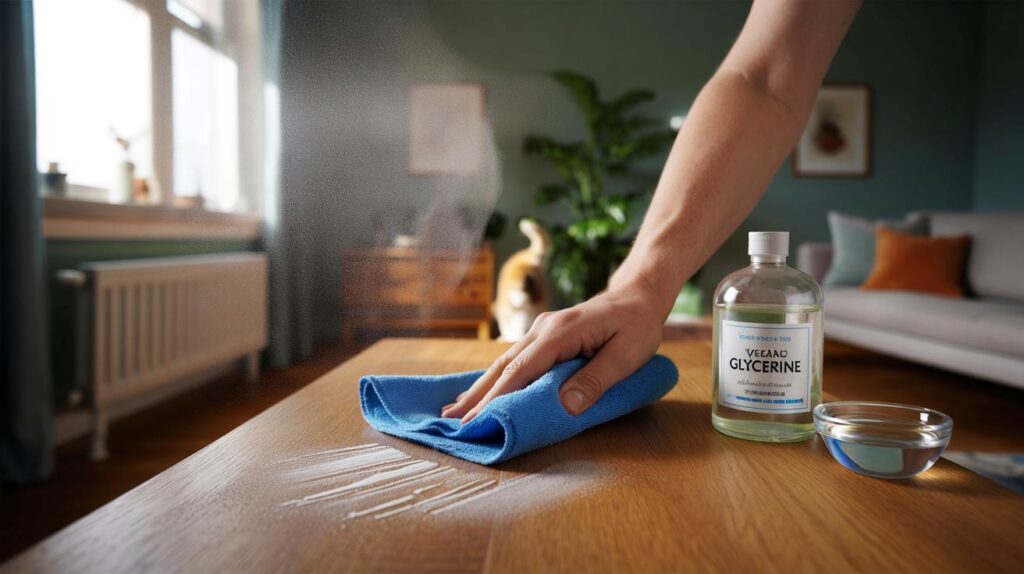
Pair a microfibre cloth with a touch of vegetable glycerine. Microfibre traps particles in its split fibres. Glycerine is plant-derived and humectant, so it forms a thin, near-invisible layer that slightly holds moisture and reduces static on the surface. The result is slower resettling for several days, without a heavy polish shine or scent.
A few drops of vegetable glycerine on a damp microfibre cloth reduce static and delay dust for days.
What you need
- 1 clean microfibre cloth
- Vegetable glycerine (often £3–£5 for 250 ml)
- Warm water (about 200 ml or 20 cl)
- Small bowl or spray bottle (optional)
Two easy ways to apply
You can use glycerine directly on the cloth, or dilute it into a light solution. Both work when applied sparingly.
- Direct method: lightly dampen the cloth, add 2–3 drops of glycerine to the fabric, then wipe with slow, even strokes.
- Solution method: mix 200 ml warm water with 1–2 teaspoons of glycerine in a bowl or bottle. Lightly moisten the cloth with the solution and wipe surfaces. Increase to 1 tablespoon only if dust returns very quickly, and test first.
Work methodically. Wipe horizontal and vertical faces. Move slowly so the film lays evenly. Avoid soaking. Overuse can leave tackiness, which attracts dust rather than deterring it.
Where it works, and where to take care
- Good matches: sealed wood, varnish, melamine, metal, glass, plastic, painted doors and skirting boards.
- Use caution: piano gloss finishes, untreated wood, unsealed stone. Test on a hidden patch first.
- Electronics: for TV and monitor screens, use a dry or slightly damp screen-safe microfibre only. Avoid glycerine on touchscreens and lenses.
How long it lasts and how often to repeat
In typical living rooms, the effect holds for three to seven days. In bedrooms with windows shut and radiators on, expect five to ten days if the air stays comfortable. In households with multiple pets or open-plan cooking, repeat every week. If you notice any dulling, buff with a dry cloth.
Use the lightest touch that works, then repeat weekly or fortnightly depending on the room and season.
Real-world timings and trade-offs
| Method | Upfront cost | Time per room | Dust reappears in | Notes |
|---|---|---|---|---|
| Dry duster | £0–£3 | 5–8 mins | Hours | Moves dust into air; little capture. |
| Damp microfibre | £1–£3 | 8–10 mins | 1–3 days | Safer for most finishes; no film. |
| Microfibre + glycerine | £4–£8 | 10–12 mins | 3–7 days | Reduces static; use sparingly. |
| Commercial polish | £3–£6 | 10–12 mins | 2–5 days | Shine and scent; risk of build-up. |
| Antistatic spray | £4–£7 | 10–12 mins | 3–6 days | Check label; many leave residue. |
Small changes that cut dust at the source
- Ventilate for 5–10 minutes each morning. A quick cross-breeze clears fine particulates.
- Aim for indoor humidity around 40–50%. A simple hygrometer costs a few pounds. Too dry boosts static.
- Fit a coarse mat at the front door and a second mat inside. Shake them outdoors weekly.
- Vacuum with a HEPA filter once or twice a week. Go slow along skirting and under sofas.
- Wash throws and cushion covers regularly. Fabrics trap fibres that become floor dust.
- Thin out knick-knacks on open shelves. Fewer objects mean faster cleaning and less dust trap.
- Brush pets outside if possible. A quick daily groom reduces shed and dander.
- Change boiler and extractor filters as scheduled. Filters loaded with lint release particles back into rooms.
Why this works: a short science note
Microfibre grabs dust because its split fibres increase surface area and create tiny hooks. Glycerine is hygroscopic. It attracts a trace of moisture from the air. That trace softens static build-up on plastics and varnishes. Lower static means fewer particles jump back onto the same spot after you wipe.
Common questions
Will it make furniture shiny or sticky?
Not if you go light. A few drops on a damp cloth should leave no gloss on matte furniture. If you see smearing, you used too much. Buff with a dry cloth and reduce the dose next time.
Is it safe for hardwood?
On sealed and varnished wood, yes when used sparingly. On raw or waxed wood, test first. If the test patch darkens or feels tacky, skip glycerine and stick to a barely damp microfibre.
Can I use essential oils instead?
Fragrance does not manage static. Oils add scent and film. If you want a fragrance, apply it to the room, not the cloth, and only after you finish the dusting.
A quick routine you can stick to
- Monday: bedrooms with damp microfibre plus a few drops of glycerine.
- Wednesday: living room and hallway surfaces.
- Friday: quick check of TV units and shelves; dry buff only if still clean.
- Weekend: 10-minute open-window refresh and a careful vacuum with HEPA.
Extra angles if allergies are flaring
Focus on the bedroom first. Use zipped covers for mattress and pillows. Wash bedding at 60°C weekly. Keep soft toys to a minimum or wash them often. Avoid glycerine on bedside touchscreens and reading lamps. For sensitive people, try a compact air purifier with a HEPA filter for night use in the bedroom.
If you want to test before you commit
Run a three-shelf test for two weeks. Treat one shelf with plain water, one with diluted glycerine, and leave one as usual. Note how many days it takes before a visible film returns. This small trial shows the gain in your exact conditions, whether you have pets, carpets or radiators on full.



Finally, a cheap trick that actually works. Cheers!
Isn’t glycerine hygroscopic? Won’t that make surfaces tacky over time and attract more dust? Has anyone tested after a month? Seems too good to be true.