
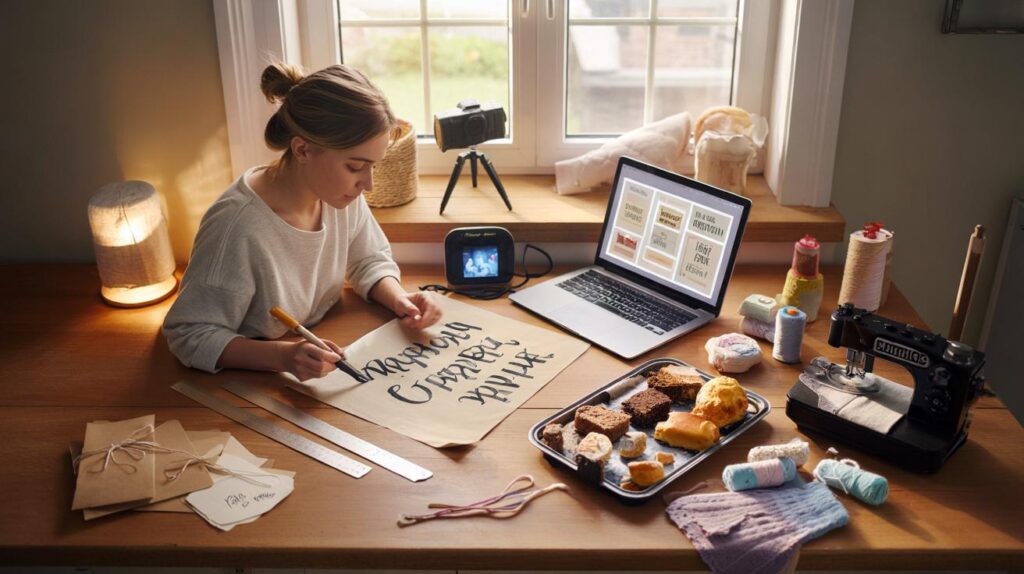
Childcare costs have spiked, commutes feel pointless, and the kitchen table has quietly become Britain’s most productive studio. Creative mums are asking a simple question: can the hobby that keeps me sane also pay for the weekly shop? The answer isn’t a distant dream. It’s happening in small pockets of time, in slippers, with a baby monitor humming in the background.
The house was still, that thin hour before the first kettle of the day. On the table: a ruler, two felt-tip pens, a half-finished birthday banner. On her phone: a tiny “cha-ching” from Etsy. She smiled, then glanced at the baby monitor as the blue light flickered. One order became three by lunchtime, wrapped between nap-time and snack-time, taped with care while a cartoon murmured from the sofa. The quiet surprise of earning without leaving the front door felt almost like a secret. The orders kept coming.
From kitchen-table craft to steady cash
Creative side hustles work because they build on what you already do for fun. That’s why they stick when life gets messy. We’ve all had that moment when a friend says, “You could sell these,” and it lodges in your mind like a spark in dry grass.
Take Sarah, 34, from Leeds. She turned her hand-lettering into personalised nursery prints, posted five designs on Etsy, and priced them at £12. The first week? One sale, £18 with shipping. By month two, she’d added digital downloads and nudged past £300, made in the gaps while her toddler napped. She found her edge on Instagram Reels, showing a 12-second clip of “from sketch to frame,” and watched messages roll in from new mums across the UK.
Here’s the logic: pick products that scale with your time. Physical items are lovely, but digital files — **Canva printables**, Lightroom presets, knitting patterns — can keep selling while you chop carrots. Print-on-demand sits between worlds: you upload a design, a partner prints and ships, you take a cut. Small bets, low overheads, and momentum that compounds with every listing and review.
Side hustles you can run in slippers
Start with a simple triangle: your skill, what people already pay for, and a format that fits the time you actually have. Set a 30-minute timer and write three lists. Match one from each list until you land on two clear ideas. Then test fast: a single listing, a one-page Gumroad, a quick “interest check” post in a local Facebook group. No grand business plan. Just a tiny offer, live before nap-time ends.
Common snags crop up early. Underpricing looks kind but eats your energy; price for the time you’ll spend on fixes and messages. Custom work can win hearts yet stretch your evenings thin, so batch it one day a week. Don’t open five shops at once. Pick one channel and let it breathe for a month. Let’s be honest: nobody actually does that every day. Progress lives in ordinary Tuesdays.
There’s also the quiet maths of sustainability. Repeatable tasks win the long game. If it takes you two hours now, aim for 90 minutes next month by templating, batching, or switching tool. You’re not starting from zero. You’re borrowing every scrap of practice you already have, and formalising it into something that pays.
“I stopped calling it a hobby the day it paid for our weekly shop. That changed how I showed up.” — Ayesha, crochet tutor turned digital pattern seller
- Print-at-home planners and habit trackers for busy families
- Personalised gifts: name prints, pet portraits, custom storybooks
- Micro-bakery boxes for Fridays: brownies, focaccia, gluten-free bakes
- Upcycled furniture flips sold on Facebook Marketplace
- Freelance product photography from a windowsill studio
- Social media packages for local cafés and yoga studios
- Podcast editing or **voiceover gigs** from a duvet “booth”
- Sewing repairs and alterations with pickup in a porch box
What happens when the side hustle grows
Growth rarely arrives as a trumpet blast. It shows up when the Royal Mail Click & Drop pile gets taller, when a stranger buys your downloadable recipe cards from New Zealand, when you open a fresh pack of mailers and think, “I need a system.” The shift isn’t just financial. It’s identity. You graduate from “I make things” to “I run a small creative business,” and your calendar starts to reflect that.
This is where boundaries matter. A simple two-slot week — one slot for making, one for marketing — can keep overwhelm at bay. Think in tiny, repeatable rituals: Monday listings, Thursday packing, five DMs to warm leads each Saturday morning. A simple brand story helps too: why you make what you make, and who it helps. That message becomes your north star on quieter weeks.
The other piece is resilience. Some months will surge, others will lag, school holidays will rip your schedule in half. Build a cushion with digital products or a subscription box so you’re not starting from scratch each payday. And if the side hustle stays small by design, that’s valid. The aim is choice — not noise.
Here’s a set of practical techniques that keep creative income flowing without devouring your day. Begin with one. Test, tweak, keep what sticks. The glow comes from momentum, not magic.
Batch work like a baker. Make five of the same item in one go to cut setup time in half. Photograph everything on one bright morning and schedule posts across the week. The rhythm creates headspace, and headspace creates better work.
Skip the algorithm panic. Anchor your marketing in human loops you can control: a simple email list, a weekly WhatsApp broadcast for locals, a pinned Instagram story with your top three products. Keep a tiny “FAQ” in Notes on your phone for copy-paste replies about sizes, shipping and care. You’ll sound consistent, and you’ll save hours.
When pricing, try the rule of thirds: one third materials and fees, one third time, one third profit to reinvest. Mention lead times clearly in your listings. Ship with a small thank-you card and a discount for a friend — referrals carry trust you can’t buy.
“Your first ten customers are neighbours, cousins, and mums from playgroup. Treat them like gold and they’ll carry your brand farther than ads.”
- Quick wins you can try this weekend:
- List a sample pack of sticker designs as a £3 digital download.
- Offer a “five-photo product shoot” to three local makers for £25.
- Post a pre-order for a limited batch of cinnamon buns, Friday collection.
- Create a 10-page party-planner kit in Canva and sell via Ko-fi.
- Sign up for a market’s cancellation list to grab last-minute low-fee stalls.
Where your creativity meets breathing room
The best side hustle doesn’t shout. It sits quietly in your day and makes it feel a bit roomier. Maybe it pays for dance lessons, or gives you a pocket of identity that isn’t just laundry and lunch boxes. Maybe it grows into a brand with its own voice. The spark is the same: you make something people love, from a place that still smells like toast.
Share the early version, even if it’s scrappy. Ask real people what they’d change. Swap “someday” for a listing that lives today. If all you can manage is one product and one reel this week, that’s enough. Next week comes around faster than you think.
And if the doubt creeps in at 9pm while you’re lining up stickers or resizing fonts, remember this: creativity is a muscle, not a miracle. It grows with use. It adapts. It pays you back in more ways than money.
| Point clé | Détail | Intérêt pour le lecteur |
|---|---|---|
| Start tiny, ship fast | One listing, one platform, one clear offer | Reduces overwhelm and gets real feedback |
| Favour scalable formats | Digital downloads, print-on-demand, templates | Earn while you sleep, fewer postage runs |
| Build human loops | Email list, local groups, repeatable rituals | Stable sales without chasing algorithms |
FAQ :
- What are the easiest side hustles to start with little time?Digital products top the list: printable planners, wall art, crochet patterns. Also quick local offers like Friday treat boxes, simple photo shoots for makers, or one-hour sewing fixes.
- How should I price handmade goods?Use the rule of thirds, then check similar listings in the UK. Add postage and marketplace fees, plus a small buffer for tweaks. If you’re selling out fast, lift prices by 10% and watch response.
- Do I need to register as self-employed in the UK?If your trading income exceeds the £1,000 trading allowance in a tax year, you’ll usually need to register for Self Assessment with HMRC. Keep basic records from day one to make life easier.
- What gear do I need to begin?Start with what you have: a bright window, your phone camera, free design tools like Canva. Add upgrades slowly — a light box, a label printer — once the hustle pays for the kit.
- How do I find my first customers without ads?Lean on warm circles: school WhatsApp groups, local Facebook pages, Instagram Stories, community boards. Offer a small “founding friend” discount and a referral bonus on your thank-you cards.



Love this. The ‘one listing, one platform’ mantra finally clicked—I’m putting a £3 sticker sample pack on sale before nursery pickup. Thanks for the calm, doable steps and the rule-of-thirds reminder 🙂
Honest question: isn’t the printable/planner space on Etsy completely saturated now? Feels like everyone and their cat sells Canva templates. Any data on how many views it takes per sale, or tips beyond “just post more”? Also fees + shipping can eat margins fast—Click & Drop helps, but profit seems thin unless you scale. I’m not being snarky, just cautiosly sceptical.