
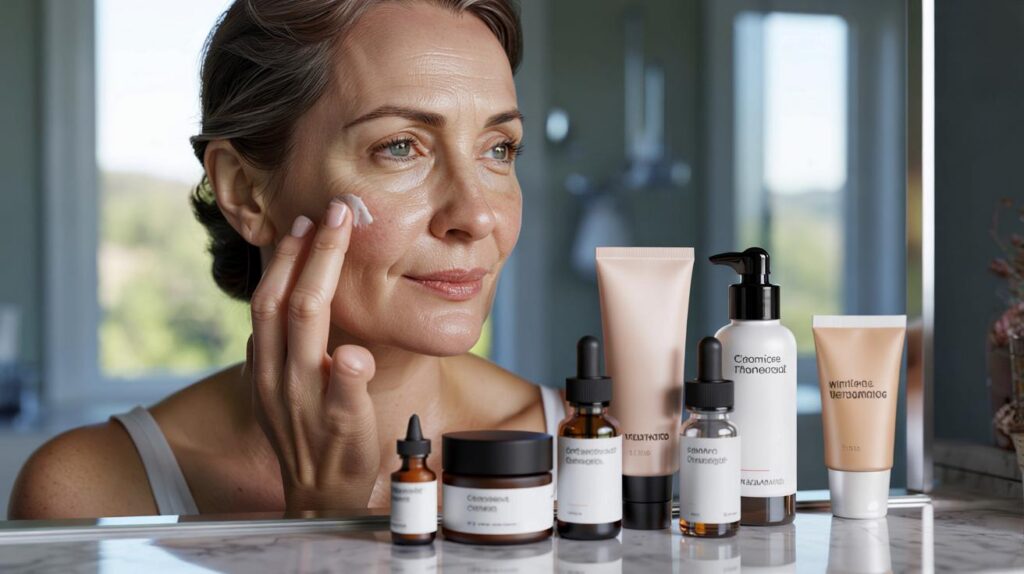
Your skin didn’t suddenly “change its mind”. It’s responding to a hormonal handbrake that tugs at collagen, oil, and moisture. Past 50, the texture, tone, and feel of your face can shift week to week — dry patches one month, redness the next, a surprise breakout by Friday. The fix isn’t more product. It’s smarter product, matched to what menopause does under the surface.
The bathroom was warm, the mirror fogged, and Janet pressed a fingertip into her cheek the way you check a ripe peach. Springy last year, it now felt thinner, almost see‑through in the morning light. Her foundation, once airy, clung to flakes around the nose; a constellation of dark spots seemed to have darkened overnight. She sighed, rinsed with water, dabbed moisturiser, and wondered when the rules changed.
That night she texted a friend: “Has your skin gone weird?” The reply arrived instantly with laughing emojis, then a voice note about creams, serums and a tube labeled “retinal” that sounded like a body part. Janet didn’t want a 12‑step routine. She wanted a map. One that didn’t feel like homework.
Skin has a memory. Menopause presses delete.
What menopause does to your skin, really
Oestrogen dips and the scaffolding wobbles. Collagen production slows, elastin unravels, and the natural lipids that keep water locked in begin to thin out. You feel it as tightness after cleansing, flakes around the mouth, and the sensation that your favourite moisturiser suddenly isn’t enough. Lines crease a little deeper. Pores look bigger because the “mattress” underneath is slimmer. *This is skin in flux.*
Across studies, women can lose up to 30% of skin collagen in the first five years post‑menopause. Sebum drops. Transepidermal water loss rises, which is why cheeks feel parched by 3 p.m. A reader from Leeds told me her cheeks got red during every hot flush, then cooled to a dull, itchy dryness. Another messaged that her chin broke out like it did at 16, except the spots lingered. Hormones rewrite the script in both directions.
Think of menopause skincare as filling three gaps: structure, barrier, and calm. Structure needs collagen‑friendly actives like retinoids and peptides. Barrier needs ceramides, cholesterol and fatty acids to patch the “mortar” between skin cells. Calm needs ingredients that soothe redness, tackle pigment, and settle reactive nerve endings. When you match an active to a gap, the routine stops feeling random and starts acting like a team.
Ingredients that actually help (and how to use them)
Start simple: morning cleanse with a milky, low‑foam wash (Avène Tolerance or CeraVe Hydrating). Then 4–5% niacinamide for pores and strength, followed by an antioxidant (ascorbic acid if you tolerate it, or a gentler vitamin C derivative). Seal with a ceramide‑cholesterol‑fatty acid moisturiser, then a broad‑spectrum SPF 50. A tinted mineral SPF with iron oxides helps against visible light, which aggravates melasma. Night: cleanse, then retinoid two to three evenings a week (retinaldehyde is a kind step up from retinol; tretinoin via GP if you want prescription strength). On non‑retinoid nights, use peptides or 10% urea for smoothness, then a richer cream.
Over‑exfoliation is the trap. Your skin is already drier; harsh scrubs and high‑acid toners will bite back. Pick polyhydroxy acids like gluconolactone or a low‑strength lactic acid once or twice a week. Azelaic acid (10–15%) is a quiet hero for redness, lingering breakouts and pigmentation. Fragrance can sting on a hot‑flush day, so lean fragrance‑free. We’ve all had that moment where a new serum tingles and we convince ourselves it’s “working”. Sometimes it’s just irritation. Let’s be honest: nobody does that every day.
Azelaic acid can share the night shift with retinoids on alternate evenings, while tranexamic acid targets stubborn patches of melasma in the morning. If vitamin C stings, swap to ferulic‑rich antioxidant serums, resveratrol, green tea or ectoin. For body, 10% urea or 5–12% lactic acid creams keep shins and forearms smooth. Your products should feel kind, not heroic.
“Menopause isn’t a skin disease; it’s a new operating system,” says Dr Sara H., a consultant dermatologist. “Feed the barrier, pace your actives, and protect what you build.”
- Look for: retinoid (retinol, retinal), peptides, niacinamide 4–5%, ceramides + cholesterol + fatty acids, azelaic acid 10–15%, tranexamic acid 2–5%, vitamin C or antioxidants, urea 5–10%, glycerin + hyaluronic acid.
- Skip or limit: strong scrubs, daily high‑strength acids, heavy fragrance, drying alcohols, essential oils if you’re reactive.
- Hot‑flush helpers: keep a fragrance‑free mist or gel‑cream in the fridge; apply cool, not cold, to calm flare‑ups.
A smarter way to shop your shelf
You don’t need a “menopause” label on every jar. You need formulas that fill the gaps. Build a capsule: a gentle cleanser, one barrier‑loving moisturiser, one retinoid you can actually use, one redness/pigment calmer, one daily SPF you enjoy. Then layer by feel. On sore evenings, skip actives and do a ceramide sandwich: light lotion, thin retinoid, then richer cream. On melasma days, add tinted SPF and tranexamic acid. If you’re on HRT, skin may plump in a few months; if you’re not, that’s fine too. The principles don’t change. Share what’s working with a friend. It makes the mirror kinder.
| Point clé | Détail | Intérêt pour le lecteur |
|---|---|---|
| — | Retinoids (retinol/retinal) build collagen and smooth texture | Firmer look and fewer lines with measured use |
| — | Ceramides + cholesterol + fatty acids repair the barrier | Softer, less reactive skin that holds moisture |
| — | Azelaic + tranexamic + niacinamide even tone | Redness and dark patches fade without harsh peeling |
FAQ :
- Can I use a retinoid if my skin is sensitive post‑menopause?Yes, but pace it. Start twice weekly, buffer with moisturiser, and consider retinaldehyde for strength with less sting.
- Which moisturiser texture works best for dry‑tight skin?Look for mid‑weight creams with ceramides, cholesterol and squalane. Layer a hydrating serum first if you like a lighter feel.
- Do “phytoestrogen” creams actually help?Soy isoflavones and genistein may improve dryness and elasticity in some users. They’re not HRT; think support actives, not substitutes.
- Is daily sunscreen still necessary in the UK?UVA penetrates clouds and windows. Use SPF 50 daily; try a tinted mineral formula with iron oxides if pigmentation is a concern.
- What tackles menopausal breakouts without wrecking my barrier?Azelaic acid 10–15% or benzoyl peroxide 2.5% on spots, plus a gentle retinoid. Keep acids low and infrequent.



This was the first guide that felt like a map—not homework. The structure‑barrier‑calm framework finally clicks; I was over‑exfoliating and wondering why my cheeks stung by 3 p.m. Starting niacinamide 5% + a ceramide/cholesterol moisturiser has already calmed the tightness. Thank you!
If I use retinaldehyde (0.05%) two nights a week and azelaic acid 15% on the others, is that too much for mild rosacea? Should I buffer with moisturiser first or after? Also, does tranexamic acid play nice with vitamin C in the morning?