
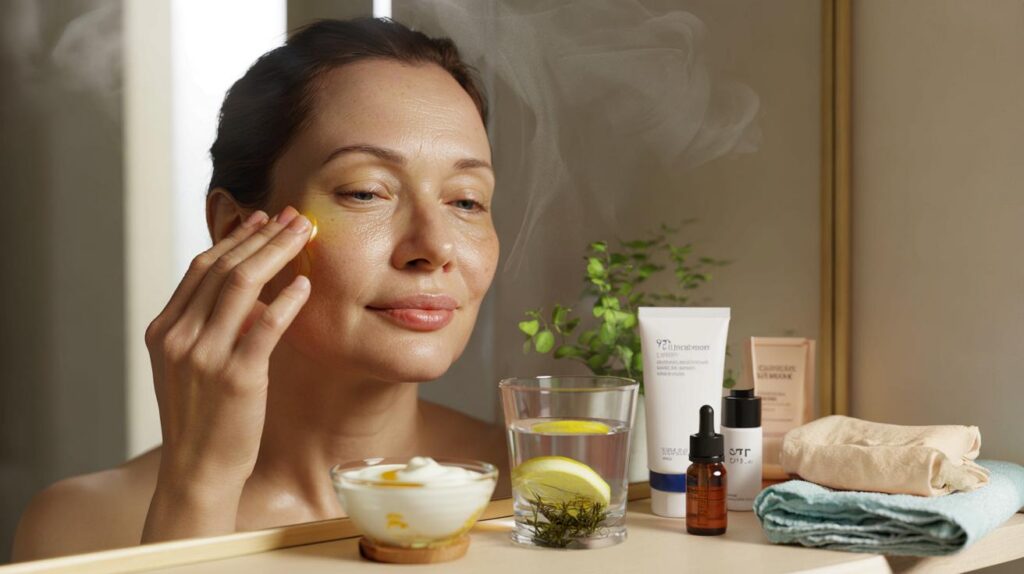
You wake with skin that can’t decide who it wants to be: dry around the cheeks, a flare of redness on the nose, and a new breakout on the jawline that feels faintly teenage. Perimenopause reshuffles hormones and, with them, the rules of skincare. The shelves push jars with diamond lids; your face asks for something simpler, steadier, kinder. This is about keeping your glow without emptying your purse or your patience.
The bathroom mirror was still fogged from the shower when Emma, 47, pressed a fingertip to a patch of heat along her cheekbone. The day before it was oil; today it was sand. She stared at the expensive serum she’d been saving for “good days” and reached for a plain, fragrance-free moisturiser instead. Outside, bins rattled up the street and her tea went cool on the windowsill. She didn’t look older. She looked… stormy. One small thing had to change first.
The shift beneath the surface
The skin mood swings of perimenopause aren’t a moral failing or a mystery; they’re your body adjusting its orchestra as oestrogen dips and progesterone plays loud and soft. Collagen production slows, sebum gets fickle, and the skin barrier asks for extra protection. Start with your barrier, and everything else calms down. Think less “fight the face”, more “teach the skin to feel safe again”. Calm skin glows because it’s not defending itself every minute.
We’ve all had that moment when a tiny red dot steals the whole mirror. A GP told me she sees a steady queue of women in their mid-forties whispering about chin acne and sudden dryness. Research suggests up to half of women notice new sensitivity around this time, and plenty report that their go-to products start to sting. It’s not you being “dramatic”. It’s your epidermis asking for simpler instructions.
Here’s the quiet logic: when the barrier is thin or irritated, nerves send more “ouch” signals and inflammation flickers on. That can trigger more oil in some areas and more flaking elsewhere, a patchwork the fanciest cream can’t outsmart. Oestrogen also influences water retention in the skin, so hydration swings feel bigger. Rebuild the barrier, nudge inflammation down, and the mixed messages soften. *Your skin is reading your hormones, not your price tag.*
Low-cost routines that actually work
Begin with a gentle cleanse at night, then stop. Use a non-foaming, fragrance-free cleanser, massage for 30 seconds, rinse lukewarm, and pat dry with a soft towel. While skin is still damp, smooth on a humectant like glycerin or a hyaluronic acid serum, then seal with a simple moisturiser rich in ceramides or squalane. In the morning, splash with water, add a light layer of moisturiser, and finish with SPF 30+. SPF is non-negotiable, even on grey days.
Let’s be honest: nobody actually does that every single day. So build a “minimum viable routine” for tired nights—cleanse, moisturise, sleep. On calmer weeks, add one smart active: niacinamide 5% for redness and pores, or a low-strength retinoid two nights a week to keep texture smooth. Leave scrubs on the shelf. A cool green-tea compress can take down flushing after a hot commute, and a spoonful of plain yoghurt mixed with honey makes a 10-minute mask that soothes without drama.
Harsh mistakes creep in when you’re desperate. Doubling exfoliants “just this once”, jumping between ten-step routines, or switching everything at once confuses your skin’s microbiome, which is already coping with hormonal noise. As Mae, 48, told me the week she rediscovered oat soaks:
“I stopped fighting my face and it stopped fighting me.”
Try this little kit that costs less than a posh latte a week:
- One fragrance-free cleanser and moisturiser you actually like using
- Niacinamide serum for daytime calm
- Low-strength retinoid, twice weekly at night
- SPF 30+ daily, even in winter
- Green tea bags in the fridge for quick de-puffing
The deeper calm your skin notices
Skin listens to your nervous system. A 10-minute evening wind-down—dim light, slow breathing, phone face-down—can tame cortisol spikes that fuel flushing and breakouts. Keep a glass of water by the kettle and add a pinch of electrolytes after sweaty exercise. A palm-sized portion of protein with meals and a sprinkle of ground flaxseed supports steadier energy, and your skin loves that steady pace.
Little lifestyle edits travel straight to your face. Shorter, cooler showers preserve your barrier. Cotton pillowcases washed with non-bio detergent reduce irritation at night. Walks in daylight tick both mood and circadian rhythm, and your skin’s repair processes are rhythm-driven too. If you love retinoids but peel easily, “sandwich” them between moisturiser layers—thin moisturiser, retinoid, then another thin layer—to keep the glow and skip the flake.
There’s also the power of touch. Two minutes of soft facial massage with clean hands and a drop of sunflower or squalane oil brings blood flow, eases jaw tension, and helps lymphatic drainage when you feel puffy. Space your actives—niacinamide in the morning, retinoid at night, AHA only once a week—and keep a diary for a month. Small, steady habits beat any miracle jar.
Space for your own rhythm
The glow you’re chasing is more about steadiness than perfection. If your routine feels like a nag, trim it. If your skin sulks, fall back to basics for a few days, then reintroduce one element at a time. Swap a midday coffee for a mug of warm water with lemon when flushing hits, and pocket a mini SPF for swift top-ups on the bus. Your bathroom shelf doesn’t need to look like a boutique; it needs to tell a simple story your skin understands.
Share what works with friends, swap the products that didn’t, and trade notes on the tiny rituals that keep you steady. A cheap mist bottle filled with cooled chamomile tea, a brisk walk when your face feels hot, a five-minute stretch before bed—these are quiet levers. Your hormones will keep shifting, and your skin will keep talking. The calm arrives when the conversation gets kinder.
| Point clé | Détail | Intérêt pour le lecteur |
|---|---|---|
| Repair the barrier first | Gentle cleanser, humectant, ceramide/squalane moisturiser | Reduces irritation, stabilises oil and hydration |
| One active at a time | Niacinamide for day, low-strength retinoid two nights a week | Visible results without overwhelm or peeling |
| Everyday habits matter | Cooler showers, SPF daily, brief massage, sleep rhythm | Low-cost changes that stack into lasting glow |
FAQ :
- Can skincare really help during perimenopause without pricey creams?Yes. A steady routine that protects your barrier, adds hydration, and uses one or two proven actives will outperform an overstuffed shelf. Your skin needs consistency more than luxury.
- What’s the best budget moisturiser texture for mixed dry/oily skin?Look for a light cream or gel-cream with glycerin, niacinamide, and ceramides. If you get dry patches, layer a few drops of squalane on those areas only.
- How often should I exfoliate when my skin is sensitive?Once a week at most with a mild AHA like lactic acid, and skip it the week you add a retinoid night. If stinging appears, pause and return to basics for several days.
- Do food choices really show up on my face during perimenopause?Patterns matter. Balanced meals with protein, fibre, and healthy fats support energy and steadier skin. Hydration and gentle movement help more than any single “superfood”.
- When should I see a professional?If flushing is sudden and intense, acne is scarring, or rashes won’t settle, speak to your GP or a dermatologist. They can check triggers and suggest tailored treatments.



Loved the barrier-first approach. I’ve been ping‑ponging between oil slick and desert face during perimenapause, and the “minimum viable routine” finally sounds doable. Swapped my fancy scented cleanser for a boring, fragrance‑free one last week and my cheeks stopped stinging. The green‑tea compress tip was gold, too. Quick Q: do you prefer ceramides over squalane at night in winter, or layer both? Thanks for keeping it simple and not salesy 🙂