
Hotel prices in Scotland swing like a pub door on a windy night. One week you’re eyeing a “bargain”, the next the total lands like a brick. We’ve all had that moment when the “great rate” dissolves behind fees, parking, and breakfast that tastes of the spreadsheet it came from.
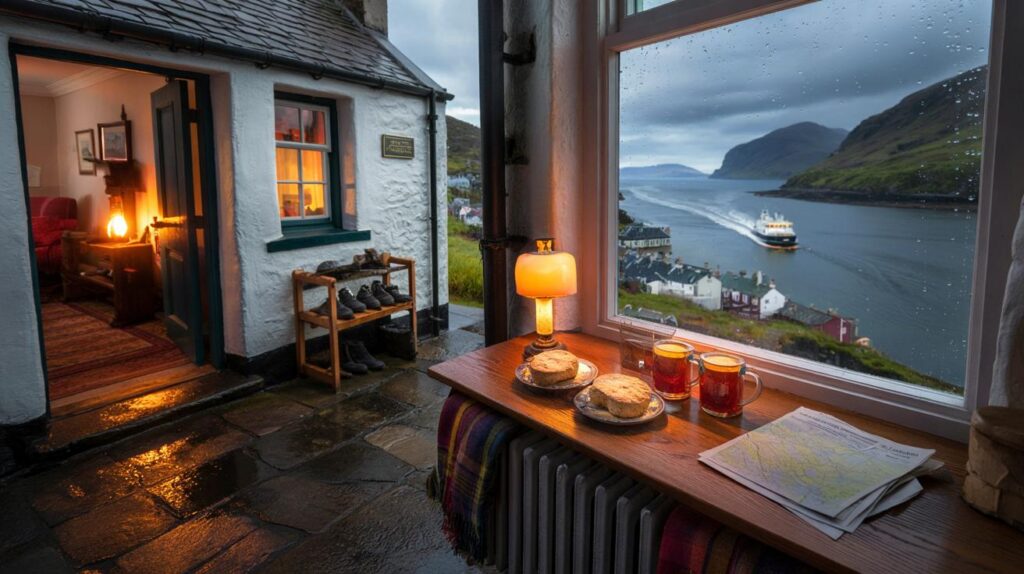
The rain in Tobermory arrived sideways, needling the harbour as the last ferry wake unravelled. I ducked into a whitewashed house, boots squeaking on flagstones, and a woman with kind eyes pressed a warm mug into my damp hands. “Sit by the radiator, love,” she said, the soft burr of the isles smoothing the edges of the day. In the hallway, the tang of peat and fresh scones. Photos of dogs, hill races, and the family’s first fishing boat. I hadn’t booked weeks ahead or sold a kidney. I’d simply rung the bell and asked. The secret sits in plain sight.
Why B&Bs beat big hotels when you’re in Scotland
Scotland’s small B&Bs trade in something algorithms don’t capture: care. You get a room that feels lived in, not themed; jam that actually tastes of fruit; a host who points you to the quiet path where otters fish at dusk. The price often covers parking and breakfast, and the chat over coffee is worth the room alone.
On Skye last March, I paid £72 for a spare, sunlit room facing the Cuillin. My host circled three hidden viewpoints on a map, sent me to a village hall ceilidh, and tucked two flapjacks in my pocket “for the ridge”. That same weekend, a city hotel wanted £189 for a box with a window facing another box. One felt like a treat. The other felt like a receipt.
City hotels play surge pricing and efficiency. B&Bs run on rhythm. They fill from festivals and ferries, from bird migrations and rugby fixtures, yet their rates tend to move with seasons rather than software. You pay for breakfast that arrives from the croft next door, not for a lobby sculpture. The return? Better sleep, better tips on where to go, and a bill that leaves room for a boat trip or a dram.
How to actually find them, from Borders villages to island harbours
Start with maps, not ads. Type “B&B + village name” into a map app, then zoom until you see single-lane roads and bay names. Cross-check with VisitScotland’s listings and local tourism pages for the town. If you’re headed to islands, look at ferry timetables first, then search the hamlets nearest the late sailings.
Call or email hosts directly. Many don’t list all rooms on big platforms, and a friendly voice can reveal a last-minute cancellation or a quieter annex. Ask about “one-night gaps” on busy weeks, and whether they have a drying room, early breakfast, or space for bikes. Let’s be honest: nobody does that every day. A two-minute chat can save you money and the mild panic of turning up after 9pm without a plan.
Common trip-savers: read the house notes, check whether the bathroom is en-suite, and ask where to park if you’re on the NC500. If you have an early hill day, ask about breakfast bags. Hosts are human, which is where the magic lives.
“If you call and sound like you’ll love the place, I’ll try to help. We live here. We want you to fall for it too,” Morag told me in Ullapool.
- Check for ferry-day flexibility on breakfast times.
- Ask about a boot rack or drying cupboard after wet hikes.
- Confirm Wi‑Fi if you’re working on the road.
- Share dietary needs in advance; most can adapt.
- If you’re bringing a dog, confirm where they can sleep.
Where and when to look for the good ones
Think like a local, not a brochure. Follow the seasons: wildlife weeks in Mull and Islay, heather burn in the Cairngorms, autumn light in Torridon, calm seas for Orkney in late May. Town edges and small villages often hide the gems: a manse near Dunkeld, a croft above Ullapool, a family terrace in Leith where breakfast is poetry and black pudding. Fringe weeks crank Edinburgh prices, so hop the Fife Circle or base in North Berwick and ride in. In summer, book two anchors and improvise the nights between. In winter, ring day-of and ask kindly. One yes can change your map.
That first cup of tea after rain tastes like a welcome.
Search at off-peak times. Early morning and early evening are when hosts tend queries. Weeknights are friendlier to single-night stays. If you’re on Skye, look at Sleat and Broadford as well as Portree; on Harris, cast your net to Leverburgh, not just Tarbert. Families do well in Speyside where rooms often run bigger, hikers near Glencoe where drying rooms and hearty breakfasts come as standard. **Highland hospitality** isn’t a slogan. It’s the nod, the flask refill, the “take another slice”.
Price-wise, £55–£95 per room in rural spots is common outside peak weeks. On islands in July, expect £90–£130 with sea views costing a touch more. In cities, look at residential streets just beyond the centre to halve your rate and double your sleep. **Book direct** to dodge platform fees and to ask small, practical questions robots miss. The **full Scottish breakfast** lives up to its name. Pace yourself.
Skip the marble lobby, keep the warmth. The best B&Bs don’t shout. They glow at dusk, with a lamp in the porch and the smell of toast drifting down the lane. If you’ve only stayed in hotels, try one night inland from the postcard spots and see how your trip changes shape. Share your finds, ask locals where they’d send a friend, and keep a small list for the future. The map of Scotland is generous. It rewards those who linger.
| Key points | Details | Interest for reader |
|---|---|---|
| Use maps and local listings | Search “B&B + village”, cross-check VisitScotland, align with ferry times | Faster path to hidden, better-value stays |
| Call hosts directly | Ask about one-night gaps, early breakfasts, drying rooms | Lower prices, kinder logistics, human advice |
| Time and place strategy | Go off-centre in cities, target shoulder seasons in the isles | More character, fewer crowds, money left for experiences |
FAQ :
- How much should I budget per night for a Scottish B&B?Outside peak weeks, £60–£100 for a double in rural areas is common; cities and islands in summer can run £90–£140.
- Is it fine to book last minute?Yes in shoulder seasons and winter, sometimes even on summer weekdays. Call between 8–10am or 5–7pm for best luck.
- What about early ferries or hill starts?Many hosts offer a packed breakfast or bring service forward if you ask the day before.
- Are B&Bs OK for solo travellers?Very. You’ll often get safer, friendlier stays than in big hotels, and hosts will keep an eye on your route if you’re hiking.
- Can I bring kids or a dog?Plenty say yes, some have age limits or pet-free rooms. Ask early and confirm any extra cleaning fee.



Loved the map-first approach—typing “B&B + village name” then checking ferry times is such a simple win. Calling hosts directly has saved me twice; the “one-night gap” trick actually works. Book direct, dodge the platform fees: yes. Also appreciate the reminders about drying rooms and breakfast bags for early hill starts. This reads like advice from someone who’s been rained on, a lot, in the best way.
Isn’t “just ring the bell and ask” a bit risky in peak season? I’d panic if the last ferry is full and every B&B is booked. Any backup plan you reccomend if calls go unanswered after 7pm?