
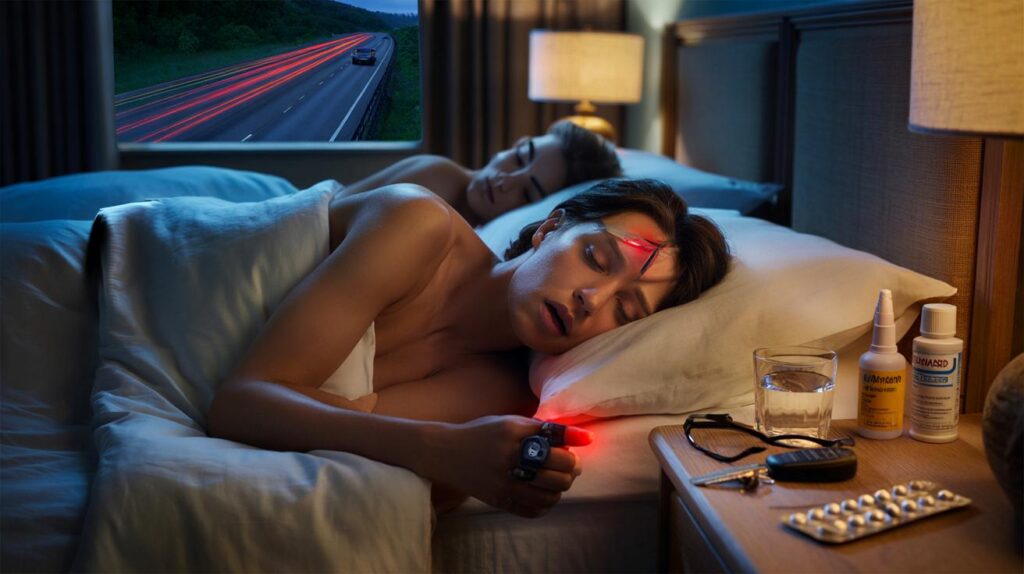
You sleep eight hours and wake foggy; your pulse races at night; mornings sting. The mattress probably isn’t to blame.
Millions live with sleep apnoea that makes no sound. No bed-shaking snore, no obvious clue, yet oxygen dips and micro-awakenings chip away at health and focus. If that sounds familiar, you could be affected even if your room is whisper-quiet.
What happens when breathing stalls in the night
Obstructive sleep apnoea occurs when throat muscles collapse during sleep. Airflow stops or narrows for 10 to 30 seconds, often multiple times each hour. Oxygen levels fall. The brain jolts you into shallow wakefulness to reopen the airway. You rarely remember these events, but they shatter deep sleep.
That repeated stress drives up blood pressure, agitates heart rhythm, and floods the body with adrenaline. Over months and years, untreated apnoea raises the risk of hypertension, stroke and type 2 diabetes. It also saps reaction time and attention, which is why crash risk can triple.
Snoring isn’t required. Repeated breathing pauses can strike in silence and still derail your brain, heart and metabolism.
Nine quiet clues you might notice
Beyond snoring, subtle signs cluster at night and spill into the day. Watch for patterns rather than one-off bad nights.
- Unshakeable daytime sleepiness, especially during meetings, TV or at the wheel.
- Morning headaches that lift as the day progresses.
- Dry mouth or sore throat on waking, hinting at mouth breathing overnight.
- Palpitations or night sweats without a clear cause.
- Multiple night-time trips to the loo (nycturia), even without prostate issues.
- Acid reflux that wakes you or worsens when lying down.
- Foggy thinking, poor concentration or short-term memory slips.
- Irritability, low mood or anxiety that crept in without explanation.
- Restless sleep with tossing and frequent awakenings, even if you think you “slept through.”
Red flags that demand swift action
Seek medical advice promptly if you nod off while driving or at work, if blood pressure stays high despite treatment, if you notice breathless awakenings, or if a partner witnesses pauses in your breathing.
If two or more symptoms persist for a fortnight, ask your GP about a sleep assessment. Silent apnoea is common and treatable.
Who is at risk, even without snoring
Sleep apnoea isn’t only about weight or a noisy bedroom. Thin people, women and younger adults can be affected. Risk rises with a thicker neck, a narrow jaw, nasal obstruction, family history, menopause, pregnancy, alcohol or sedatives before bed, smoking, and conditions such as hypothyroidism or reflux. Asthma and nasal allergies can worsen night-time airflow and tip a vulnerable airway into collapse.
How doctors test for silent sleep apnoea
Assessment starts with targeted questions and screening tools such as the Epworth Sleepiness Scale or STOP-Bang. If apnoea is suspected, you’ll be offered a home sleep study or an overnight test in a centre. Sensors track airflow, oxygen levels, heart rate and breathing effort. The key metric, the apnoea–hypopnoea index (AHI), counts breathing interruptions per hour of sleep.
| AHI (events per hour) | Severity | Typical daytime effects |
|---|---|---|
| 5–14 | Mild | Sleepiness in quiet settings, occasional morning headaches |
| 15–29 | Moderate | Frequent fatigue, reduced concentration, elevated blood pressure |
| 30+ | Severe | Marked sleepiness, memory lapses, higher cardiovascular risk |
Oxygen desaturation, arousal frequency and heart rhythm changes also guide care. Some people have central sleep apnoea, where the brain’s breathing signals intermittently pause; the treatment pathway differs, so measurement matters.
Treatments that actually work
Therapy matches the cause and severity. Many feel sharper within days of starting the right option.
- Continuous positive airway pressure (CPAP): a small device that gently keeps the airway open. It normalises AHI in most users, improves blood pressure by a few mmHg on average, and reduces crash risk towards normal. Aim for at least four hours’ use on most nights.
- Mandibular advancement devices: custom mouthpieces that bring the lower jaw forward to widen the airway. Effective for mild to moderate cases or if CPAP isn’t tolerated.
- Positional therapy: training or devices that keep you off your back if events cluster supine.
- Weight management: losing 10% of body weight can meaningfully lower AHI in many people, though apnoea can persist even after weight loss.
- Nasal care: treat congestion and allergies; consider saline rinses; check for deviated septum or polyps.
- Alcohol and sedatives: avoid them for three hours before bed; they relax airway muscles and prolong events.
- Targeted surgery or nerve stimulation: selected cases benefit after thorough evaluation in a specialist centre.
Driving and work safety
Daytime sleepiness linked to apnoea can impair driving and hazard perception. In the UK, people with sleepiness that could affect driving should stop driving and speak to their GP. Many return to safe driving once treatment controls symptoms. Employers can help with adjustments during diagnosis and early treatment.
What you can try tonight
While you wait for assessment, these practical steps can reduce events and improve sleep quality:
- Sleep on your side; use a pillow or positional aid to stay off your back.
- Skip alcohol after dinner; keep at least a three-hour buffer before bed.
- Clear your nose before lights out; elevate the head of the bed by 10–15 cm if reflux bites.
- Keep a consistent sleep window; aim for the same wake time daily.
- Review medicines with your pharmacist or GP if they cause drowsiness or muscle relaxation.
Extra context to widen your options
Not all apnoea looks the same. Some people experience apnoea mainly in rapid eye movement (REM) sleep, when muscles naturally relax; symptoms may be worse near morning. Others have “upper airway resistance syndrome,” a milder cousin with few full apnoeas but many effortful breaths and arousals. Both can produce morning headaches, brain fog and mood changes, and both respond to airway-stabilising treatments.
Wearables that track oxygen or breathing rate can hint at a problem if they show repeated dips or restless sleep, but they cannot diagnose apnoea. Use them as prompts to seek proper testing, not as proof you’re fine. If a dental guard has been suggested for tooth grinding, ask your dentist about sleep apnoea as a potential driver; treating the airway often helps the jaw relax at night.



Great explainer—didn’t know nycturia could be linked. I’ve been waking with dry mouth and morning headach for months; is that enough to justify asking for a sleep study, or should I track Epworth and STOP‑Bang first? Thanks, this was super clarifiyng.