
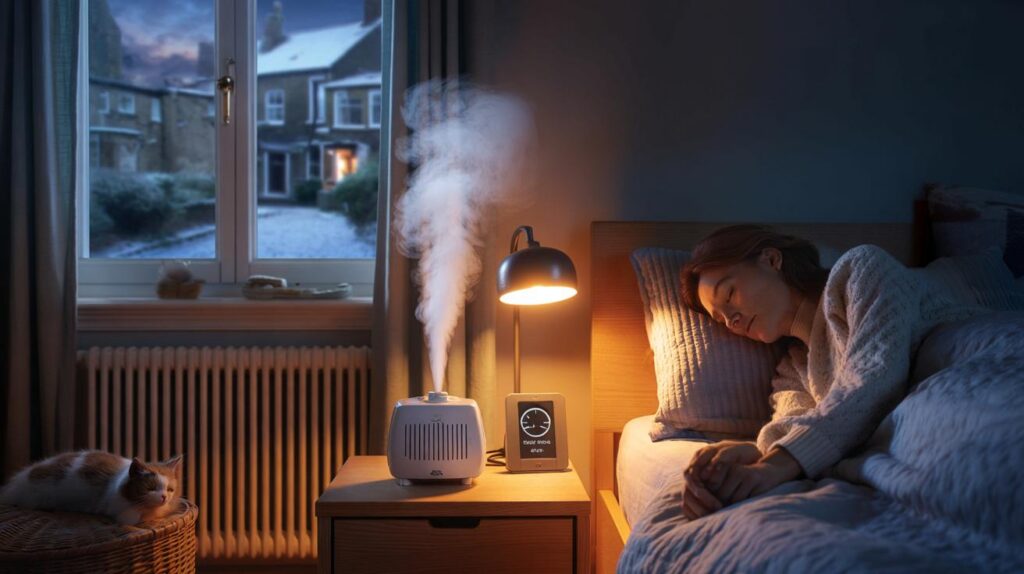
Winter does something sneaky to bedrooms: the air turns thin and scratchy, radiators hum like bees, and sleep collapses into choppy little pieces. You wake at 3 a.m. with a dry throat, a stinging nose, and a duvet that feels both heavy and not enough. We’ve all had that moment when the night feels longer than it should. There’s a fix that doesn’t involve pills, gadgets, or a renovation. It’s small, almost boring. That’s what makes it powerful.
I noticed it first in a terraced house in Leeds, the kind with a radiator under the window and a streetlight that sneaks past the blind. The cat had found the warm spot; my nose, not so lucky. There was a dusty smell in the air and a faint metallic taste, like the room had been baked. I got up for water, twice. That’s when I checked the little digital square on the bedside shelf and blinked: 28% humidity. Dry as a library in August. It starts with the air.
The one small change: tune your winter air to 40–50% humidity
The big idea is wonderfully unglamorous: bring your bedroom to **40–50% humidity** at night. Not damp, not tropical, just balanced. In winter, central heating can drag indoor air to **dry air** territory, often below 30%. Your nose dries, your throat wakes you, your skin prickles, and snoring gets louder. Raise the moisture gently and the room softens. Breathing becomes quieter. Sleep holds.
Here’s a simple snapshot. A couple in Glasgow kept waking at 4 a.m., trading the duvet and sighing. They bought a £10 hygrometer—those pocket-sized readers you can stick on a shelf—then ran a small, **quiet, cool-mist humidifier** on low. Night one: 31% to 38%. Night two: 44%. They didn’t sleep like teenagers, but they stopped clock-watching at 4. In many UK homes, winter bedroom humidity sits around 25–35% with the heat on. Push it to the mid-forties and the night stops snagging.
There’s a simple chain of cause and effect. Dry air irritates nasal tissue, which swells and narrows the airway. Mouth breathing follows, snoring gets worse, and micro-awakenings multiply. Add one or two degrees of warmth from the radiator and the air grows even thirstier, stealing moisture from you. *This tiny nudge changes how your night feels.* Keep humidity near the sweet spot and you reduce irritation, ease snoring in many cases, and stabilise sleep stages. Go much above 60% and condensation joins the party, so the target band matters.
How to do it tonight
Start with a cheap hygrometer. Put it at pillow height, away from a radiator blast and not right by the window. Take two readings: when you first get into bed, and when you wake. If it’s under 35%, add moisture. Easiest options: a small cool-mist humidifier on low, a bowl of water on the radiator, or a clean damp towel draped over a chair back near the heat. Aim for a slow creep to 40–50%, not a fog.
What trips people up is going too wet, too fast. If the window glass runs in the morning, dial it back or crack the window for ten minutes before lights out. Keep the humidifier’s tank clean and rinsed every couple of days—mould is not the upgrade you’re after. Distilled water is ideal, but tap water is fine in most areas if you wipe limescale weekly. Let’s be honest: nobody does that every day. Find a rhythm that works three nights out of seven and your sleep will notice.
“Set your bedroom near 18°C and around 45% humidity, and most winter snorers do better,” a sleep clinician told me. “It’s boring, but it works.”
- Buy a £10–£15 hygrometer; target **40–50% humidity** at night.
- Use a **quiet, cool-mist humidifier** on low, or a bowl of water on the radiator.
- If humidity climbs past 55–60%, air the room for 10 minutes before bed.
- Place the device away from bedding; clean the tank every few days.
- Thermal curtains help keep the room steady so the air stays in the sweet spot.
Why this beats most winter sleep hacks
Plenty of advice tells you to ban screens, meditate, and stretch your hamstrings. Great ideas, all of them. Yet winter sleep often fails for a more basic reason: the room air isn’t right for your nose and throat. When humidity is in the sweet spot, you cough less, you wake less for water, and your duvet feels cosy instead of suffocating. Comfort isn’t a luxury; it’s the foundation the other habits stand on.
There’s a second, quiet win. Balanced humidity can make the room feel warmer, even if the thermostat stays put. Moist air holds heat differently; it softens the edge of radiator warmth. That can mean nudging the heating down a notch without feeling it in your bones. If you live in a flat where the boiler has its own moods, you’ll take any lever you can get that isn’t noisy or expensive.
Think of this as a tiny bit of climate control you can manage without a smart home. One device, one number, one routine. Wake with a comfortable throat and a calm nose, and everything else goes better—your morning coffee tastes brighter, your commute stings less, you stop scanning the office clock at 3 p.m. The trick isn’t glamorous. It’s reliable.
A winter bedroom worth talking about
Here’s the curious, oddly hopeful part. One small change makes you notice the rest of the room again. Once the air feels right, light matters more—maybe you swap a harsh bulb for warm amber and read three pages before bed. Your duvet suddenly fits the season; you might add a breathable wool throw and stop wrestling the night. Conversations at breakfast turn from “I was up at four” to “It was actually quiet in my head.”
People share what works. A friend texts you a photo of their hygrometer at 46%, like it’s a new pet. Another nudges you to crack the window for ten minutes and reports fewer headaches. Someone swears by thermal curtains, someone else by washing the duvet cover midweek to reset the feel. The common thread is simple: tune the basics first. Then build your own rituals on top.
If you try this, resist the urge to chase perfection. Rooms breathe, weather swings, boilers misbehave. Nights are generous once the air cooperates, even when nothing else is picture-perfect. What you get is quiet confidence: the sense that winter can be gentle, that sleep can be steady, that your bedroom can hold you up instead of wearing you down.
| Key points | Details | Interest for reader |
|---|---|---|
| Target 40–50% humidity | Use a hygrometer and low-output humidifier or simple radiator hacks | Fast, low-cost fix with noticeable comfort gains |
| Avoid over-humidifying | Watch for window condensation; air the room for 10 minutes if RH > 55–60% | Prevents mould and keeps the room fresh |
| Pair with steady temperature | Keep bedroom near 17–19°C and soften light in the evening | Stacks habits for deeper, more consistent sleep |
FAQ :
- What’s the quickest way to raise humidity tonight?Place a bowl of water on a warm radiator or run a small cool-mist humidifier on low for an hour before bed.
- Will higher humidity cause mould?It can if you push past 60% and never air the room. Stay in the 40–50% band and crack the window for ten minutes if the glass fogs.
- Do houseplants help enough on their own?A few plants look lovely but move the needle only a little. Think of them as a bonus, not the main tool.
- Is warm mist better than cool mist?Cool-mist units are safer and usually quieter. The goal is the right humidity number, not a steam room.
- What if my nose is still blocked?Keep the humidity steady for a week, rinse the tank often, and consider a saline nasal rinse before bed if you like. If congestion persists, speak to your GP.



Tried this last week: hygrometer read 29%, ran a cool-mist humidifer on low, woke up with zero throat razors. Didn’t think humidity mattered this much—wild. Cheers!