
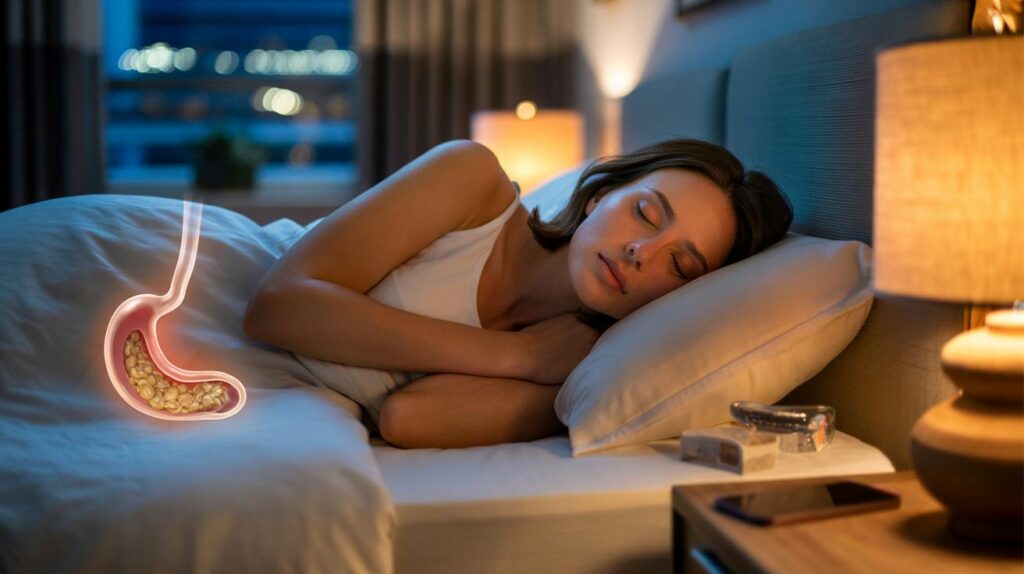
Wellness feeds say it like a whisper: sleep on your left and your body will thank you. Digest better, snore less, help your heart, even drain toxins in your brain. Is that real science or just another bedtime story chasing clicks?
I watched a friend at 3.13 a.m., half propped on a pillow, lit by the cold blue of her phone. Heartburn had yanked her awake again, so she tried that trick she’d seen on TikTok: roll to the left, hug a cushion, breathe. The room settled; the dog stopped pacing; the city pressed its soft hum against the window. She didn’t need a lab coat to notice the difference, just a minute of quiet and a belly that stopped burning. The next night she tried again. Patterns began to form in the messiness of real life. Something simple was happening here. Something not quite magical, but stubbornly useful. She fell asleep before the video ended. A question stayed awake.
Left side, right story: what your body actually does at night
Let’s start with the claim that left-side sleeping helps reflux. Your stomach sits slightly to the left, with the outlet curving down and the top valve angling up. On your left, gravity nudges acid away from the oesophagus; on your right, that angle can tilt the wrong way. Sleep on your left and many people feel less burn. It’s not myth. It’s plumbing.
Ask around and you’ll hear it. A cabbie in Hackney swears his night-time heartburn halved when he stopped flopping onto his right. Surveys suggest around one in five adults gets heartburn weekly, and small trials have shown left-side sleeping can reduce night-time acid exposure by a meaningful chunk. No pills, no gadgets, just a pivot in bed and a taller pillow. **Sleeping on your left isn’t magic, but it can be smart.**
Then there’s the heart. People often think lying on the left “crushes” it. The heart sits left-of-centre, true, yet in healthy folks it doesn’t mind the side. Those with heart failure often prefer the right because left-side pressure can feel uncomfortable, which is about sensation more than damage. Snoring and mild apnoea are more about side versus back anyway; side-sleeping tends to keep the airway more open than lying flat. And those viral “lymph detox” claims? The system does drain into the left duct, but sleep detox is a poetic stretch. *Your body isn’t a geometry problem; it’s a lived-in place.*
Trying the left-side experiment: small tweaks that help
There’s a right way to try left-side sleeping without wrecking your neck. Think of a gentle scaffold. Use a medium-firm pillow that keeps your neck level, not craned. Tuck a thin cushion between your knees to stop hips from twisting. If reflux bothers you, raise the head of the bed by 10–15 cm or use a wedge under the torso, not just extra pillows under your head. Two weeks like this tells you plenty.
Common mistakes make left-side nights fail. People curl into a tight C, chin jammed to chest; that can pinch the airway and stir up neck pain. Others rotate their top leg forward so the pelvis torques and the lower back shouts by dawn. Try a soft cushion hug, shoulders stacked, ears aligned over shoulders. And breathe low into the belly, not up into the collarbones. Let’s be honest: nobody really does that every day. But once you feel the difference, you’ll do it more nights than not.
You also don’t need to be a purist. If you’re a die-hard right-sleeper, split the night: left for the first half, drift as you wish later. Comfort is not a luxury; it’s the mechanism.
“Use the position that reduces symptoms and lets you sleep. Left can help reflux and late pregnancy, but the best position is the one you stay in long enough to rest.” — a sleep physiologist once told me
- For reflux: left side + elevated torso beats left side alone.
- For pregnancy (third trimester): any side is better than back; left is often comfier.
- For snoring: side over back; left or right matters less than staying lateral.
- For shoulder pain: hug a pillow, don’t sink into the mattress edge.
So… myth or secret? A kinder way to think about it
We’ve all had that moment when the night feels longer than it should and the bed feels like a puzzle you can’t solve. The left-side story lives there, inside little experiments people run in the dark. It isn’t a miracle cure. It is a nudge. The kind that stacks odds in your favour without demanding much back. Try it for reflux. Use it through late pregnancy to keep blood flow happy and the bump settled. Lean on it if you snore and your partner has run out of polite elbows.
Be wary of overpromises. “Left side cleanses the brain overnight” sounds sleek, but human evidence is thin. The more faithful truth is gentler: positions matter when they fix a problem and vanish when they don’t. If your shoulder complains on the left, roll right and prop differently. If your heart pounds uncomfortably on the left, go right. Side-sleeping beats back-sleeping for snorers, most nights. The secret, if there is one, is listening to your body with a bit of structure and a lot of grace.
| Point clé | Détail | Intérêt pour le lecteur |
|---|---|---|
| Reflux relief | Left-side + torso elevation can reduce night-time acid exposure | Fewer wake-ups, less burning, better sleep continuity |
| Pregnancy comfort | From 28 weeks, side-sleeping is encouraged; left often feels best | Supports blood flow and peace of mind without complicated rules |
| Snoring and airway | Side beats back for snorers; left vs right is less critical | Quieter nights, less partner disturbance, lower morning grogginess |
FAQ :
- Does sleeping on the left help my heart?For most healthy people, the heart is fine on either side. Those with heart failure often prefer the right because the left can feel uncomfortable, but that’s about feel, not damage.
- Will left-side sleeping fix my heartburn?It often helps. Pair left-side sleeping with raising your upper body by 10–15 cm, avoid heavy meals late, and give it a couple of weeks to judge.
- I’m pregnant. Do I have to sleep on the left?From the third trimester, any side is better than your back. Many find the left comfier, yet don’t panic if you wake on your back—just roll to a side and settle.
- What about snoring and mild sleep apnoea?Side-sleeping can reduce snoring by keeping the airway from collapsing. Left versus right matters less than staying off your back.
- My left shoulder hurts on that side. What now?Try a pillow hug, a knee spacer, and a slightly higher head support, or flip to the right and keep the same supports. Pain trumps theory.



Franchement, ça sent le truc bien-être vendu sur TikTok. Des études solides et randomisées, ou juste des anecdotes qui rassurent? Je reste sceptique pr l’instant.
Testé hier soir avec un oreiller entre les genoux + la tête un peu surélevée: reflux presque disparu, rendormi en 10 min. Merci pour les conseils précis! 😊