
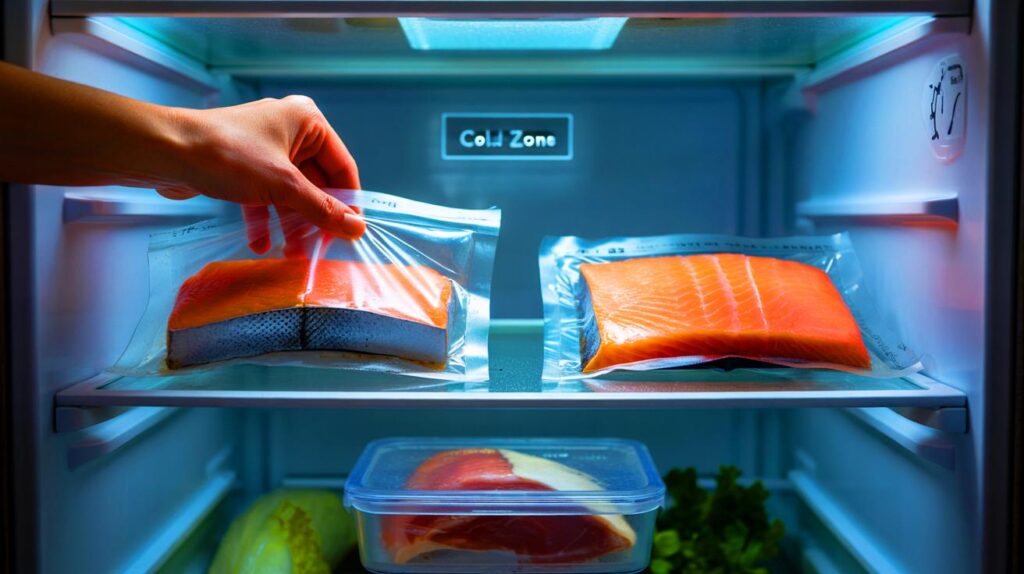
That pink packet in your fridge looks fine, the clock says otherwise. Here’s what smart shoppers do before dinner.
You grabbed smoked salmon on offer, tucked it beside the milk, and life happened. Now the use-by date lurks. Before you panic or pour it straight into the bin, learn the checks, the temperatures and the time limits that actually protect you.
What the date really means
Smoked salmon is a ready-to-eat food. The use-by date is a safety deadline, not a flavour cue. Shops must set it to cover the time food stays safe if you keep it chilled. A sealed, vacuum-packed, factory-sliced pack usually sits in the fridge for 2 to 3 weeks if the chill chain stays intact. Once you open it, the clock shrinks to about 2 days. If you bought it freshly sliced at a counter, aim for 5 to 8 days from purchase.
Temperature drives risk. Keep smoked salmon at 0–4°C ideally, and never above 6°C. Warm fridges shorten safe life. A crowded shelf can create warm spots. A prolonged car journey warms the pack. Each slip adds up.
Use-by means safety. Do not serve smoked salmon past that date to pregnant people, older adults, or anyone with lowered immunity.
The 30-second safety check
When the date is close, your senses add another filter. Run this quick check before you plate up:
- Smell: a sour, sharp or very fishy odour means risk. Bin it.
- Colour: dull flesh, blotches or greying edges suggest spoilage. Avoid it.
- Texture: slippery or sticky surface signals bacterial growth. Do not eat it.
- Pack: a torn seal or a pack that balloons indicates gas from microbes. Throw it away.
- Storage truth: if the salmon sat out at room temperature, do not second-guess. Discard it.
If it smells clean, looks bright and feels firm, quality remains. The taste may fade a touch with time. The risk profile still depends on the date and the temperature history.
Never taste test “to be sure”. Smoked salmon that looks wrong can contain enough bacteria to make you ill after one bite.
Cold facts: storage, cross-contamination and your fridge
Put the pack in the coldest shelf, not the door. Keep it in its original pack or transfer it to an airtight box. Air exposure speeds spoilage. Reseal opened packs tightly, and mark the opening date. Use clean knives and boards. Keep smoked salmon away from raw meat and raw juices.
Check your fridge with a thermometer. Many domestic fridges sit at 7–8°C unless you set them lower. Aim for 4°C. Leave space around the pack for airflow. Move salmon straight from the shop to your fridge. Use a cool bag for longer trips.
Freezing and thawing without losing quality
You can pause the clock if you act before the use-by date. Freeze at −18°C or lower. Quality stays at its best for 2 to 3 months, and safety holds if the temperature remains steady. Freeze in portions so you only thaw what you need. Label the date. Press out excess air.
Thaw in the fridge, not on the worktop. Slow thawing protects texture and keeps the surface temperature low. Once thawed, eat within 24 hours. Do not refreeze thawed smoked salmon. If you plan to cook with it, add it at the end to avoid toughening the flesh.
Freeze before the use-by, thaw in the fridge, and never refreeze. That trio prevents the biggest home mistakes.
How long can you safely keep it
| Scenario | Chill target | Safe window |
|---|---|---|
| Unopened, vacuum-packed | 0–4°C | Up to the use-by date (often 2–3 weeks from packing) |
| Opened, resealed tightly | 0–4°C | About 2 days |
| Bought freshly sliced at the counter | 0–4°C | 5–8 days from purchase |
| Frozen before use-by | ≤ −18°C | Best quality for 2–3 months |
Who faces the highest risk
Cold-smoked fish can carry Listeria monocytogenes. This bacterium grows at fridge temperatures and targets the most vulnerable. Pregnant people, older adults and those with weakened immunity face a higher chance of severe illness. For these groups, stick to the use-by date without exceptions. Consider cooking smoked salmon in quiches, pastas or fish pies, and serve it steaming hot. Heat reduces listeria risk.
Sense versus safety: what to trust
Your nose and eyes catch many spoilage problems. They do not catch all. Listeria does not always announce itself with bad smells. A swollen pack is a loud warning, yet some dangerous packs stay flat. Treat the date as the first line of defence, and your senses as a second line.
A clear plan you can follow tonight
- Check the use-by date. Past the date and you are in a risk zone, especially for vulnerable people.
- Confirm fridge temperature. Aim for 4°C before you store or thaw fish.
- Inspect the pack. Any swelling, damage or leaks means you bin it.
- Open and smell. Fresh, clean, mildly smoky is fine. Sour or sharp is not.
- Touch lightly. Firm is good. Slime signals growth and waste.
- If close to the date and you will not eat it today, freeze it now.
Make quality last without gambling
Buy smaller packs if you live alone. Portion and freeze half on day one. Keep salmon on the lowest shelf, near the back. Store it above raw meat, not below it. Use a labelled box to avoid stray odours from cheese or onions. Plan dishes that use the whole pack within two days of opening.
What to do with borderline salmon
If the date is today, the pack is pristine and the salmon passes every sensory check, you can still reduce risk. Serve it promptly from the fridge. Keep it out of the “danger zone” between 8°C and 60°C. If you feel uneasy, cook it in scrambled eggs, a hot chowder or a creamy pasta. Heat tilts the balance your way.
Know the label language
Use-by means safety. Best-before means quality. Smoked salmon carries a use-by date, so treat it with care. Check for storage advice such as “keep refrigerated 0–4°C” and “consume within 2 days of opening”. These lines reflect how the product was packed and the salt and smoke levels used by that brand.
A final tip that saves money and stomachs: keep a cheap digital thermometer in your fridge, and one in your freezer. Verify that the fridge stays at about 4°C and the freezer at −18°C. That small check pays for itself the first time it prevents a spoiled pack. If your fridge struggles in summer or during a heatwave, lower the dial one notch and shuffle food to maintain airflow.
If you enjoy smoked salmon often, set a routine. Shop with a cool bag, label each pack at home, and schedule dishes around the opening date. Turn leftovers into cooked meals within 48 hours. You will cut waste, protect your household and still enjoy that silky slice without second-guessing your gut.



Brilliant guide—especially the 30‑second check and the “never taste test” warning. I definitley used to trust my nose too much. The temp advice (aim for 4°C, skip the door shelf) and freeze‑before‑use‑by are gold. I’m going to label packs and quit guess‑the‑date. Also ordering a cheap thermometer; I didn’t realise many fridges sit at 7–8°C. Thanks!
Quick question: if it smells clean and looks bright but it’s one day past the use‑by, is it still a hard no for everyone, or only for pregnant/older/immunocompromised people? Also, do the rules differ for hot‑smoked salmon vs cold‑smoked?