
A burst of early-season chill is lining up behind the current mild spell, raising questions about travel and routines.
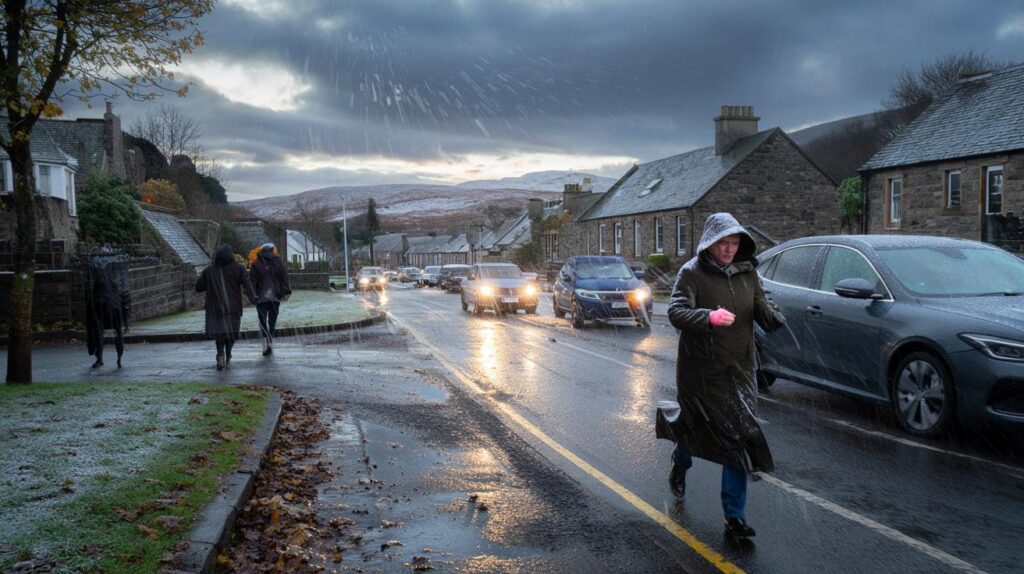
After days of calm, high pressure and gentle sunshine, computer weather maps now flag a sharp flip towards a colder, more unsettled spell later in October, with a window for widespread flurries over one weekend and a brief return to wintry conditions for parts of the UK.
What the latest maps show
Model guidance highlighted by WXCharts points to a notable dip in temperatures over the weekend of 25–26 October. That drop opens the door to showers turning wintry in places, especially where air is lifted over hills and colder pockets settle in. Signals indicate bands of snow grains or sleet could clip northern England, Wales and Scotland on Saturday morning, with the focus gradually shifting south and east during the day as showers move along a developing westerly flow.
Forecast maps indicate a 48‑hour window, 25–26 October, when parts of the UK may see snow or sleet, mainly on higher ground and in the north.
By Saturday evening, the risk band edges further south in England, though the stronger signal remains over Wales and Scotland. Into Sunday, the chance persists in Scotland and increases a little for eastern England as colder air filters in behind a passing low pressure system. Most low‑level spots that see flakes are unlikely to see prolonged settling, but brief coverings on grassy surfaces cannot be ruled out where showers turn heavier.
Where and when could snow fall
The set-up favoured by the models resembles a classic late‑October pattern: high pressure retreats, the jet stream dips, and a series of lows spin in from the Atlantic with colder air nibbling in behind fronts. That nudges freezing levels down, especially over upland areas.
| Day | Region | Snow likelihood | Notes |
|---|---|---|---|
| Sat 25 Oct (morning) | Northern England, Wales, Scotland | Low to moderate | Wintry showers most likely above higher ground; transient flakes possible to lower levels in bursts. |
| Sat 25 Oct (evening) | Central and southern England; Wales and Scotland | Low (south), moderate (Wales/Scotland) | Risk band slides south; higher chances remain in western uplands and Scottish hills. |
| Sun 26 Oct | Eastern England; Scotland | Low (east), moderate (Scotland) | Colder air entrenches in the north; scattered wintry showers, chiefly over exposed coasts and hills. |
How cold will it feel
Air temperatures trend sharply down compared with the current mild spell. Guidance suggests the west of Scotland could dip to around 0C at times, with many northern and western areas stuck in single digits by day. A brisk breeze will add bite, especially near showers. Ground frost becomes possible overnight where skies clear for a few hours between bands of precipitation.
Expect a markedly colder feel: around 0C in parts of western Scotland and a raw wind where showers line up.
- Short, sharp showers may hail or turn sleety; heavier bursts can produce quick, slushy coverings on grassy surfaces.
- High routes in northern England and Wales could see temporary slippery patches during showers.
- Wind chill will make temperatures feel several degrees lower near exposed coasts and hills.
What the met office outlook says
Before the late‑month shake‑up, the pattern from 15–24 October leans settled. High pressure keeps most areas largely dry with variable cloud, occasional sunshine and isolated overnight fog patches. Temperatures sit close to the seasonal norm.
Towards the 25 October to 8 November period, the balance shifts. Low pressure systems assert themselves more often, bringing spells of rain and showers, sometimes heavy. Between the wetter interludes, shorter drier windows look likely. Temperatures stay near average for late October into early November rather than plunging for days on end, which limits the scope for long‑lasting low‑level snow.
Late October looks changeable with low pressure in charge: rain or showers at times, brief drier breaks, and temperatures near seasonal norms.
Key timings at a glance
- Now to 24 Oct: chiefly dry under high pressure; patchy fog, sunny spells, seasonal temperatures.
- Sat 25 Oct: colder, showers turning wintry in the north and west; small risk further south by evening.
- Sun 26 Oct: continued wintry risk in Scotland; slim chance in the east; widely colder feel.
- 27 Oct onwards: unsettled spells return with showers or rain; brief calmer windows in between.
Why an october snowfall is possible
Early‑season flakes in the UK usually arrive when polar‑maritime air surges south behind an Atlantic system. The air itself is cold aloft rather than deeply cold at the surface, but showers drag that chill down, and any heavier burst can turn to sleet or snow on higher ground. The Scottish Highlands often see the first dustings by October; elsewhere, any low‑level flakes tend to be fleeting and melt quickly on mild ground.
Elevation tips the balance. A drop of a few hundred metres in freezing level can be the difference between cold rain and a half‑hour of wet snow over moors and passes. That is why maps show higher probabilities over Wales’ uplands, the Pennines and Scottish hills, with only marginal, localised chances at lower levels.
How to read the snow maps you’re seeing
Snow‑risk charts aggregate several ingredients: upper‑air temperatures, surface temperatures, moisture and lift. They are snapshots of model output, not guarantees. A subtle shift in wind direction or timing can move a shower streamer by 30–50 miles. As the weekend nears, short‑range radar and nowcasting will refine the picture within a few hours’ lead time. If you live near higher routes, watch for updates on Saturday morning and evening, when bands are most likely to pivot.
What you can do before the weekend
- Check car essentials: screenwash rated for freezing, de‑icer, scraper, and tyre tread above 3 mm for wet roads.
- Plan journeys around the most shower‑prone windows; allow extra time over moors and higher passes.
- At home, bleed radiators and test timers; short cold snaps expose weak boilers and stuck valves.
- Keep a small bag of grit or coarse salt for paths; a quick sprinkle helps during brief sleety bursts.
- Look in on neighbours who rely on transport or heating support, especially if nights turn frosty.
Extra context for travellers and events
Late October often coincides with school half‑term in parts of the UK, which increases motorway traffic and raises demand for rural stays in upland areas. Short, sudden showers can catch drivers out on high sections of the M62, A66 and A9, where visibility and grip change rapidly. Check for convective bands lining up on radar before setting off, and build in a break point where you can pause if a heavier burst sweeps through.
For runners and outdoor organisers, a plan B matters. Mark courses away from exposed ridges, brief marshals on wind chill, and keep foil blankets on hand for participants who stop moving. Walkers should add a thin insulating mid‑layer and a hat to their kit list; once the breeze picks up, perceived temperatures tumble even when the thermometer shows mid‑single digits.
What this means for the weeks ahead
A brush with wintry showers in October does not lock in a cold season. With temperatures projected to sit near average into early November, most snow signals hinge on short incursions of colder air behind fronts. Expect a back‑and‑forth pattern: wet and windy spells interspersed with clearer, colder snaps. If you commute over higher routes, treat those snaps as your cue to shift to winter routines, even if low‑level towns stay wet rather than white.



Didn’t we hear this last October and it ended up as cold rain? I’ll believe “widespread flurries” when I see them. Models flip‑flop every 6 hrs and teh bands can shift 50 miles—sounds a bit clickbaity.