
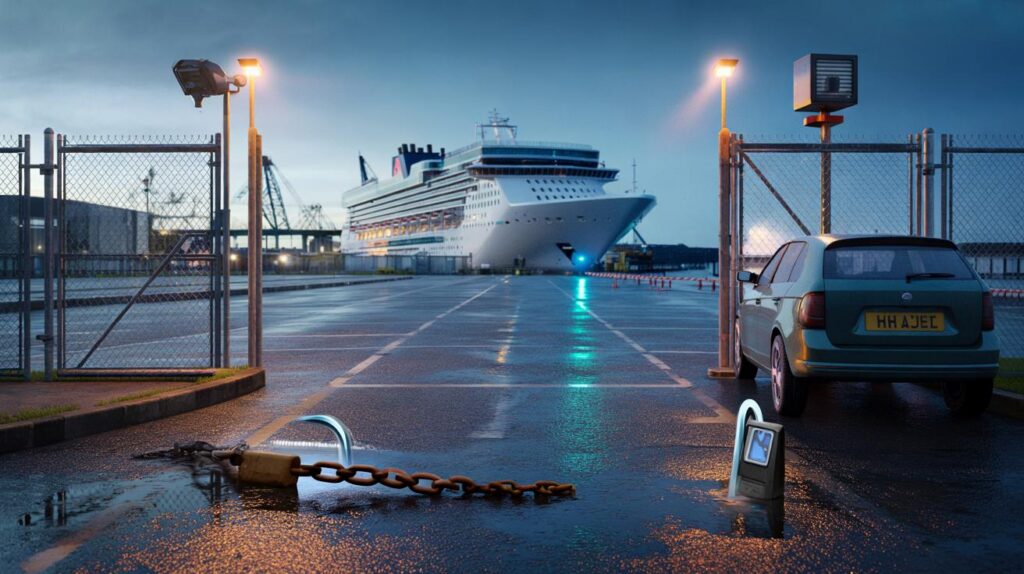
Sunset sailings, packed suitcases and the promise of a break. Then, a grim discovery in a long-stay bay. Empty tarmac.
Police in Hampshire are investigating a spate of vehicle thefts linked to a cruise parking site in Southampton, raising urgent questions for travellers who leave their cars behind while they head to sea.
Police probe and a 24-hour window
Officers from Hampshire Constabulary are examining a cluster of thefts reported at a site on First Avenue in Millbrook, used by travellers heading for the city’s busy cruise terminals.
Detectives say the vehicles disappeared within a short period between 9 and 10 September, suggesting coordinated activity rather than opportunistic crime.
Seventeen vehicles were reportedly taken from a First Avenue cruise parking unit in Millbrook between 9 and 10 September.
The unit is operated by Southampton Cruise Parking Services, which has been asked for comment. Investigators continue to establish how the thieves accessed and removed multiple cars without raising the alarm.
| Location | First Avenue, Millbrook, Southampton |
| Operator | Southampton Cruise Parking Services |
| Reported period | 9 to 10 September |
| Vehicles affected | 17 |
| Police reference | 44250409694 |
| Information line | Crimestoppers 0800 555 111 |
What witnesses and signs at the site reveal
Signage on the building states that the premises are under 24-hour surveillance. Another sign warns that vehicles and their contents remain on site at the owner’s risk. Such warnings now sit awkwardly against a high-volume theft within a tight time window.
“Under 24 hour surveillance” and “vehicles left at owners’ sole risk” appear on signs at the First Avenue unit.
Investigators will assess whether cameras covered key access points, whether recordings were retained, and whether perimeter and gate controls functioned as intended. If the thieves exploited a predictable routine, investigators will want to know how.
What this means for cruise travellers
A long-stay car park promises convenience. You arrive, drop the keys or park, then head for the quayside. That convenience can create a clear target. Vehicles often sit unattended for days while owners are out of contact at sea. Thieves know that delay buys them time to move, replate or strip cars.
- Choose parking with staffed presence, not just cameras.
- Ask how keys are stored if you must hand them over.
- Note the exact location and take timestamped photos when you leave.
- Remove documents, spare keys and valuables from the vehicle.
- Add a visible deterrent such as a steering lock or pedal lock.
- For keyless cars, store the fob in a Faraday pouch before handover.
What to do if your car is missing
Act fast. Quick steps preserve evidence, reduce loss and help insurers process claims.
- Call 999 if a theft is in progress or you see suspects.
- If the vehicle has gone, report it to police via 101 or online and obtain a crime reference number.
- Inform the parking operator in writing and request CCTV retention and a security log from the relevant period.
- Notify your insurer immediately and provide proof of parking, booking details and photographs.
- If your car has a tracker, activate it and give the police live access.
- Contact your finance provider if the vehicle is on PCP or lease.
- Remove the vehicle from any app-based keys or digital accounts.
Police reference for this incident: 44250409694. You can share information anonymously via Crimestoppers on 0800 555 111.
Liability, insurance and those ‘owner’s risk’ signs
Parking sites often display “owner’s risk” notices. These warnings do not automatically relieve operators of responsibility. In paid facilities, the operator usually owes a duty to take reasonable care of vehicles left in their charge. That duty may include secure key storage, controlled perimeter access, functioning CCTV, adequate lighting and competent staff procedures.
Whether compensation applies depends on the facts. If a car park operated robust security yet thieves defeated it with sophisticated methods, insurers may handle the loss under comprehensive cover. If basic safeguards failed, customers could argue the operator did not take reasonable care. Keep all paperwork and ask for their written incident report.
Most comprehensive policies cover theft from car parks, subject to the policy excess and any security conditions. Some insurers require the use of steering locks on high-risk models. No-claims discounts may be affected, so ask about protection and the impact on premiums. If you used a credit card to purchase parking, you may have limited protection for services not provided with reasonable care and skill.
How long-stay car parks can tighten security
- Use controlled gate systems backed by ANPR and audit trails for every vehicle movement.
- Store customer keys in certified safes with dual-control access and logging.
- Segment parking areas, so thieves cannot move many cars without passing multiple checkpoints.
- Retain high-resolution CCTV for at least 31 days and ensure all approaches are covered.
- Increase staffed patrols during known cruise changeover periods.
- Run spot checks to match keys, registrations and booking IDs before any release.
Why thieves target port cities and long-stay bays
Port schedules create predictable peaks when thousands of travellers park and depart within hours. Off-site storage yards fill quickly. That pattern can allow criminals to scout, plan and strike when staff attention stretches across multiple sites. Many modern vehicles also face keyless relay attacks, where criminals amplify the signal from a fob to unlock and start the car without the key present. Visible locks and secure key handling disrupt that method.
Police data over recent years shows vehicle theft fluctuates but remains a persistent problem, with organised groups focusing on sought-after models and parts. High-demand components such as catalytic converters, infotainment units and body control modules add profit incentives. Long-stay contexts give time to dismantle tracking devices or move vehicles into containers bound for overseas markets.
Practical steps before you sail
- Photograph your car, mileometer and any pre-existing damage at the handover point.
- Record the VIN and keep copies of your V5C and insurance documents at home, not in the glovebox.
- Ask for written confirmation of where your vehicle will be stored and who holds the keys.
- Enable any OEM tracking or “theft alert” notifications in your vehicle app.
- Place a discreet ID card in the cabin with your phone number and the words “police only”.
The appeal for information continues
Detectives are piecing together the movements of vehicles on and around First Avenue during the period in question. They want dashcam footage from drivers who passed through Millbrook on 9 or 10 September, especially near industrial estates feeding the cruise terminals. Residents who noticed unusual tow trucks, low-loaders or convoys of unfamiliar cars can help build a clearer picture.
Have information about suspicious activity near First Avenue on 9–10 September? Quote 44250409694 when you contact police.
For now, cruise-goers setting off from Southampton can reduce risk with simple layers of protection and pointed questions at booking. Thieves prefer soft targets. Visible deterrents, verified procedures and good paperwork make your car harder to take — and easier to trace if the worst happens.



Seventeen cars gone from a “24/7 surveilance” lot in a single day—without alarms or staff intervening? That screams systemic failure. I’d like to see their key handling logs and gate records.
Note to self: fit a big yellow steering lock before sailing—maybe a decoy clamp too 🙂