
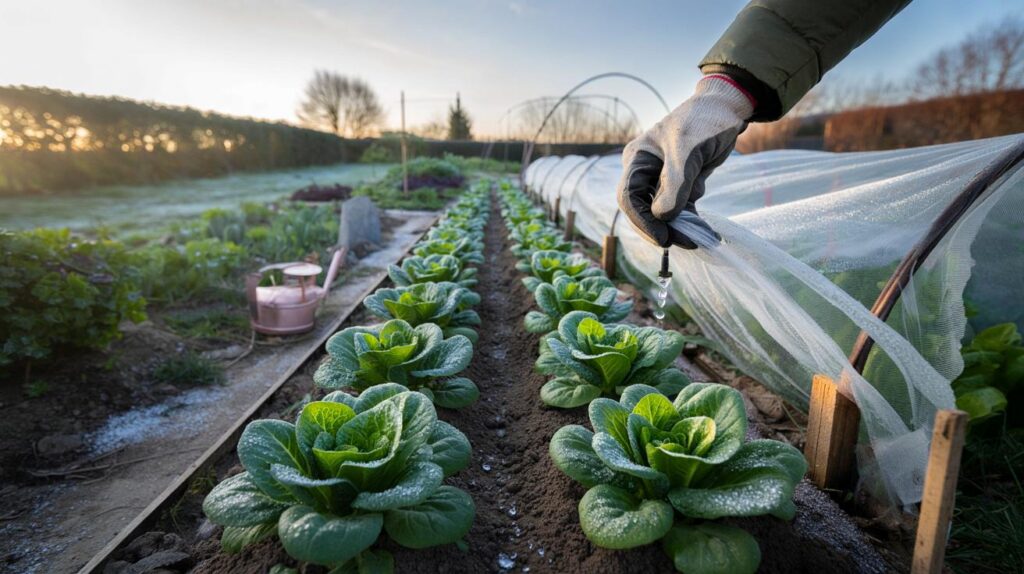
As clocks go back and gardens fall quiet, a tiny window still opens. The ground holds warmth. Your dinner might change.
Across the country, many gardeners stop at the first frosts. Yet the soil often sits warmer than the air. Shorter days slow growth, but they don’t end it. With a timely sowing and modest protection, spinach and lamb’s lettuce keep plates green while the rest of the plot sleeps.
The late-sowing truth most people miss
Autumn growth hinges on two things: temperature and daylight. Once average soil drops near 7–8°c and day length dips below ten hours, seedlings creep rather than race. They still establish if you give them a fortnight to settle before real winter bites. That is the gap most gardeners skip.
Hit a 10–14 day window now and you bank hardy rosettes that hold through winter and surge in early spring.
In much of southern Britain, that window sits around 15–25 October under a light fleece. In the Midlands and the North, it shifts earlier by roughly a week. Along mild coasts, it stretches longer. Miss it and growth pauses too soon. Catch it and you get steady pickings, then a flush once daylight returns in February.
Three moves that change the outcome
1) Give each plant air and light
Cramped rows trap damp and shade the crown. That invites mildew and slow recovery after cutting. Space rows at 25–30 cm. Thin seedlings early.
- Spinach: 5–8 cm within the row for baby leaf; 10–15 cm for larger leaves.
- Lamb’s lettuce (mâche): thin to 2–3 cm for dense baby tufts; 5 cm for rosettes.
- Sowing rate guide: spinach 0.8–1.2 g per metre; lamb’s lettuce 0.3–0.6 g per metre.
Rake a shallow drill 1–1.5 cm deep. Scatter seed thinly. Backfill lightly. Firm with the back of a rake. A level surface sheds heavy rain more evenly.
2) Water enough, never too much
Autumn swings between downpours and dry spells. Fresh seed needs even moisture in the top 2 cm of soil. That is the layer that dries first in wind.
Water in the morning, and only when the surface looks dry. Aim for 5–8 litres per square metre per session on free‑draining beds.
Use a fine rose to avoid capping the soil. In wet regions, lay a light mulch of chopped leaves or straw. It softens raindrops and cuts splashes that spread disease. Overwatering invites damping off. Underwatering delays emergence. Check with a finger. If soil sticks, skip the can.
3) Shield seedlings and vent on bright days
A fleece or mesh cover shifts the microclimate by a degree or two. Wind drops. Night chills soften. Leaves stay cleaner. Weigh the edges with bricks or pegs so gusts can’t lift it.
Lift or vent the cover when daytime temperatures top 10°c to prevent humidity build‑up and soft growth.
Choose 17 g/m² fleece for general protection or 30 g/m² in exposed sites. In sluggy plots, place organic pellets sparingly outside the rows or set beer traps beyond bed edges. Birds rarely peck through a well-tensioned cover.
What you can actually expect to harvest
Timing sets the tone. Sow now and you bank small, sturdy plants before the darkest weeks. You then pick baby leaves in mild spells. In February and March, growth lifts fast. That is the payoff for a small gamble late in the year.
- Spinach flavour sweetens under chill as sugars rise in the leaves.
- Lamb’s lettuce holds tender texture and a gentle, nutty taste in low light.
- Cut‑and‑come‑again picking gives 6–10 harvests from one bed across winter and early spring.
Yields vary with shelter and latitude. A protected square metre often returns 1–2 kg of leaves between November and March. Baby leaf harvests sit at the lower end. Full rosettes push the top end. Pick in the afternoon on bright days if you watch nitrates. Light lowers leaf nitrate content, which suits winter salads.
| Region | Latest sensible sowing under fleece | First likely baby pick | Notes |
|---|---|---|---|
| South and South‑West | 15–25 Oct | Late Nov to mid‑Dec | Strong rebound from mid‑Feb with longer days. |
| Midlands | 10–20 Oct | Early to late Dec | Growth pauses in deep cold; protect from wind. |
| North and Scotland (lowland) | 5–15 Oct | Mid‑Dec to Jan | Focus on baby leaf; add cloche or tunnel if exposed. |
| Mild coastal belts | Up to late Oct | Early to mid‑Dec | Salt winds dry beds; mulch helps moisture hold. |
Seed choices that handle cold and short days
Not all varieties behave the same in a murky winter. Pick types bred for cool growth and disease resistance.
- Spinach: ‘Giant Winter’ rides low light well; ‘Medania’ suits baby leaf; ‘Red Kitten’ brings colour and tidy habit.
- Lamb’s lettuce: ‘Vit’ forms reliable rosettes; ‘Gala’ gives neat, uniform leaves; ‘Pommette’ copes with chill under fleece.
Fresh seed matters. Spinach seed loses vigour after a couple of years. Lamb’s lettuce seed keeps better. Test germination by pre‑sprouting a teaspoon on damp paper for three days at room temperature before committing a bed.
Common pitfalls and quick fixes
Fungal issues in damp spells
Poor airflow and soggy surfaces drive downy mildew and damping off. Widen rows. Vent covers on bright days. Water at the base, not over the canopy. Remove yellowed leaves before they rot on the soil.
Slugs and birds
Clear decaying foliage around bed edges. Use coarse grit or wool pellets as a barrier on short rows. Keep fleece tight so beaks can’t dip through gaps.
Nutrient dips
Fresh compost feeds soil life but can cool the bed if applied thickly now. Spread a 1–2 cm layer, not more. Add a light sprinkle of seaweed meal if leaves pale. Avoid heavy nitrogen in low light. It lifts nitrate levels and soft growth.
Make small spaces work through winter
Balcony growers can sow in 20–30 cm deep boxes. Use a peat‑free mix with sharp sand for drainage. Water with 1–2 litres per box when the top looks dry. A clear lid or a homemade frame with fleece acts as a mini cloche. Turn the lid a finger’s width on sunny days to vent steam.
On allotments, slip a fleece inside a low tunnel to stack protections. That adds a helpful 2–4°c on still nights. It also keeps the wind from wicking moisture out of leaves. Mark rows with string so you can lift and replace covers quickly between showers.
Planning ahead while the bed stays busy
Late sowings do not block spring plans. Harvest spinach hard in March, then fork in a light compost dressing. Follow with early carrots or spring onions. Lamb’s lettuce clears fast if you cut whole rosettes in late February. That frees ground for peas or radish. The winter bed, in effect, gives food now and time later.
Think of the late sowing as a bridge. You feed yourself in winter and step into spring with living soil that never sat bare.
If your first attempt feels risky, try a simple trial. Sow one short row of each crop this week. Cover one, leave one uncovered, and note emergence and first pick dates. The numbers under your sky beat any rule of thumb. Over one season, you will learn your own 14‑day window. Over many, you’ll stretch it with a cloche, a timely watering can, and a habit of venting at 10°c or above.



This is the nudge I needed! The 10–14 day “bank rosettes” idea makes sense, and the vent‑at‑10°C tip is gold—my fleece gets soggy too. I’ll thin harder (I usually cram rows… oops) and try ‘Giant Winter’ + ‘Vit’. Thanks—definately bookmarking.
On the nitrate bit: you suggest picking in the afternoon on bright days. In a dim northern winter, that’s rare. Does a cheap LED grow light for 2–3 hours actually lower leaf nitrates similarly, or is outdoor sunlight uniquely effective? Any data on temprature interactions with nitrate levels in spinach?