
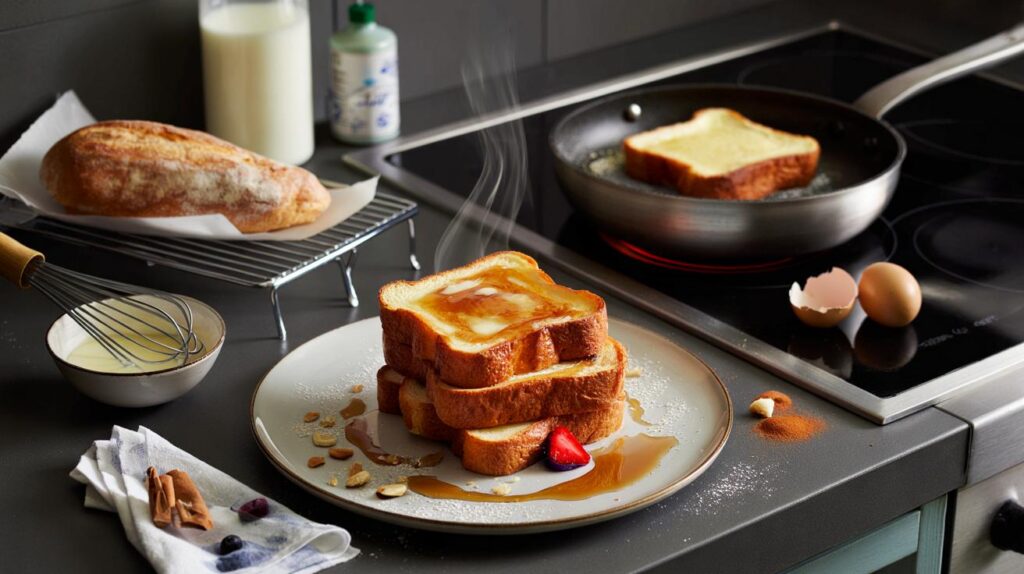
The loaf on the counter has gone stiff and shy, the kind you’re tempted to toss in the bin. Money’s tight, dinner felt rushed, and yet the craving for something sweet won’t go away. What if that stale bread could be the best dessert you eat all week?
The kitchen was quiet, the sort of weeknight silence that hums after the washing-up is done. I found half a baguette at the back of the bread bin, scarred by yesterday’s air, good for nothing or so it seemed. Butter hit the pan, the first melt whispering, and the room shifted from tired to hopeful in a single breath.
I cracked eggs into a bowl, a drizzle of milk, a spoon of sugar, a flick of cinnamon, and watched the mixture turn the colour of afternoon tea. Outside, a neighbour’s lamp blinked on, the street looked soft and kind, and I felt that small, rare freedom of cooking just for the joy of it. The bread had other ideas.
From sad loaf to café dessert
Day-old bread is a quiet miracle waiting to happen. It drinks in custard without collapsing, keeps its shape, then cooks to edges that shatter like caramel glass. Fresh bread can taste great, but stale bread has backbone.
In Lyon, a baker once told me his pain perdu uses yesterday’s brioche because “it remembers better.” He meant the crumb keeps its dignity after a long soak, and you get that café-level finish at home. In the UK, we throw away tonnes of bread each year, a small tragedy that tastes like nothing. Turning it into dessert gives it a second act.
The science is simple and kind. As bread stales, starches set and water moves out, which is why it feels tough. Add a light custard and those starches relax, the crumb loosens, and every pocket fills with flavour. Heat does the rest, browning sugars on the surface until your kitchen smells like a patisserie.
The method that turns leftovers into silk
Cut the bread into thick slices, 2–3 cm, so the centre stays custardy. Whisk 2 large eggs, 150 ml whole milk, 1 tbsp caster sugar, 1 tsp vanilla, a pinch of salt, and a shy dusting of cinnamon. Dip each slice for 30–45 seconds per side if it’s a baguette or farmhouse loaf, up to 90 seconds for brioche, until it feels heavier but not collapsing.
Heat a non-stick pan over medium, then add 1 tbsp butter and 1 tsp neutral oil. Lay the slices in without crowding and cook 2–3 minutes per side, nudging the edges to check the colour. You want deep gold with freckled brown spots, the kind of toast that looks like it’s wearing holiday tan.
We’ve all had that moment when the middle is wet and the outside is nearly there. Lower the heat, give it time, and finish in a 160°C oven for 5–7 minutes if the slices are thick. It tastes like Sunday morning, even on a Tuesday night.
There are traps, and they aren’t your fault. Slices too thin go limp, slices too fresh go mushy. Pan too hot and the sugar burns before the custard sets, pan too cool and nothing browns, it just sulks.
Let the cooked slices rest on a rack for a minute so steam can escape and the crust stays crisp. Dust with icing sugar only right before serving, not while they sweat on the plate. Let’s be honest: nobody really does this every day.
Some recipes drown the bread. This one kisses it. Soak to the centre without flooding the crumb, then let control and patience do their work.
“The difference between decent French toast and unforgettable French toast is 30 seconds of courage,” said a Paris hotel cook who’d been flipping slices since before I could tie an apron.
- Use whole milk for silk, double cream for decadence, or half-and-half for balance.
- Swap cinnamon for cardamom, or add orange zest for a citrus lift.
- Finish with a spoon of rum or brandy in the custard if it’s an adults-only plate.
- Top with macerated berries, a quick honeyed yoghurt, or a scoop of vanilla ice cream.
- For crunch, scatter toasted almonds or crushed cornflakes over the finished slices.
A little ritual that tastes like care
I like to warm the plates while the last batch finishes on the hob. A tiny thing that makes the first bite feel bigger, like pulling on a jumper that’s been on a radiator. Food that meets you halfway is rare; a few minutes more can be the difference between “fine” and the story you text to a friend.
French toast is really an attitude to leftovers. Not “make do,” but “make it lovely.” A spoon of salted butter melting into the crust. A drizzle of maple syrup pooling at the edges. The soft sound a knife makes when the custard is set just right.
This recipe is forgiving. It likes baguette, batch loaf, challah, brioche, and even sourdough if you slice it thick and watch the salt. It’s a dessert that cleans your conscience as much as your bread bin. And if you’ve got nothing but a heel and a wish, you still have a plan.
There’s room to play. Swap milk for coconut milk and add lime zest, or fold in cocoa and a pinch of espresso powder for cappuccino vibes. Add a spoon of tahini to the custard for a nutty echo that tastes expensive and grown-up.
Or go classic: warm strawberries, a kiss of balsamic, black pepper that makes the fruit taste more like itself. A spoon of Greek yoghurt alongside keeps things bright. Some nights you want glitter; some nights you want hush.
Serve it at 10pm after a long day, or at 10am with a crowd. A loaf no one wanted becomes a table everyone leans toward. The kind of small magic worth sharing.
| Key points | Details | Interest for reader |
|---|---|---|
| Best bread for the job | Day-old brioche, challah, baguette, farmhouse; 2–3 cm slices | Turns “waste” into café-quality dessert with reliable texture |
| Custard ratio | Per 2 slices: 1 egg + 75 ml whole milk + 1 tsp sugar + pinch salt + vanilla | Easy to scale for solo nights or weekend crowds |
| Heat management | Medium heat, butter-and-oil mix, 2–3 min per side, finish in oven if thick | Prevents soggy middles and burnt edges; delivers crisp shell and soft centre |
FAQ :
- Can I use sourdough?Yes. Choose a loaf with a soft crumb and mild tang, slice thick, and watch the salt. The chew gives great texture.
- What if I only have skimmed milk?It works, but add 1 tsp melted butter or an extra yolk to boost richness and browning.
- How do I stop the middle being soggy?Lower the hob to medium, cook longer, and finish 5–7 minutes at 160°C. Drain on a rack, not a plate.
- Can I skip sugar in the custard?Yes, though a little sugar helps colour. Sweeten at the end with syrup, honey, or fruit if you’d rather.
- Can I prep ahead?Whisk the custard and chill up to 24 hours. Soak and cook to order, or par-cook and reheat 5 minutes in a 180°C oven.



Tried this tonight with a heel of brioche—followed the medium heat + oven finish and warmed the plates. It was cafe-level good. The “kiss, don’t drown” soak is key. Added cardamom instead of cinnamon and a splash of rum; definitly making again. Thanks for turning my bread-bin guilt into dessert.