
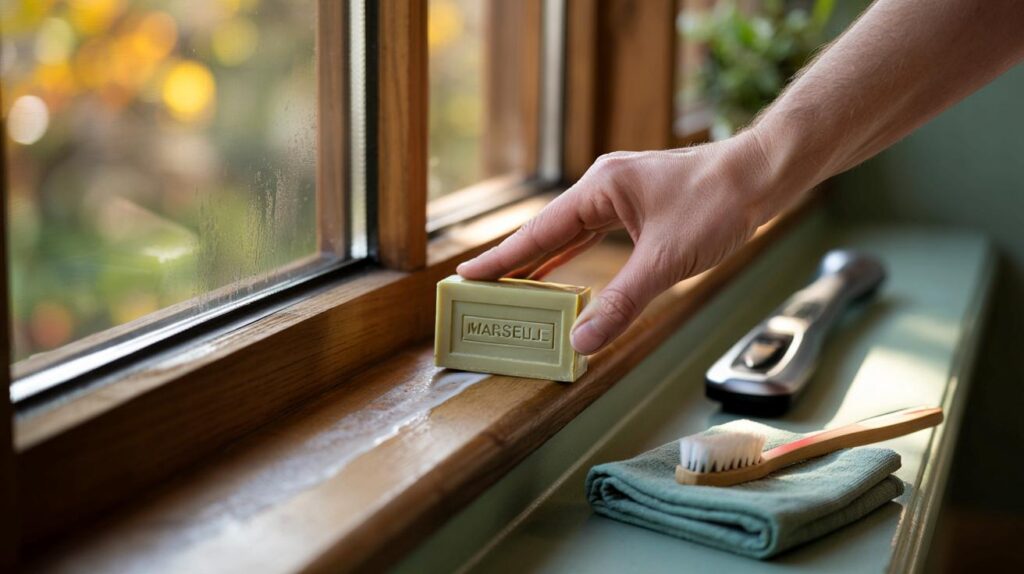
Autumn damp swells frames and tempers. A forgotten £2 household staple is back in drawers, promising quieter rooms and quicker exits.
Across the UK, homeowners are turning to an old-fashioned bar of Marseille soap to silence squeaks and ease sticky window rails. The claim is simple: three minutes, no aerosols, no oil. The method comes from a long domestic tradition and relies on the chemistry of the soap, not a slick marketing spray.
Why a Marseille soap bar is back on your rails
Most squeaks come from dust, humidity and raw friction along the window’s running surfaces. Timber swells, particles grind, and the sash drags. Rub a hard soap into the contact points and the fatty acids leave a thin, dry film that cuts stiction. You feel the difference on the first open-and-close cycle. The idea pre-dates modern lubricants and survived because it’s cheap, quick and clean.
Traditional Marseille soap lists 72% olive oil on the stamp. That high oil content helps deposit a microscopic layer across the rail. The layer reduces rubbing without attracting as much grime as grease. There’s no solvent smell. No aerosol mist. No sticky residue under your fingers.
Three minutes. About £2 per bar. No industrial lubricant. Repeat every 3–4 months as rails dry out.
What you need for a 3-minute tune-up
- One bar of Marseille soap (72% olive oil) or a traditional hard household soap
- One clean microfibre cloth
- One old toothbrush for debris in the rail
- Handheld vacuum, optional for quicker clean-up
A transparent glycerine soap also works. It tends to wear off a bit sooner than olive-based soap but glides well at first.
The step-by-step, with practical timings
Pick a dry day if possible. Moist air can make the soap foam, leaving traces you’ll need to wipe away. If a timber sash still drags after treatment, the wood may be parched or swollen. Nourish dry wood first, then repeat the soap pass.
Does it work on every frame
Timber responds best. Softwoods such as pine or spruce often show the biggest gain because they swell readily with moisture. Hardwoods benefit too, although you may need one extra pass to coat the contact edges. On aluminium and uPVC frames, the method can calm noise on metal tracks and nylon guides. Keep the bar away from rubber weather seals, which should remain dry. Always test on a hidden section before a full application.
How long the effect lasts
Expect a few months of easier movement, depending on dust levels and local humidity. Households near busy roads may see rails load up with particles faster. Many DIYers keep a small shard of soap in the toolbox; as it hardens, it lays down a finer, longer-lasting film.
Refresh the rails when you feel drag return. A clean, soapy hint beats the sharp odour of solvent sprays indoors.
How it stacks up against common lubricants
| Option | Typical cost per job | Time to apply | Mess risk | Likely duration | Indoor air impact |
|---|---|---|---|---|---|
| Marseille soap bar | ~£0.10–£0.20 | 3–5 minutes | Low | 2–4 months | Very low |
| Silicone spray | ~£0.50–£1.00 | 2–3 minutes | Overspray on walls/glass | 2–6 months | Solvent vapours |
| Petroleum jelly | ~£0.20 | 5–7 minutes | High, attracts dust | 1–3 months | Low |
| Graphite powder | ~£0.30 | 2–4 minutes | Black residue | 3–6 months | Low |
The soap route scores on cost, cleanup and indoor air. Sprays can last longer in some cases, but overspray on paint and glass adds risk. Grease attracts dust that later slows rails again. Graphite excels in locks; on window rails it can mark paintwork.
Small cautions that save bigger headaches
- Avoid getting soap on glazing or silicone sealant. Wipe any smears quickly to prevent streaks.
- Do not over-apply. A thick layer can gum up with dust and reverse the gain in a week.
- Keep the bar off finished floors; it can create a slip hazard if crumbs drop underfoot.
- If timber is swollen from a leak, treat moisture first. Mechanical friction fixes will not address water ingress.
- For heritage joinery, test on an inconspicuous patch to ensure no dulling of waxed finishes.
Beyond windows: where a quick rub helps
The same approach tames rattly shutters, squeaky cabinet drawers and sticky wardrobe sliders. A light pass along chest-of-drawers runners can restore smooth travel. For exterior gates and wooden latches, reapply more often after rain. Do not use on bicycle chains or bearings, which need purpose-made lubricants.
When the problem is misalignment, not friction
Soap won’t fix broken rollers, loose hinges or warped sashes. Check for uneven gaps, crushed weather seals and fresh rub marks on paint. Lift the sash slightly as you slide; if it frees up, the rollers may be worn. If the frame binds even with the sash removed, a joiner may need to plane and refit the contact edge. Persistent condensation and swelling can signal poor ventilation or failed glazing units.
A quick cost-and-time check for busy households
A 300 g Marseille bar often lasts a year across an average flat. Ten windows treated quarterly use only a few grams per pass. That’s under £1 in consumables for 40 minutes of maintenance spread over the year. A single can of silicone spray costs several pounds and risks overspray cleanup that adds time you did not plan for.
For those sensitive to aerosols, the dry-film nature of hard soap helps. It reduces squeal without a cloud of solvent. If you like a cleaner scent, choose an unscented traditional bar and store a thin slice in the toolbox. Hard slices apply more precisely and waste less.
The chemistry, briefly, and why it feels different
Marseille bars contain sodium salts of fatty acids from olive oil. When you rub the bar on a dry rail, a micro-layer of these salts and trace oils forms. This layer lowers the surface’s coefficient of friction just enough for sliding hardware. Because the film is thin and dry to the touch, dust has less to cling to compared with greasy products. That balance explains why the glide feels crisp rather than oily.



Tried this today on a sticky sash in my 1930s semi — three minutes, tops, and it actually glides. Cant believe a £2 Marseille bar beat my silicone spray and left zero smell. Will report back in a few months on how long it lasts.