
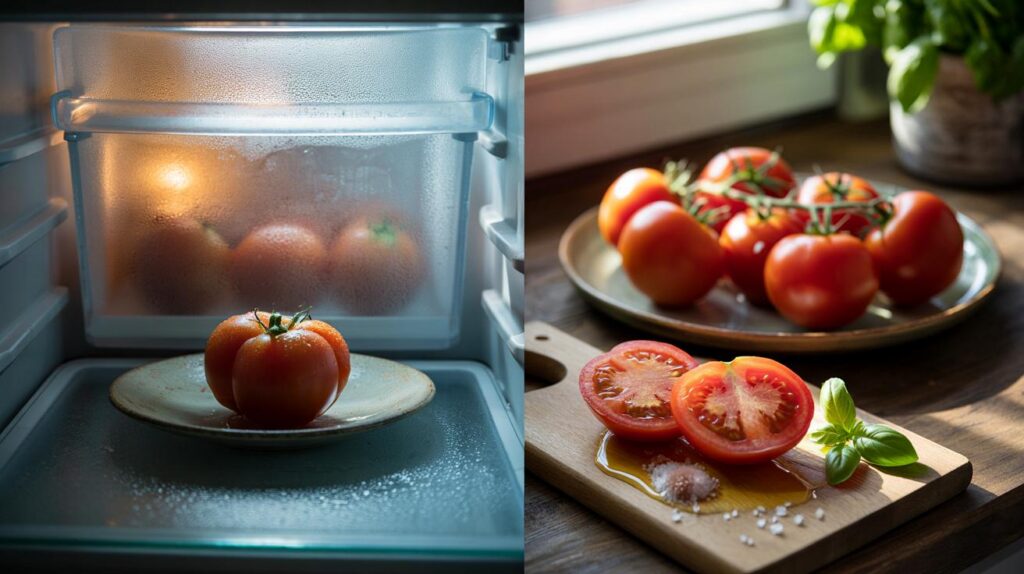
You buy a bag of glossy tomatoes, pop them in the fridge “to keep them fresh”, and days later they taste flat and oddly watery. It feels frugal, even logical, to chill them. Yet the cold quietly steals what makes a tomato a tomato: that sunshine smell, that snap, that rush of juice. The habit is common. The result is universal. And the fix is simpler than you think.
It was a Tuesday evening in a small London kitchen, rain needling the window, when I grabbed a tomato straight from the fridge. The skin looked perfect. The knife slid through. The flavour did not arrive. The salad sat there like a polite guest. No sparkle, no lift, just a faint echo of summer.
I remembered the same variety from the market two days earlier. Warm, heavy, fragrant. A tomato that asked to be torn into. I’d chilled the rest to “save” them. The chill had saved nothing. The chill changed everything.
Cold cancels the magic your nose is waiting for
Tomatoes don’t just taste sweet and tangy; they smell like sunshine, grass and subtle spice. That aroma carries the joy. Lowering the temperature switches off the fruit’s aroma-building machinery. Beneath 10°C, tomatoes start to sulk. Their cells slow, flavour molecules fade, and the texture loses its bounce.
We’ve all had that moment when you slice into a bright red tomato and it tastes like wet cardboard. A chef in Hackney told me he can spot a “fridge tomato” blindfolded: the scent dies first, then the snap. He joked that cold turns a £3 heirloom into a 30p mistake. Harsh, but you know the feeling.
Scientists have measured this disappearing act. Cold disrupts the creation of volatile compounds—the tiny molecules that deliver tomato’s signature perfume. Genes linked to aroma go quiet in the chill, and enzymes that keep the fruit juicy and bright get sluggish. The result is mealy flesh and muted taste. Bring a cold tomato back to room temperature and some scent returns, but the deep notes are often gone for good.
Keep tomatoes at room temperature, and treat them like fruit (because they are)
Store whole tomatoes on the counter, stem-side down, in a single layer. Room temperature—around 18–22°C—is the sweet spot. Keep them out of direct sunlight on a cool worktop or a ventilated bowl. If they’re rock-hard, let them ripen a day or two. If they’re fully ripe and you can’t eat them the same day, tuck them in the fridge briefly, then bring them back to room temperature before serving. Warmth coaxes back some aroma.
Rinse only just before eating. Washing in advance leaves moisture that nudges mould. Keep tomatoes away from ethylene-sensitive neighbours like leafy greens, and don’t stack them in deep bowls where pressure bruises the bottom layer. Let’s be honest: nobody actually does that every day. Still, even small changes—like not throwing them straight into the salad drawer—make a visible difference.
Home habits shape flavour more than fancy recipes. Once cut, refrigeration is fair game for safety, but give sliced tomatoes 20–30 minutes on the counter before you plate them. That little pause wakes up the nose. A tomato that smells like itself will taste like itself.
“Cold steals aroma; warmth gives it back—at least partly.”
- Room temp for whole tomatoes, brief fridge only when fully ripe and necessary
- Stem-side down on a plate or rack, single layer, out of direct sun
- Wash right before eating, not before storing
- Let chilled tomatoes warm up before serving for better flavour
- Use very ripe or bruised ones for sauces, soups, or roasting
What you gain when you keep the fridge door closed
Something odd happens when you treat tomatoes right: simple food suddenly sings. A BLT becomes a better BLT. A cheese toastie with sliced tomatoes becomes lunch you talk about. **When the aroma is there, you need less salt, less dressing, less everything.** The fruit carries the dish, the dish carries the meal, and waste shrinks because you actually want to eat the tomatoes you bought.
There’s thrift in it too. Skip the chill and your tomatoes ripen evenly rather than dying quietly at the edges. If a few nudge past their peak, blitz them into a quick sauce with garlic and olive oil. Roast the stragglers at high heat until their edges caramelise. **Good tomatoes are forgiving—if you give them a warm start.** That small counter habit can rescue a weeknight pasta, a picnic salad, even breakfast on toast.
There’s a tiny ritual to it: you come home, place the tomatoes on a plate, stem-side down, and let the room do the work. No gadgets. No fuss. **Flavour from patience, not tech.** In a world of smart fridges and clever apps, that’s a quiet relief.
A tomato kept warm is a small act of care
A tomato isn’t a jewel. It’s just fruit that once felt the sun. Keep it at room temperature and you honour that. Tell a friend this week. Share a salad that smells like summer in the middle of March. Trade the habit of chilling for the habit of tasting. Your kitchen will feel different. So will your next sandwich.
| Point clé | Détail | Intérêt pour le lecteur |
|---|---|---|
| Room-temperature storage | 18–22°C, out of direct sunlight, single layer | Better aroma, fuller flavour, less waste |
| Short, strategic refrigeration | Only for fully ripe or cut tomatoes; let them warm before eating | Balances safety with taste |
| Simple handling habits | Stem-side down, wash last, use overripe ones for cooking | Fewer bland bites, more useful meals |
FAQ :
- Should I ever refrigerate tomatoes?If they’re fully ripe and you won’t eat them the same day, a short chill slows spoilage. Bring them back to room temperature before serving to recover some aroma.
- What about cherry tomatoes?Treat them the same. Keep them on the counter in a shallow bowl. If they’re very ripe, refrigerate briefly and warm before eating for best flavour.
- How long do tomatoes last at room temperature?Typically 2–5 days, depending on ripeness and temperature. Firmer tomatoes last longer; soft, fragrant ones want to be eaten sooner.
- Why do refrigerated tomatoes go mealy?Cold triggers “chilling injury” that disrupts cell walls and dulls enzymes. Texture turns grainy, and aroma compounds break down or never form.
- Can I freeze tomatoes?Yes—for cooking. Frozen tomatoes lose fresh texture but are brilliant for sauces, soups and stews once thawed and simmered.



Je viens de tester: sortir mes tomattes du frigo 30 min avant le dîner change tout. Les aromes reviennent et j’assaisonne moins, comme vous dites. Ça parait bête mais le BLT d’hier avait enfin du peps. Merci pour les conseils de stockage (tige vers le bas, couche unique). Je vais arrêter de les enterrer dans le bac à légumes.
Franchement, j’ai toujours gardé mes tomates au frigo et c’est nickel. Peut etre que ça dépend des variétés?