
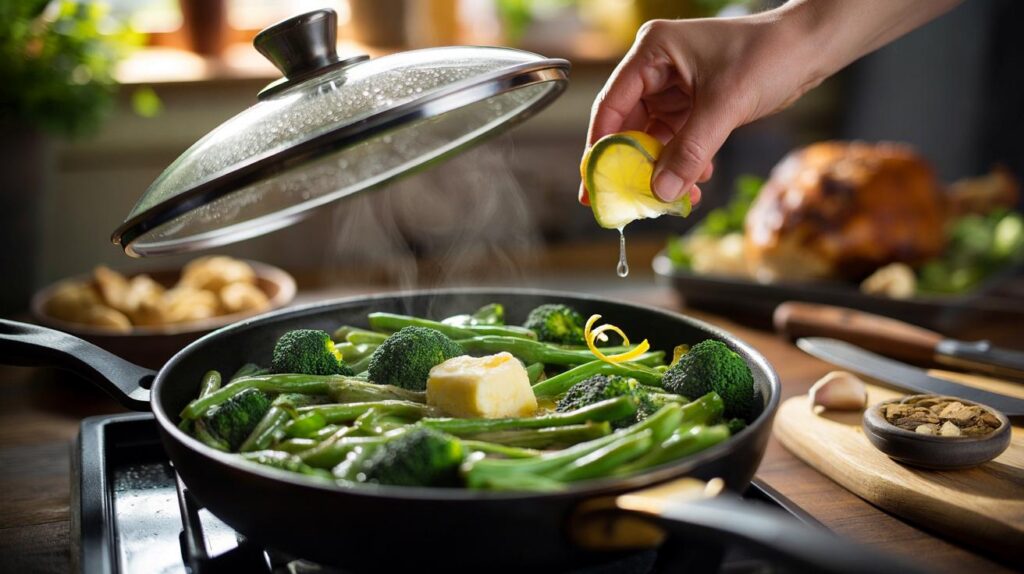
We all think we’re being “healthy” when we dunk broccoli into a rolling boil, then watch it fade to khaki and taste of… not much. Mary Berry does it differently. Her method keeps greens sweet, glossy and bright, with a finish that actually makes you want seconds. And no, it doesn’t involve turning your kitchen into a science lab.
Sunday lunch at my friend Rob’s looked like a postcard: roast chicken, crisp potatoes, and a pan of greens bubbling away, getting softer by the second. Steam fogged his glasses. He poked a floret, sighed, and reached for more salt. It still tasted like hot water.
Then his mum walked in. Calm as you like, she lifted the greens out, flicked them dry in a colander, melted a small knob of butter in a pan, tossed in a crushed clove of garlic, slid the greens back in with a squeeze of lemon. The kitchen smelled like spring. The broccoli squeaked. We all shut up and ate.
She learned it from Mary Berry years ago, she said. One tiny switch. Big difference.
And that’s the point.
The real reason your greens taste flat
Boiling seems safe. It’s what we were taught. You fill a pot, you wait, you go too far. By the time beans go limp or cabbage slumps, flavour has leached into the water. Colour dulls. Texture disappears. You’re left chasing taste with extra salt or a late swirl of oil that can’t quite save it.
At a weekday supper, I watched a neighbour chase that exact moment. He timed the broccoli, set a timer, still overshot by two minutes as a phone buzzed. That’s all it takes for greens to tip from lively to lifeless. When he drained them, the water ran green. His little boy prodded a floret like it might bite back. He didn’t eat it.
What’s actually happening is simple: water is a thief when it’s given time and heat. Aromatic compounds drift, chlorophyll shifts, and the sugars that make greens naturally sweet get diluted. The answer isn’t to give up. It’s to use just enough moisture to soften the fibres, then finish flavour in the pan, not in the pot. Which is where Mary Berry’s approach quietly shines.
Mary Berry’s genius method, step by step
Call it steam-fry. You heat a large frying pan until hot. Add a splash of water — just two or three tablespoons — and your trimmed greens in a single layer. Lid on. Let the trapped steam do the quick lifting: 2 minutes for tenderstem, 3–4 for beans, 1–2 for shredded spring greens. Lid off. Water gone? Drop in a small knob of butter or a drizzle of olive oil, a pinch of salt, a breath of lemon. Toss for 30 seconds. Plate up.
It’s the same spirit as Mary’s classic blanch-and-refresh trick. Quick hot, then cold, then a buttery finish. Steam-fry cuts a step and keeps the kitchen calm. Want variations? Swap butter for olive oil and a crushed garlic clove. Add lemon zest for brightness, or a spoon of capers if you like a cheeky, briny kick. Toasted almonds for beans. A dust of Parmesan on broccoli. **Stop boiling your greens. Finish them with flavour.**
Small tweaks matter. Don’t overcrowd the pan — greens need space to steam, not stew. Keep the water minimal. If moisture pools, tilt the pan and let it evaporate before you add fat. Salt late, so the greens don’t wilt too early. Cook to “squeak”: that moment a bean feels bouncy against the pan. Let’s be honest: nobody actually does that every day. But when you do, dinner lifts.
How to make it everyday-easy
Prep while your main cooks. Trim beans. Slice spring greens. Keep a small bowl with lemon wedges, ready to squeeze. Heat the pan early. As soon as your chicken rests or your pasta drains, give the greens their fast steam, then toss in butter or oil. That last 60 seconds is where the magic happens — the gloss, the fragrance, the way garlic goes soft without burning.
Common trip-ups? Using too much water. Walking away “just for a sec”. Overloading the pan until greens stew. If you’re nervous, steam for one minute less than you think and taste. Raise the heat for the finish so the butter emulsifies with any moisture. Add acidity right at the end — lemon, a dash of vinegar, or a spoon of mustard loosened with oil. On a busy Tuesday, frozen peas love this too: straight into the pan, splash of water, lid on for a minute, then a pat of butter and mint. **Steam, then flavour. It’s that simple.**
There’s a feel to it that becomes second nature. You’ll know it when the colour looks almost neon and the pan goes quiet.
“Cook greens until they wake up, not until they lie down.”
- Greens that love this: tenderstem, green beans, cavolo nero, spring greens, spinach, savoy cabbage.
- Quick finishes: lemon–garlic butter; olive oil, chilli flakes and lemon zest; miso–sesame dressing; anchovy butter and parsley.
- Crunch ideas: toasted almonds, pumpkin seeds, pangrattato, crispy onions.
- Acid hits: lemon, sherry vinegar, rice vinegar, a splash of white wine reduced in the pan.
Why Mary’s way changes the whole plate
Food memory is weirdly powerful. Bright, squeaky greens make roast potatoes taste crisper and chicken feel juicier. They reset your palate with freshness. When you finish greens in the pan, the fat clings, the salt actually sticks, and the acidity lifts the whole bite. That’s why the dish tastes “more”, even with the same ingredients. **Heat, fat, acid, crunch.** That’s the rhythm.
There’s also a quiet confidence in serving something green that looks alive. Guests notice. Kids notice. (On a good day, they even eat it.) And if you want to go full Mary, cook ahead: give greens their quick steam earlier, run under cold water, pat dry, then reheat for 30 seconds in a hot pan with butter and zest as you serve. *It’s the two-minute trick that tastes like a miracle.*
We’ve all had that moment when a bowl of grey cabbage drags an entire meal down. You don’t need a new recipe, or a specialist pan, or a dozen steps. Just change the order: brief steam, then flavour, then plate. It’s kinder to the greens, and kinder to your evening. You’ll taste the difference in one forkful — the snap, the sweetness, the brightness. That little Mary Berry nudge takes you there.
| Key points | Details | Interest for reader |
|---|---|---|
| Steam-fry instead of boiling | Hot pan, splash of water, lid on for 1–4 minutes, lid off, finish with fat and acid | Faster, brighter greens with better texture and flavour |
| Finish flavour in the pan | Butter or olive oil, garlic, lemon, herbs, nuts for crunch | Restaurant-level taste using everyday ingredients |
| Timing and space matter | Cook in a single layer, small water, salt late, look for “squeak” | Reliable results without guesswork or soggy veg |
FAQ :
- What exactly is Mary Berry’s method for greens?Use quick steam in a hot pan with a splash of water, then finish with butter or oil, lemon, and seasoning. It’s essentially a fast steam followed by a flavour glaze.
- Can I make it dairy-free?Yes. Swap butter for extra-virgin olive oil, rapeseed oil, or a nut oil. Add zest, capers, or a spoon of mustard for richness without dairy.
- Does this work with frozen greens?Frozen peas, spinach, and chopped green beans respond well. Steam straight from frozen with a small splash of water, then finish as normal.
- Do I need an ice bath?Only if you’re cooking ahead. For serve-now dinners, the steam-fry approach skips the ice bath. If prepping in advance, cool quickly under cold water, pat dry, then reheat with butter.
- How do I know I’ve cooked them “just right”?Colour should pop, not dull. Beans and broccoli should squeak and feel bouncy. Taste a piece — it should be tender with a little snap.



Tried this tonight with tenderstem and a knob of butter + lemon — the colour stayed bright and the beans actually squeaked. House smelled amazing and dinner was ready faster than boiling a big pan. Definately making this the new default 🙂
Isn’t this basically steam-sauteeing, which restaurants have done forever? Calling it “genius” feels a bit much. That said, the ‘salt late’ tip is interesting. Any blind taste tests vs properly salted, fast-boiled greens?