
Water bills rise, reservoirs wobble, and every litre starts to matter. A quick fix in the bathroom can shift the needle fast.
Across the UK, toilets often send more water away than you’d expect. A small tweak inside the cistern trims each flush without changing habits or comfort. No tools, no mess, and no need to rip out the pan you already have.
Why loos waste more water than you think
Older cisterns can release up to 9 litres at a time. In many homes, flushing accounts for more than a quarter of daily water use. Multiply that by a family and dozens of flushes add up quickly. Much of that volume isn’t always needed.
Modern dual-flush units help. Yet millions still rely on single-flush or dated mechanisms set at generous levels. That’s where a simple spacer inside the cistern makes sense: it reduces the volume the tank can hold, so each refill uses less water.
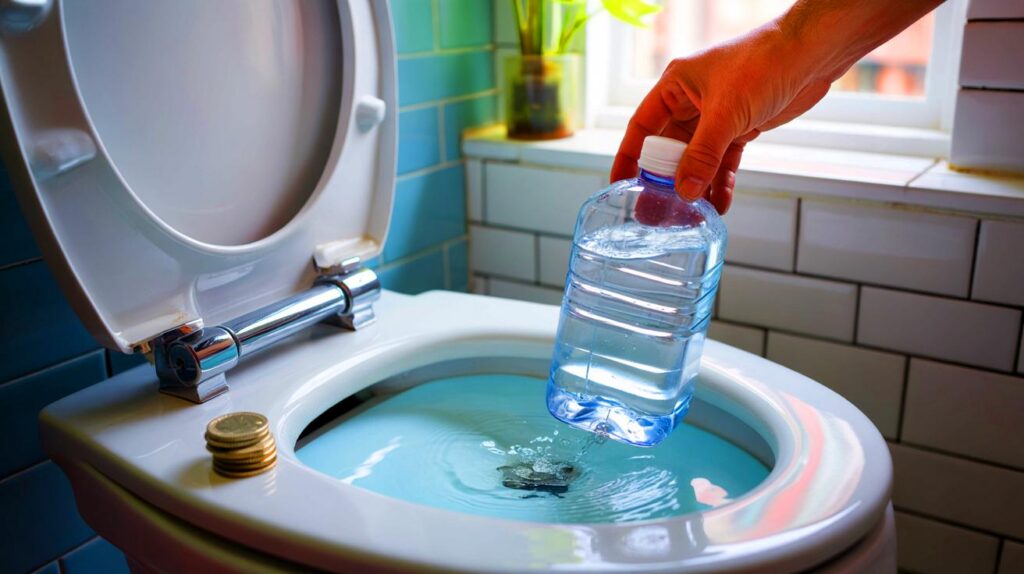
Place a sealed bottle in the cistern so it doesn’t foul the float or valve, and you cut every flush without changing how you use the loo.
The £0 bottle move: how it trims every flush
The principle is basic displacement. A sealed bottle takes up space inside the cistern. Less space means less water per refill, which means less water released per flush. Done well, you save roughly 1.5 to 3 litres each time, often up to 30% on bulky tanks.
What you need
- A sturdy plastic bottle (1–1.5 litres works in most cisterns)
- Fill material: sand, gravel or plain water
- A tight, reliable cap
Step-by-step fit
- Lift the cistern lid and identify the float, inlet valve and flush mechanism.
- Fill the bottle, screw the cap firmly and shake to check for leaks.
- Place the bottle upright in a clear corner, away from moving parts.
- Refit the lid, flush once and watch the refill. Adjust the bottle position if anything rubs or sticks.
Mistakes to avoid
- Loose caps: water seeps in, the bottle sinks, and the trick stops working.
- Fragile fillers: bricks and crumbly materials shed grit that damages seals.
- Overcrowding: too much displacement can weaken the flush, forcing a second go and nullifying the gain.
A single, reliable flush is the goal. If you need to flush twice, reduce the bottle size or reposition it.
When a dual-flush kit makes more sense
If your loo sees heavy use or you already have a compact cistern, a retrofit dual-flush kit can deliver more control. Many models install in under half an hour and offer a short flush for liquids and a longer one when required. In small flats or rentals, combining a modest bottle with a sympathetic flush setting can strike the right balance without major work.
| Option | Typical saving per flush | Upfront cost | Best for |
|---|---|---|---|
| Sealed bottle in cistern | 1.5–3 litres (up to ~30%) | £0 | Older single-flush cisterns; quick wins |
| Retrofit dual-flush kit | Short flush ~3–4 litres; long flush ~6–9 litres | £15–£40 | Frequent use; better control |
| New efficient toilet | As low as 4/2.6 litres (dual) | £120+ | Renovations; long-term upgrade |
How much could your household save?
Start with a simple scenario. A three-person home averages about 15 flushes a day. Cut 1.5–3 litres per flush and you save 22.5–45 litres daily. Over a year that’s roughly 8–16 cubic metres. On a water meter, combined water and wastewater charges vary by region, but even at £2–£5 per cubic metre, you’re looking at £16–£80 a year back in your pocket. Larger families and older cisterns see more.
On top of the bill, there’s resilience. During summer restrictions or in homes on private supply, trimming every routine use helps keep tanks going longer and reduces pressure on storage.
Practical checks after the tweak
- Flush performance: solids should clear in a single flush. If not, reduce volume slightly.
- Float freedom: listen for scraping. A light tap or a repositioned bottle usually fixes it.
- Seal health: a gritty cistern chews through washers. Keep the bottle smooth and clean.
- Lid fit: an ill-seated lid can rattle and stress the mechanism. Ensure it sits flat.
Small add-ons that multiply the gain
Greywater from the shower
Catch the cold run-off while waiting for hot water. A bucketful poured into the bowl can clear waste without touching the flush. In many homes, that’s 4–6 litres a day reclaimed with no plumbing changes.
Check for silent leaks
Leaking flapper valves and sticky inlet valves waste more water than a long shower. A dye tablet or a few drops of food colouring in the cistern reveal seepage into the bowl within minutes. If the colour appears without flushing, replace the seal or adjust the float. This single fix can dwarf the bottle saving.
Tune the refill level
Many floats have a small screw or slider to set the fill height. Back it off a notch. Paired with the bottle, that fine-tune locks in consistent savings without hurting performance.
Who should skip the bottle?
Some ultra-compact or pressure-assisted cisterns don’t have spare space or rely on specific internal geometry. In such cases, a dual-flush kit or a manufacturer-approved adjustment works better. If you rent, check your tenancy agreement before altering fixtures, even if the change is reversible.
A quick way to choose your setup
- If your tank is roomy and single-flush: add one sealed 1–1.5 litre bottle and test.
- If your tank already struggles: try a smaller 0.5–1 litre bottle or move straight to a dual-flush kit.
- If you plan a bathroom refit soon: shortlist a 4/2.6 litre dual-flush toilet and keep the bottle as a stopgap.
Extra context and useful angles
Terminology varies on packaging. Look for “WC cistern inlet valve”, “flush valve” and “dual-flush converter” when shopping parts. A simple float adjustment costs nothing and pairs neatly with the bottle approach. If you run a rain barrel, a small hand jug by the toilet turns storms into flushes, as long as you keep the bowl clean and avoid grit.
For a quick simulation, note your meter before a typical day, make the bottle change, then repeat a week later under similar routines. The difference reflects both the bottle’s impact and any leak fixes you made along the way. Pair the data with your bill’s unit rate to estimate annual savings. Add greywater routines on top, and the cumulative effect becomes hard to ignore.



Brilliant idea — hadn’t realised older loos dump 9 litres a go. I dropped a sealed 1.5L bottle in and it still clears solids fine. Any tips to stop the cap loosing over time? Worried about seepage and grit wrecking the washers.