
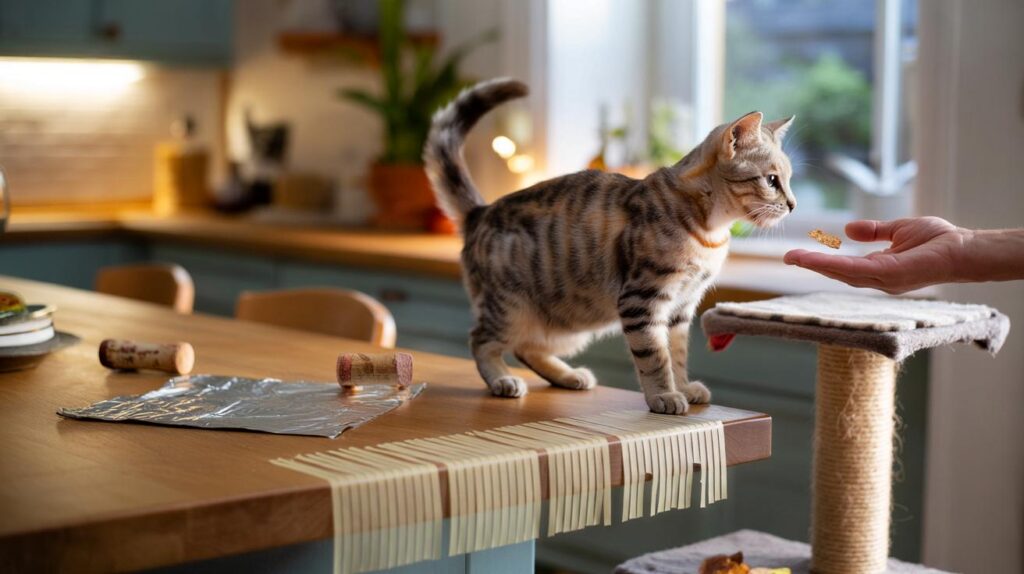
As nights chill, curious cats claim kitchen tables and fray tempers. A simple, kind tactic now promises calmer, crumb-free meals.
Across Britain, owners report toppled glasses, shifting plates and vanishing leftovers as feline acrobats stake a claim on dining tops. The move looks comic until hot pans, sharp cutlery and tears at teatime enter the frame. A low-tech fix now captures attention because it costs pennies, takes minutes and respects the animal.
Why your cat raids the table
Height offers safety and control. Warmth keeps joints happy. Smells of roast chicken, buttered toast or gravy override restraint. A table also gives a clear view of people, plates and open doors, so the cat can map every movement.
Height, heat and human attention
Cats choose high perches to scan space and avoid surprise. A sunny patch on a wooden surface adds heat. Your gaze, your voice and your hands add bonus attention that reinforces the climb without you noticing.
Food odours and routine
Unwashed plates, breadboards and tiny crumbs matter to a nose built for tracking. If a chair sits half-pulled, you also provide an easy stepping stone. The animal learns the route, then repeats it.
The easy deterrent making waves
Double-sided tape along the edge of the table changes the whole equation. Cats dislike sticky sensations on their paw pads. A light tack puts them off the landing without pain or fright, and most stop after a few attempts.
Cats hate sticky paws. A few narrow strips of double-sided tape turn your table into a no-go zone.
How to set it up in 90 seconds
- Wipe the rim of the table and dry it fully.
- Cut slim strips of low-tack, furniture-safe double-sided tape.
- Run a border around the outer 10–15 cm where the cat lands.
- Leave gaps so humans can still grip plates and placemats.
- Remove after 7–10 days once the habit fades.
Safe for furniture and pets
Pick removable, low-residue tape sold for craft or décor. Test a small, hidden patch first on varnished wood or lacquer. Keep strips tidy so fur does not mat. Replace if dust dulls the stick and the deterrent fades.
Add wobble, remove appeal
Where tape feels wrong for you, change the landing physics. An unstable surface kills confidence in the jump and encourages a retreat to a safer perch.
Unpredictable landings curb acrobatics fast; confident jumpers pick steady ground instead.
Simple ways to add instability
- Lay a loosely folded sheet of kitchen foil under a fabric placemat.
- Balance a few empty cardboard tubes or wine corks near the edge.
- Place a light, wobbly chopping board over a tea towel.
- Rest a magazine so it overhangs slightly and shifts under weight.
Offer a better perch
Deterrents work best when you give a superior option nearby. A dedicated high spot satisfies the need to survey, warm up and watch you cook without barging into the plate zone.
Build a legal lookout
- Set an 80–120 cm cat tree by a window with a view of the garden.
- Add a fleece or heat-reflective mat to trap warmth.
- Scent it with a little catnip or a treat scatter for quick wins.
- Position it so the path from floor to perch beats the table route.
Make the allowed spot the best seat in the house: warm, high, stable and rewarding.
Train with rewards, not scolding
Shouting fuels stress and sometimes turns the chase into a game. Calm, consistent reinforcement teaches faster and keeps trust intact.
Reward what you want
Carry a few small treats. When paws touch the tree or window shelf, drop one and praise. Repeat twenty or thirty times across a day, then randomise. If a jump to the table starts, guide the cat down with a hand target or a toy, then pay the perch, not the table.
Keep your house rules aligned
Agree a single rule across the family. Chairs push in after meals. No one slips titbits from the table. Only the perch earns strokes and snacks. Consistency ends mixed messages and speeds habit change.
Pay attention to the right place, ignore the wrong place, and the cat will choose the right place.
Seven quick fixes you can try tonight
- Double-sided tape border to block the landing zone.
- Wobbly surfaces that remove perfect footing.
- High-perch alternative with warmth and a view.
- Treat-and-praise routine for every correct choice.
- Push in chairs and clear food odours straight after eating.
- Ten-minute play burst before mealtimes to burn off energy.
- Night-time kitchen closure with a baby gate if raids happen after dark.
Costs, timing and what to expect
| Method | Estimated cost | Setup time | Typical result time | Notes |
|---|---|---|---|---|
| Double-sided tape | £3–£6 | 2 minutes | 1–3 days | Pick low-tack; test on finishes first. |
| Wobbly surface tricks | £0–£4 | 3 minutes | Immediate | Foil and corks work; keep hot pans away. |
| Cat tree or window shelf | £20–£60 | 10 minutes | 2–7 days | Place by light; add cosy fabric for warmth. |
| Reward-based training | £2–£5 | Ongoing | 3–10 days | Small treats reduce calories; praise matters. |
| Chair management and cleaning | £0–£3 | Daily | 1–2 days | Remove odours; block easy stepping stones. |
| Pre-meal play burst | £0 | 10 minutes | Same day | Feather wands or balls drain spring energy. |
| Night kitchen closure | £0–£20 | 1 minute | Same night | Use a gate or door if raids happen at 3 am. |
Hygiene and safety you should not ignore
Hot dishes, lit candles and knives turn a stunt into a trip to the vet. Clear hazards before you plate up. Keep raw meat trays and poultry juices off reachable surfaces. Wipe tables with pet-safe cleaner to strip odours that invite repeat visits.
Glassware tips easily under a hind paw on a sliding landing. Choose heavier tumblers during training days, and avoid tall stacks that collapse like dominoes.
When the habit sticks fast
Increase play and puzzle feeding to meet mental needs. Two short sessions morning and evening beat one long blast. If a sudden surge in table raids pairs with weight loss, thirst or restless nights, book a health check to rule out pain or thyroid issues that can drive seeking and pacing.
Extra tips for sharper results
Simulate mealtime chaos and train outside real dinner. Set the table, rattle cutlery, then cue the cat to the perch and pay well. You will build a strong default that holds when guests arrive. Rotate rewards: a lick of pâté, a play burst, or a warm spot under a lamp on the approved perch. Variety keeps focus high and stops begging on the edge of the plate.
If you juggle work and school runs, stack the deck. Keep a small tin of treats by the legal perch, store foil and tape in a drawer near the table, and set a reminder for an evening play sprint. Tiny systems turn good intentions into habits that hold through the winter.



Double-sided tape sounds clever, but does it ruin varnish long-term? Anyone tried it on oak or lacquer without residue?
Tried the wobbly chopping board trick and my cat looked personally offended, then claimed the window shelf instead. Success! 🙂