
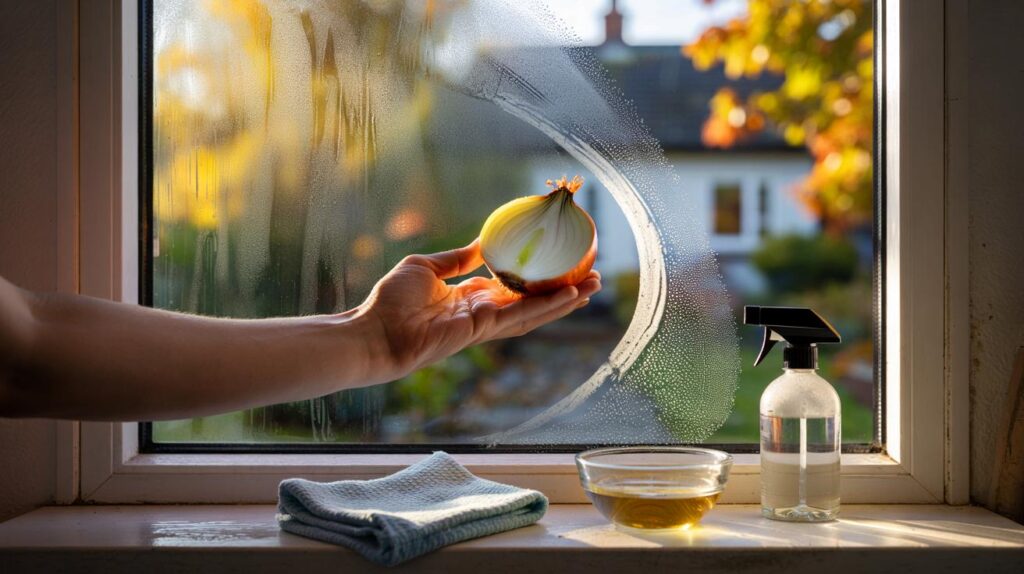
Autumn’s low sun exposes every fingerprint and smear, turning window care into a time-sink just when evenings draw in.
Across Britain, people are spraying, wiping and repeating, only to watch greasy halos bloom when light hits the glass. The season’s colder air invites condensation, city grime sticks, and kitchen vapours cling. A simple switch in method can cut time, cost and waste while leaving glass bright.
Why your windows still streak in autumn light
Streaks often come from hard water minerals, overused detergent, and fluff from unsuitable cloths. Low, raking sunlight makes every residue visible. Kitchen windows collect fine oil aerosols, while traffic film leaves a dull layer on street-facing panes. Using too much product builds a sticky film that grabs dust, so the next clean looks worse.
Microfibre helps, but friction alone struggles against greasy deposits. People reach for stronger sprays, then rub harder, which drives residues into corners and along edges. Results look fine indoors, then fail the daylight test.
Key point: streaks usually come from residue, not dirt left behind. Break the film and a single wipe finishes the job.
The 29p onion method: what actually happens on the glass
A halved raw onion brings a low-cost, low-chemical answer hiding in plain sight. The juice contains mild acids and sulphur compounds that behave like gentle surfactants. They loosen oily films and lift static dust, so the cloth removes contaminants instead of smearing them around.
There’s a hygiene bonus as well. Onion chemistry can inhibit some microbes on contact, useful on high-touch glass doors and patio sliders. You avoid propellant aerosols and reduce fragrance load indoors, which benefits children and pets sensitive to strong scents.
One onion, two panes: half an onion typically cleans a large patio door inside and out, then a standard window.
Five-minute routine for a streak-free finish
- One onion (yellow or white), cut cleanly in half.
- One dry, clean microfibre cloth.
- A bowl of lukewarm water for optional rinse.
- Press the freshly cut face onto the glass and glide in overlapping passes.
- Refresh the cut surface by trimming a sliver if it dries during the task.
- Pay attention to greasy patches near handles and kitchen hobs.
- Wipe once with the microfibre to lift moisture and residues.
- For sensitive noses, mist with lukewarm water and wipe again for a neutral finish.
The technique relies on contact, not force. The juice breaks the film; the cloth simply lifts it. Most panels take two minutes per side once you get your rhythm.
What about the odour?
The smell fades after drying, especially with a quick water pass and ventilation. If you’re concerned, add a final wipe with a damp cloth lightly scented with lemon peel. Avoid perfumed sprays afterwards, as they reintroduce residues that streak.
Cost, time and waste: how it compares to shop-bought sprays
People in the UK report using a bottle of glass cleaner every month or two, plus paper towels. That adds up quickly, and the plastic mounts.
| Method | Typical cost per clean | Time for two panes | Residue risk | Packaging |
| Halved onion + microfibre | £0.15–£0.29 | 4–6 minutes | Low | None |
| Glass spray + paper towels | £0.80–£1.50 | 6–10 minutes | Medium to high | Plastic bottle + towels |
| Glass spray + microfibre | £0.40–£0.90 | 6–8 minutes | Medium | Plastic bottle |
Assume a typical home cleans eight panels every fortnight. Spray plus disposables can reach £78 a year once you factor paper and product. Switching to an onion and a reusable cloth cuts that to just a few pounds, while reducing plastic and bin waste.
Money saver: cleaning glass twice a month with an onion can trim £50–£80 from annual consumables.
Technique upgrades that boost clarity
Beat hard water spots
Where limescale speckles the glass, pre-dampen a corner of the onion in warm water and add a tiny pinch of table salt. This forms a mild slurry that lifts mineral dots. Rinse lightly and wipe dry to avoid salt crystals on seals.
Edge control for frames and seals
Residues accumulate along rubber seals and in corners. Run the onion right up to the edge, then fold your microfibre into a sharp pad to trace the perimeter. This prevents bright centres with dull borders.
Squeegee finish for big panes
On patio doors, wipe the onion as usual, mist with plain water, then draw a squeegee from top to bottom. Buff the bottom edge with microfibre. This method leaves an even film-free shine at speed.
Where it works best—and where to test first
- Domestic windows and French doors: reliable results indoors and out.
- Shower screens: effective on soap scum when followed by a water rinse.
- Oven door glass: breaks baked-on grease before a full clean.
- Car side glass: OK for external glass; avoid tints and test a small corner first.
A small spot test makes sense on treated or coated glass. Avoid letting juice sit on natural stone sills—wipe drips promptly to protect porous materials.
Health, pets and practical cautions
Onion residue should not be ingested by pets. Keep animals away during cleaning and finish with a water wipe on low windows or patio doors. People with sensitive skin can wear thin washing-up gloves. Rinse cloths promptly so odour does not linger in laundry.
Do not use on leaded glass or antique painted panes without advice. For exterior winter cleans, choose a milder day; freezing surfaces reduce effectiveness and can trap moisture near seals.
Why this odd trick suits autumn routines
Shorter days magnify imperfections as light travels at a shallow angle. By dissolving the greasy layer first, you cut passes down to two: apply, then wipe. That saves minutes per pane, which matters when you’re racing the dusk.
The onion sits on the countertop you already own. No special bottle, no propellants, no synthetic fragrance haze. The method scales from a quick touch-up before guests arrive to a full-house reset at the weekend.
Extra ideas that pair well with the onion method
Keep two microfibres: one for glass only, one for frames. Wash them in cool water without fabric softener, as softeners leave films that cause streaks. Store half-onions in a lidded jar for a day if you plan a second session; trim the face before use to refresh the juice.
For a quick calculation, time one window with your current spray and towels, then repeat next week with the onion method. Multiply the difference by the number of panes you clean monthly. People report saving 30–40 minutes across an average three-bedroom home, alongside lower spend and less bin waste.
If you prefer a scented finish, dab the cloth with a drop of diluted lemon or eucalyptus oil only after the glass is dry. Keep applications minimal to avoid building a new film. For very dusty frames, vacuum edges first; less grit means fewer micro-scratches and a brighter look when the sun returns.



Tried this on two street‑facing panes—onion swipe, microfibre wipe, done. No smearing in that brutal autumn sun. Weirdly quicker than my spray‑and‑rub routine. Odour faded after a quick water mist. Colour me converted.