
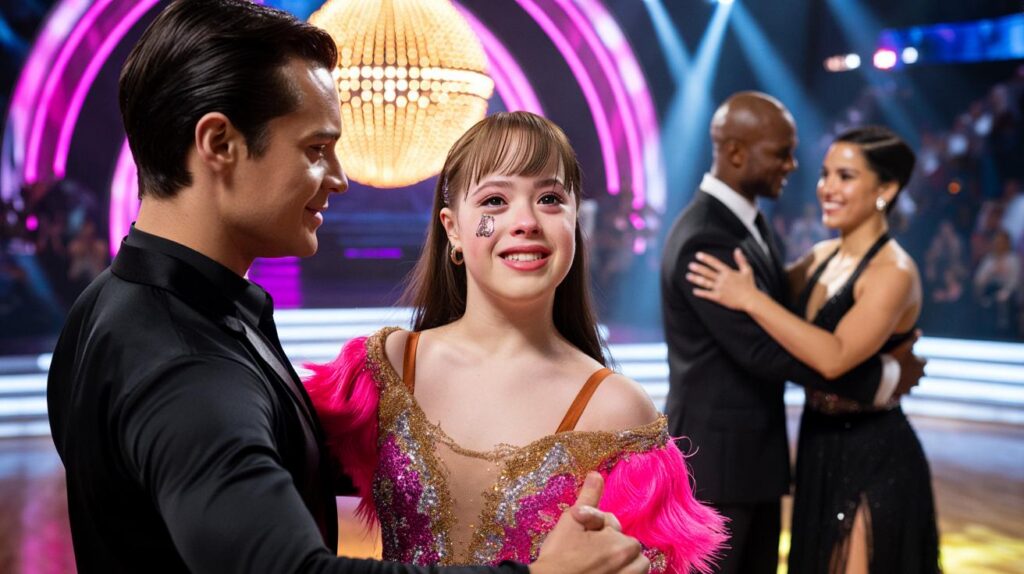
First nights on Strictly can rattle even the most camera-ready stars. Bright lights, fast critiques and instant reaction shape a febrile mood.
Model Ellie Goldstein made her live debut on the ballroom juggernaut alongside professional partner Vito Coppola, drawing a rush of online concern after some viewers read her glistening eyes as distress. Within hours, she set the record straight with a calm message and a clear mindset.
Ellie Goldstein’s debut and a steady start on the scoreboard
Goldstein, who became the first Vogue cover star with Down syndrome in 2023, opened her Strictly journey with a cha-cha-cha. The routine earned 17 points from the judging panel, a common early benchmark that leaves plenty of headroom to climb across the series. Anton Du Beke praised her musical timing and suggested she focus on foot placement to unlock extra marks in Latin dances.
The celebrity–pro pairing leaned into punchy arm lines and playful performance beats, the sort of ingredients that often help newcomers settle. Early Latin outings can be unforgiving under glare, yet Goldstein kept time with the track, which frequently matters more to judges than polish alone in week one.
Goldstein said her eyes appeared watery after a long day, not because she was upset. She described feeling happy, confident and entirely herself on the Strictly stage.
Concern on social media and a quiet moment backstage
As the show unfolded, posts on X framed her moist eyes and tentative expression as sadness. The speculation intensified when cameras caught sprinter Harry Aikines-Aryeetey and pro Karen Hauer speaking to Goldstein in a supportive huddle near the dancefloor. In the cacophony of a live broadcast, a short exchange read by some as a wobble quickly snowballed into a narrative of distress.
What Ellie actually said the next day
On Sunday, Goldstein addressed the chatter via her official Facebook page. She thanked viewers for the flood of messages and said performing on Strictly felt like a dream turned real. She explained that her eyes can water at the end of a long day and emphasised she was not upset during the broadcast. She also underlined a point central to her public advocacy: she lives with Down syndrome, but it does not define her or limit what she sets out to do.
“Down syndrome doesn’t define me” was her take-home line, paired with a promise that she is feeling strong and having a brilliant time.
What happens next on the leaderboard
The opening weekend ended without an elimination, with judges’ scores carrying forward to the next shows. Head judge Shirley Ballas flagged a change to the voting mechanics for this series, a tweak that raised eyebrows in the studio and online. For now, week one places serve more as markers than verdicts; training time and stamina tend to reshape the rankings by week three.
- Goldstein and Coppola: cha-cha-cha, 17 points, judges liked her timing.
- A visible pep talk from Harry Aikines-Aryeetey and Karen Hauer added to the “is she okay?” debate.
- A change to the voting system was announced by Shirley Ballas.
- No elimination in week one; scores roll over to the following weekend.
- Thomas Skinner’s “unsexy” paso doble drew laughs and divided opinion.
Representation in prime-time and why this moment resonated
Goldstein’s arrival on Strictly extends a trend that has helped mainstream television widen its field of vision. The show has previously showcased a range of bodies and lived experiences, including winners and finalists who shifted perceptions about what dance on a Saturday night can look and sound like. Viewers have responded strongly to stories that fold technique into a broader sense of visibility and pride.
For many watching at home, a brief close-up of watery eyes tapped into a protective instinct. The rapid pace of live television can make normal fatigue read as fragility. Goldstein’s clarification punctured that narrative and redirected attention to the dancing, where her timing already shows promise.
How scoring works and why 17 is a platform, not a ceiling
Strictly’s four judges award up to 10 points each per dance, producing a maximum of 40. Early Latin scores often cluster in the mid-teens to low-twenties as celebrities adjust to rhythm changes, foot pressure and partner connection under pressure. A 17 in week one suggests secure timing with technique to build. With daily rehearsal blocks, consistency typically improves rapidly, especially once muscle memory settles.
| Celebrity | Pro partner | Dance | Score | Judges’ focus |
|---|---|---|---|---|
| Ellie Goldstein | Vito Coppola | Cha-cha-cha | 17 | Keep the timing, sharpen footwork and pressure through the balls of the feet |
Reading live-TV emotions without jumping to conclusions
Studio lighting, adrenaline comedowns and eyebright make-up can all cause watery eyes. A glance down while listening to feedback can look like deflation when it is simply concentration. Micro-moments make great television but poor diagnostics. The best guide remains the person at the centre of the frame, when they choose to speak for themselves.
On live nights, tears can have many causes. Let contestants set the story; your vote carries the message they hear most clearly.
The dance itself: why the cha-cha-cha can trip up beginners
The cha-cha-cha demands fast hips, crisp foot swivels and relentless timing across syncopated beats. New dancers often focus so hard on steps that their feet flatten and timing drifts. Goldstein’s timing strength signals a useful foundation. If she and Coppola drill foot pressure and settle the hip action, the same musicality should translate into cleaner finishes and stronger finishes in Latin frames.
What viewers can do if they’re worried or want to help
If you feel protective of a contestant, the most constructive support is practical: vote when lines open, send measured positivity rather than diagnosising from a clip, and be wary of piling on speculation threads. Contestants read that noise while juggling 8–10 hours’ daily training, and focus thrives on calm feedback.
Broadcasters now place duty-of-care at the core of their entertainment programmes. That usually includes briefing, off-camera check-ins and access to wellbeing support during long studio days. The system is designed to separate TV drama from personal welfare. Goldstein’s statement suggests the safeguards and her own resolve are aligned.
For those curious about progress between weeks, watch for three indicators: steadier heel–toe patterns in basics, improved balance in spins, and facial relaxation during judge critiques. Each signals that rehearsal learning has migrated from conscious effort to habit. On that trajectory, a 17 can climb to the mid-20s in short order, especially once Ballroom weeks give pairs a different canvas for musicality.



I saw confidence, not tears. 17 in week one is definately a solid start—time and footwork will lift it.
Can we please stop diagnozing from a three-second close-up? Ellie literally said she was happy and just had watery eyes after a long day. Believe the person at the center of the story.