
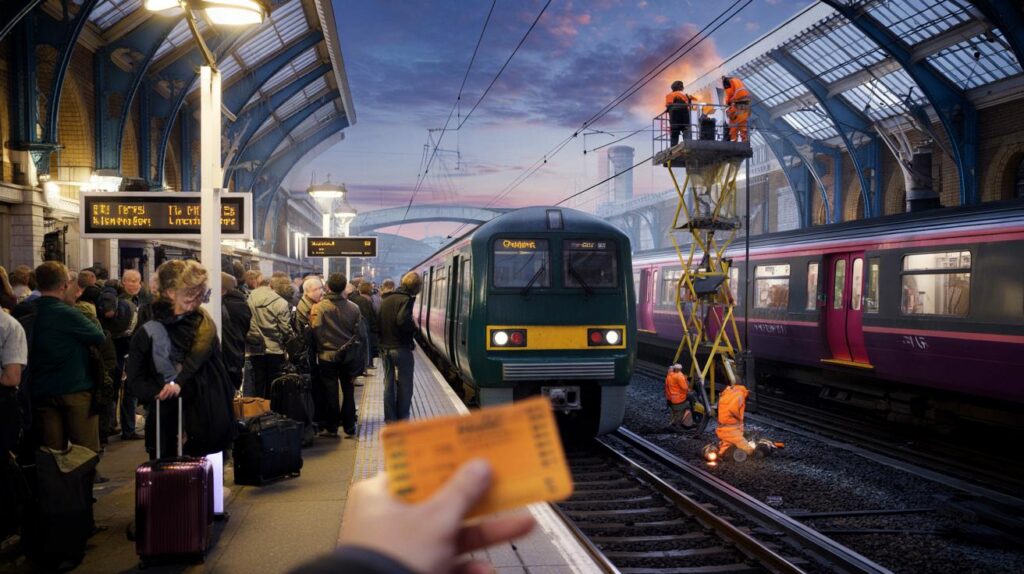
Platforms filled fast and timetables unravelled as evening peak crowds met a sudden power problem on the Great Western.
Engineers are dealing with a failure in the overhead line equipment between London Paddington and Reading, bringing services to a standstill during Thursday’s evening peak and triggering a ripple of knock-on delays across westbound routes.
What happened this evening
Network Rail teams are on site tackling a fault with the Overhead Line Equipment (OLE) that supplies electricity to trains on the Paddington–Reading corridor. With the wires out of action, electric services cannot run safely and diesel trains cannot bypass the blockage, so the operator has shut the route while repairs take place.
All lines between London Paddington and Reading are blocked. Passengers have been advised not to attempt to travel on this stretch.
Great Western Railway (GWR) says disruption will continue until the end of service tonight, Thursday 18 September. The advice covers both directions, affecting journeys from Wales and the West into the capital and from London out to the Thames Valley, the Cotswolds and South Wales.
How far the disruption spreads
The problem is not confined to intercity services. Elizabeth line trains that use the same section of railway are curtailed, and Heathrow Express services cannot operate to or from Paddington while the fault persists. Crowds at major interchanges, including Paddington and Reading, built quickly through the evening.
- GWR: No services to or from London Paddington.
- Elizabeth line: Disruption on services touching Paddington, Maidenhead, Reading and Heathrow terminals.
- Heathrow Express: No trains between Paddington and Heathrow Terminal 5.
Rail replacement buses, coaches and taxis are not being provided due to the sheer number of people affected.
Your options tonight and tomorrow
GWR has activated ticket acceptance and flexibility to help people complete essential journeys or postpone non‑urgent trips.
- Use South Western Railway services between London Waterloo and Reading this evening at no extra cost.
- Travel on your intended route tomorrow using the same ticket if you were booked for today.
- Check the National Rail Enquiries journey planner before setting out; routes may change at short notice as repairs progress.
| Operator/route | Status tonight | Ticket acceptance | Notes |
|---|---|---|---|
| GWR to/from London Paddington | Suspended | GWR tickets valid Friday 19 September | Expect residual delays after repairs |
| Elizabeth line (Paddington–Reading/Heathrow) | Severely disrupted | As per TfL operational control | Services may terminate short of the fault |
| Heathrow Express | Suspended | Use the Underground where possible | Allow extra time for airport trips |
| South Western Railway (Waterloo–Reading) | Running | Accepting GWR tickets tonight | Trains are likely to be very busy |
Alternative routes for key trips
Central London to Reading: Travel from London Waterloo direct to Reading on South Western Railway. Expect crowding and longer journey times than via Paddington.
London to Heathrow: The Piccadilly line serves Heathrow Terminals 2&3, 4 and 5. If you started at Paddington for Heathrow Express, allow significant extra time and consider taking the Tube from central London instead.
Wales and the West to London: Trains will not reach Paddington tonight. If you are not yet on a train, delay travel until tomorrow. If you are already en route, staff may divert services to terminate earlier than planned; follow on-train announcements.
What is OLE and why failures stop everything
Overhead Line Equipment consists of the masts, wires and tensioning gear that feed high‑voltage power to electric trains. When a wire de-tensions, snaps or becomes obstructed, trains risk damage to their pantographs and the route must be isolated. Repair crews first switch off the power, inspect and secure the area, then restring and re-tension the wire. They often need specialised road-rail vehicles and access windows, which is why rectification can stretch to the end of service.
Warm weather, strong winds, foreign objects caught in the wire, or a damaged pantograph can all trigger a fault. The Paddington–Reading section carries dense traffic, so a small failure can cascade into widespread disruption in minutes.
When services might resume
GWR expects problems to run until the end of the day on Thursday, with trains likely to start up gradually once engineers release the line. Early Friday may still see reduced capacity while speed restrictions and safety checks remain in place. If you have a time‑critical journey tomorrow morning, recheck before leaving home.
GWR tickets dated Thursday 18 September will be honoured for travel on Friday 19 September on your intended journey.
Practical advice while you wait
- Stay behind platform lines and follow crowd management instructions; stations may operate one‑way systems.
- Keep your ticket and any seat reservations; you will need them for travel tomorrow and for compensation claims.
- Bring water and a phone charger; concourses and trains can become hot and crowded.
- If travelling to the airport, move earlier and switch to the Piccadilly line to reduce the risk of missing a flight.
Refunds, Delay Repay and season tickets
If you decide not to travel, you can request a refund from your retailer. For those delayed beyond the operator’s threshold, Delay Repay applies; keep exact departure and arrival times and retain any receipts for additional rail tickets purchased as part of an accepted alternative route. Season ticket holders can claim compensation based on the relevant scheme for their product; check your operator’s policy and submit claims promptly to avoid deadlines.
What to expect overnight
Once repairs finish, signalling teams will test sections of the route and release them in stages. Operators will then position trains and crews for the morning peak. That reset often takes hours, which is why the first services on Friday may still see cancellations and short‑notice changes.
To reduce risk of further disruption, plan a flexible departure window, consider travelling outside the busiest peak, and build in a buffer if you are connecting to long‑distance services or flights. If your journey can wait, use the ticket acceptance to travel tomorrow when services have stabilised.



Does “tickets honoured tomorrow by midnight” mean I can use the Elizabeth line if it’s running again, or is it strictly GWR-only? Do I need a seat reservation or just the original ticket?
No replacement buses due to numbers feels like planning failure. You can definately stagger coaches and queue people. Leaving thousands to fend for themselves isn’t acceptable.