
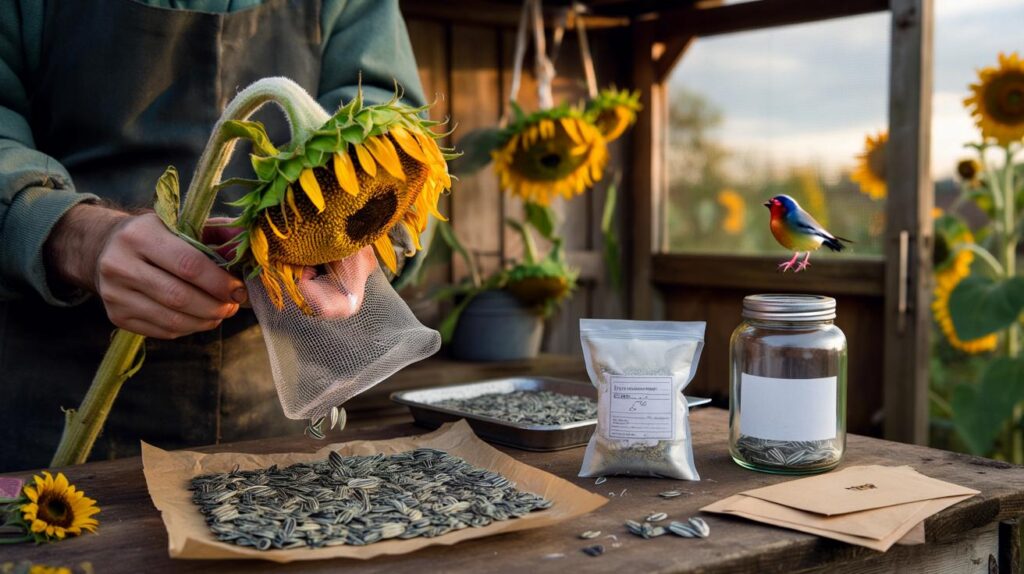
The towering faces have started to bow, petals crisping, birds already casing the joint. You want seeds for next year — fat, viable, true to type — but the weather is turning, and the internet is a tangle of half-tips and hopeful guesses. Harvest too soon and they rot. Leave them too long and the goldfinches hold a banquet. Where’s the sweet spot when real life isn’t perfect?
On the allotment, late light pools in the path ruts and the sunflowers look like giant clocks running out of time. A neighbour, sleeves rolled and hairpin in her mouth, shakes a paper bag over a spent head and laughs as a bold robin hops closer. I cut a stem with numb fingers and feel the weight of the head — heavy, damp at the back — then tilt it to hear the whisper of loose seeds. A little boy asks if they’ll grow again next summer. I tell him yes, if we time it right. He nods, solemn as a judge. The sky is bruising. A quick decision matters now. And there’s a trick most people miss.
When sunflower seeds are actually ready
Sunflower heads don’t ripen by the calendar; they ripen by signals. Look for the back of the flower (the receptacle) to turn from green to mustard-yellow, then paper-brown. Bracts should feel dry, not rubbery. Seeds should sit tight yet plump, their shells cleanly coloured — stripes for stripy types, inky black for oilseed kinds. If you press one with a fingernail and oil beads out, it’s still too green for keeping. Birds pecking is a sign you’re near, but not proof you’re there. **Dry heads, not just ripe faces.**
I learnt this on a wet September when I left a patch “for one more warm day”. It never came. The heads took on that swampy sweetness that screams mould, and by the time I hauled them in, the centres were mush. The next year I tied breathable mesh bags over half the heads as soon as the petals fell, and I cut them when the backs were golden-brown and the first ring of seeds loosened with a thumb rub. The bag caught the drifters and foiled the finches. Lost a few, kept thousands. That felt like getting away with something.
There’s a logic underneath the folklore. Seed viability hangs on moisture content. For long storage, sunflower seeds need to dry to roughly 8–10% moisture — farmer talk for “they snap, they don’t bend.” The plant begins that drying on the stalk, but autumn air can be cruel. So the best practice is a two-step: mature on the plant until the back browns, then finish-dry under shelter. If you’re growing multiple varieties and want them true, remember bees don’t read labels; open-pollinated types cross within buzzing distance. Bag a few heads early if you’re saving named lines. Hybrid F1s will still grow, just not predictably.
How to harvest, dry and store without losing next year’s bloom
Pick a dry day. Cut the head with 20–30 cm of stem, ideally when the back is yellowing to brown and the outer seeds loosen with a thumb twist. Hang the heads upside down in a shaded, airy spot — shed rafters, an attic with a window ajar, the cupboard above a boiler that isn’t steamy. Slip on paper or mesh bags to catch shed seeds and deter mice. After a week or so, rub the seeds out over a tray: hands, a soft brush, or the back of a spoon. Winnow the chaff with a gentle blow or a fan on low. You want clean, dry, snappy seeds before they ever see a jar.
Here’s where most people trip: rushing the dry-down or trapping humidity. Spread the seeds in a single layer on trays lined with baking paper or mesh racks. Leave space, stir daily, and give them 7–14 days in a room that feels crisp, not cosy. If you bite a seed and it dents, keep going. If it snaps cleanly, you’re close. You can finish with gentle warmth — airing cupboard or a dehydrator set under 30°C — but steer clear of radiators and ovens. Let’s be honest: nobody does this every single day. So set a reminder on your phone and treat them like a sourdough starter you’ll see again.
Storage is the quiet hero. Move fully dry seeds to paper envelopes first, then into an airtight tin or jar with a little desiccant (silica gel, or a teaspoon of dry rice in a tea bag). Label with variety and date — **label everything** — and stash somewhere cool, dark, and steady. A fridge is gold; a shed swings wildly. If you’ve had weevils before, freeze the sealed jar for 48 hours, then thaw in the fridge so condensation forms on the outside, not the seeds. **Cool, dark, dry** is your mantra.
“You don’t save seeds with luck, you save them with patience and a pencil,” an old gardener told me, tapping his notebook with a muddy thumb.
- Cut when backs brown; bag heads to beat birds.
- Hang to finish-dry; rub out over a tray.
- Dry to the snap test; keep heat mild.
- Envelope, then jar with desiccant; store cool and dark.
- Label variety and year; test germination in spring.
The real-world rhythm that keeps seeds alive
We’ve all had that moment when the rain hits early, the birds get cheeky, and you think, maybe next year. That’s exactly why a light, repeatable routine helps. Keep a few mesh bags and envelopes in your shed by August. Pick two heads per variety for seed, harvest them a touch earlier than the rest, and treat them like a small side project rather than a crisis at the end. A tiny habit beats a big rescue.
In spring, do a quick germination check before committing a bed. Ten seeds on damp kitchen paper in a sandwich box, lid cracked, on the windowsill. After 7–10 days, count how many rooted. Ninety per cent? You’re golden. Under sixty? Sow a little thicker or refresh your stock. If you’ve saved from hybrids, expect surprises — height, branching, seed colour — which can be half the fun for a child or a neighbour swapping envelopes over the fence.
*Save seed, save stories.* One sunflower can feed a row, a school fundraising stall, a windowsill of jam jars lined with eager sprouts. Let a few heads stay for the birds; take a few in for the future. Seeds can stay viable for two to six years if stored well, but they carry their brightest spark in the first two. Share spare packets with the allotment WhatsApp, trade a yellow for a bronze, and keep a quiet corner for something odd and lovely. The garden will remember.
| Key points | Details | Interest for reader |
|---|---|---|
| Spot true ripeness | Back of head turns yellow-brown; seeds plump and snap, not bend | Boosts germination and avoids mouldy duds |
| Finish-dry under shelter | Hang heads, then tray-dry seeds 7–14 days with airflow | Simple routine that fits British autumns |
| Store for longevity | Envelope then airtight jar with desiccant; cool, dark, steady | Seeds stay viable 2–6 years; fewer disappointments in spring |
FAQ :
- When should I cut sunflower heads for seed?When the back of the head shifts from green to yellow-brown and the outer ring of seeds loosens with a thumb rub. Cut on a dry day and finish-dry under cover.
- Can I save seeds from hybrid (F1) sunflowers?Yes, they’ll grow, but they won’t be identical to the parent. Expect variation in height, branching and seed colour — interesting for home gardens, less ideal if you want exact repeats.
- How do I stop birds from stealing my seed heads?Slip breathable mesh or paper bags over heads as petals fade. Harvest earlier for seed-saving heads and let other heads stand for wildlife as a peace offering.
- What’s the best way to store seeds over winter?Dry to the snap test, then into labelled envelopes inside an airtight jar with a desiccant. Keep them in a cool, dark, stable place — a fridge beats a fluctuating shed.
- How long will sunflower seeds stay viable?At their best for 1–3 years, sometimes up to 5–6 if dried and stored well. Do a quick kitchen paper germination test in spring to check vigour before sowing.



Brilliant guide—especially the “snap test” and the envelope-then-jar trick. I’ve been rushing the dry-down and wondering why seeds went musty. This is definately going in my autumn routine. Thanks!
Quick question: if I’m growing two open-pollinated varieties, how far apart should they realisticly be to stay true? Is 50–100 feet enough, or do I need isolation bags the whole time?