
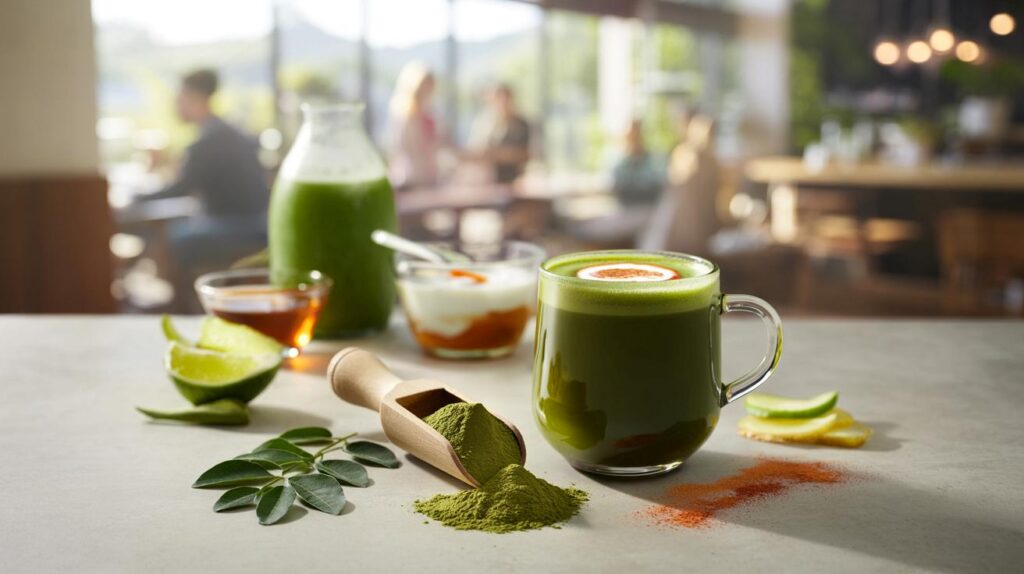
Scroll your feed and you’ll see it: green lattes that aren’t matcha, smoothie bowls dusted with emerald powder, influencers whispering about “the miracle leaf.” Moringa has slipped from niche health shops into high street cafés, promising calm focus, better skin, and that elusive steady energy. Some call it the new matcha. Others say it’s a multivitamin in a spoon. The buzz is loud. The reality is messier — and more interesting.
The first time I noticed moringa, a barista in Shoreditch was shaking a small tin like a secret. A couple in gym gear leaned in as he explained, almost conspiratorially, “It doesn’t spike you. It kind of steadies you.” Later, on the Overground, I watched a woman open a tote full of powders and jars, the moringa packet the only one that looked half-used. At home, a friend texted me: “Tried moringa. Didn’t crash at 3pm for once. Could be placebo. Don’t care.” I spooned some into yoghurt and braced for sadness. It tasted grassy, nutty, surprisingly pleasant with lime. The hype made sense. But only up to a point.
Why everyone’s suddenly talking about moringa
Moringa isn’t new. It’s a drought‑tolerant tree grown across South Asia and sub‑Saharan Africa, prized for leaves that are edible, seeds that purify water, and a sturdiness that shrugs at heat. What’s new is the way it’s turning up next to your almond croissant. Supermarkets now stock leaf powder next to protein mixes. Cafés fold it into lattes. Fitness creators say it’s how they ditched their afternoon coffee without morphing into tired ghosts. The appeal is tidy: a one‑ingredient plant that feels both ancient and future‑minded.
You can feel the shift offline too. At a Saturday market in Bristol, a stallholder sprinkles a little on cut oranges to demo the flavour, and shoppers keep circling back. Google searches trend up with each “dry January” and spring reset. Nutrition forums hum with side‑by‑side comparisons — moringa versus matcha, spirulina versus moringa — like a polite arms race of greens. A sports physio I spoke to swapped his 3pm espresso for a small moringa smoothie and noticed his sleep improved. He didn’t evangelise. He just stopped yawning in clinic.
Part of the draw is nutritional density. Moringa leaf powder brings plant protein, iron, potassium, calcium, and a spread of vitamins A, E and K, plus polyphenols like quercetin and chlorogenic acid. That bundle reads like a multivitamin label, but it lives in a leaf. The body understands that leaf. It gets fibre as standard, which slows digestion and steadies the way energy feels across the afternoon. You’re not borrowing alertness from tomorrow. You’re building a base for today. **It’s a leaf, not a miracle.** That’s the sweet spot where trends turn into daily habits.
How to use moringa without wrecking the taste (or your routine)
Start small and blend cold. Half a teaspoon in a smoothie works for most people; add lime or lemon to lift the earthiness and help your body absorb the iron. Ginger plays nicely too. If you prefer hot drinks, whisk it into warm oat milk with honey, not boiling water, then finish with a pinch of cinnamon and a squeeze of orange. Pair it with foods you already eat — yoghurt, overnight oats, hummus — so you don’t build a new routine from scratch. **Start low: 1/2 tsp.** See how your gut and energy respond over a week.
Common pitfalls are boringly predictable. Big spoonfuls on day one can feel heroic until your stomach protests. Stirring it straight into bitter coffee makes both taste worse. Expecting a “detox” moment sets you up for disappointment. We’ve all had that moment where a single purchase promises to fix everything by Monday. You don’t need an overhaul. A teaspoon tucked into your existing breakfast is enough to test the waters. Let’s be honest: nobody really does that every day.
Think of flavour as a friend, not a hurdle.
“Treat moringa like dried herbs: small amounts, mixed well, paired with citrus and fat,” said a nutritionist who’s been recommending it to clients for years. “You’ll stick with it if you actually like it.”
Here’s a quick cheat‑sheet to keep you on track:
- Buy powder that’s bright green and smells fresh, not yellowish or musty.
- Store it airtight, away from light and heat; treat it like good tea.
- Scan the label: 100% leaf powder, no fillers, ideally third‑party tested.
- If you take medication for blood pressure, diabetes, thyroid or clotting, ask a pharmacist first. **Speak to a pharmacist if you take medication.**
What moringa really does — and what the hype misses
There’s early research suggesting moringa can support healthy blood sugar and cholesterol when part of a balanced diet, particularly in people with elevated levels. It also supplies antioxidants that help counter everyday oxidative stress, the slow hum of life, not the headline drama. Iron and plant protein can make breakfasts feel more satisfying, which might curb snacky afternoons. Some people report steadier energy and calmer focus, likely because fibre smooths the peaks and troughs of a typical workday. *One teaspoon won’t rewrite your biology, but it can nudge your day in a better direction.* What it won’t do: replace sleep, repair a chaotic diet, or act like a prescription. If you’re pregnant or breastfeeding, stick with food uses and get tailored advice before supplements. If you live with a condition or take regular medication, the safe move is to check for interactions. Use moringa like a pantry ingredient that earns its place — something you’ll still want on the shelf in six months.
| Key points | Details | Interest for reader |
|---|---|---|
| Moringa’s rise in 2025 | From niche leaf to café staple; buzz built on steady energy, not a rush | Explains why it’s everywhere and whether it fits your day |
| How to actually use it | Start with 1/2 tsp, pair with citrus/ginger, blend cold, keep it tasty | Practical steps you can try tomorrow morning |
| What it really does | Provides fibre, plant protein, minerals and antioxidants; not a cure‑all | Sets realistic expectations and avoids wasted money |
FAQ :
- What exactly is moringa, and what does it taste like?Moringa is the powdered leaf of the Moringa oleifera tree, long used in South Asia and Africa. It tastes mildly earthy and nutty, like green tea met spinach. Citrus brightens it beautifully.
- Is there solid evidence behind the benefits?Early studies point to support for healthy blood sugar and cholesterol when moringa is used alongside a balanced diet. It delivers fibre, minerals and antioxidants. It’s promising, not magical.
- Can moringa help with weight management?It can make meals more satisfying thanks to fibre and protein, which may help you snack less. Real change still rests on overall diet quality, sleep, movement and stress.
- Is moringa safe in pregnancy or while breastfeeding?Food uses of moringa leaves are common in some cuisines, but concentrated powders or capsules aren’t suitable for everyone. Speak with your midwife or GP for tailored advice before supplements.
- Powder or capsules — which is better?Powder lets you control dose and taste it for freshness; capsules are convenient if the flavour isn’t for you. Choose products with clear sourcing and independent testing either way.



Tried the 1/2 tsp with lime and oat milk this morning—no jitters, no crash, just steady vibes. Might be placebo, but I’ll take it 🙂 Thanks for making it practical instead of preachy.