
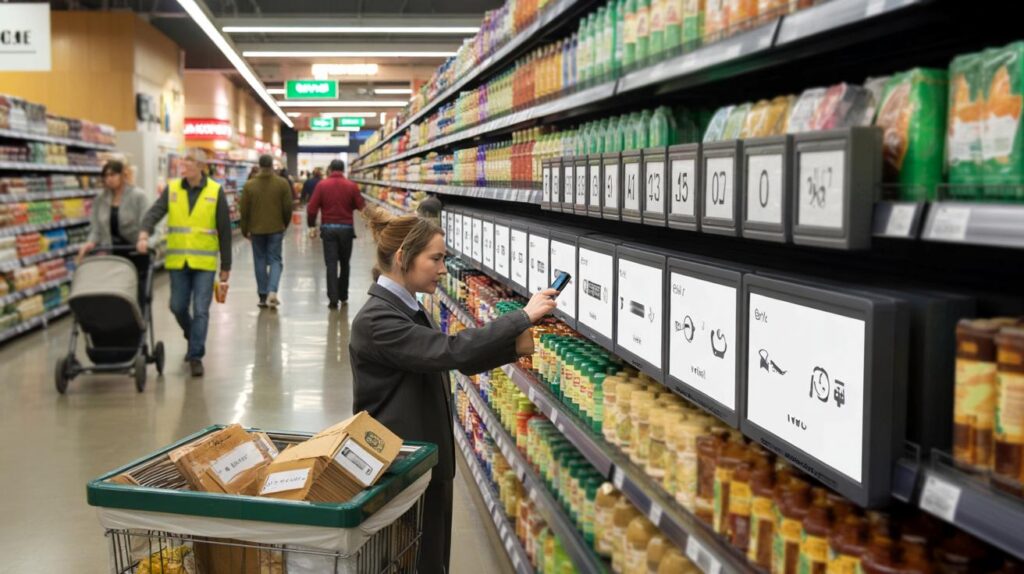
Supermarket shelves are changing shape. Not the tins and tubs, but the tiny rectangles beneath them. A UK grocery giant is rolling out digital price tags across stores, promising quicker updates, slicker promotions, and fewer paper strips. It also raises a twitchy question that goes straight to your basket: what does a price mean when it can shift in seconds? Your routine shop is about to feel different in small, telling ways.
It was just before opening, that hush when a store feels like a stage waiting for the audience. A staff member slid along the cereal aisle with a handheld device, and little e-ink labels blinked awake, one by one. A pram rolled past. A builder grabbed a meal deal. A gleam of new tech sat where paper used to curl at the edges.
The change felt quiet but loaded. No rustle of stickers, no hurried scribbles, just a subtle flicker as a price nudged itself into place. *Yes, the label itself is a tiny screen.* The kind that looks more like paper than a phone. It’s odd how quickly you accept it. Then you spot something that makes you look twice. The price moved.
What digital price tags actually do in the aisle
Digital price tags, the industry calls them electronic shelf labels, plug the shelf into the store’s brain. One update in the system, and every label for that product changes in seconds. That means **faster price changes**, and far less faffing with paper and glue. It also means promotions can land right on cue, down to the minute.
In a trial store, a pack of chicken that had always needed a yellow “reduced” sticker shifted price on its own at 7:30pm, once it hit its final day. No hunt for a colleague with a pricing gun. No mystery at the till. The tag showed the original price, the markdown, and the per‑100g figure. Some pilots report **fewer pricing errors** because the shelf and the till pull from the same source. That’s not a guarantee, but it is a cleaner pipeline.
Look closer and the real change is rhythm. Night teams don’t spend hours swapping strips before the morning rush. Managers push loyalty deals from HQ to every shelf at once, and compliance jumps because there’s less room for mishaps. You feel it as a shopper too: the price you see is fresher, closer to live. This doesn’t automatically mean surge pricing. It means the system could change faster if the retailer chooses to. There’s a difference.
How this could change the way you shop
Think of the label as a signpost, not just a number. On most tags you’ll see price, unit price, and sometimes a tiny loyalty icon if there’s a members’ rate. Tap your phone on the product barcode and cross‑check in the app for any hidden combo deals. If you chase markdowns, clock the store’s patterns for perishables and swing by in the final hour. Tags can show **dynamic discounts** that deepen near closing, and you’ll spot them quicker if you sweep with your eyes rather than hunting for stickers.
Don’t rush the scan. Give a label a second to refresh if a staff member has just synced a change. Cross‑check the unit price when pack sizes shift, because that’s where value hides in plain sight. We’ve all had that moment when your usual “bargain” turns out pricier per 100g than the fancier option. Let’s be honest: nobody really does that every day. Do it once for your staples and you’ll bank the saving for months.
Digital labels also speak a visual language. Some show a countdown for timed promos, others display a small battery or network icon in the corner. If the tag looks frozen or blank, take a quick photo and ask at customer service. You’re not being fussy, you’re just keeping the system honest.
“Our goal is less waste and clearer prices, not whipping them up and down by the hour,” a store manager told me on a quiet Tuesday. “If we reduce a lasagne at 8pm, the shelf tells you straight away. No surprises at the till.”
- Look for unit pricing on the tag; that’s your true value compare.
- Spot loyalty icons or colours that flag members‑only savings.
- Watch for small timers or “Ends” dates on promotions.
- If a tag is blank or glitchy, report it and photograph the shelf.
- Keep an eye on multibuy logic; the label should explain it clearly.
Your bill, your data, your say
The big question isn’t the gadget, it’s the rules that sit behind it. A digital label can make pricing clearer because shelf and till are reading from the same book. It can also change quicker than paper ever did, which asks for trust. If a promo flips at noon, the shelf must show it at noon. If a product is marked at a certain price, you can query any mismatch at checkout and ask for help at the desk. Policy varies by retailer, yet shoppers who speak up get results more often than not.
There’s a privacy angle too. The label itself doesn’t know who you are. It’s a passive screen using tiny bursts of power, often less than a watch. Your loyalty card and app do know you, and that’s where targeting lives. If you’re uneasy, trim your settings in the app and pay attention to what’s personalised and what’s store‑wide. On the shopfloor, the green gains are real: less paper waste, fewer van runs to deliver fresh rolls of strips, and fewer hours spent swapping labels at 3am. It’s a different kind of tidy.
What happens next will hinge on how a supermarket uses the speed it now has. If it deepens markdowns on food near expiry and keeps promos transparent, shoppers win and bins empty slower. If it toys with time‑of‑day nudges, people will notice and push back with their feet and their phones. The clever bit for you is to treat each label as a live source, not décor. Read the unit price. Scan the app. Nudge customer service if the shelf and receipt don’t sing from the same sheet. Prices have always moved. The movement is just visible now, and that visibility gives you leverage.
| Key points | Details | Interest for reader |
|---|---|---|
| Digital tags sync in seconds | E‑ink labels update from a central system across the store | Fresher promotions, fewer delays or missing offers |
| Markdowns can be smarter | Timed reductions on perishables without stickers | Better chances to grab genuine last‑hour bargains |
| Transparency still matters | Shelf, app, and till should match; report glitches | Protects your wallet and keeps pricing fair |
FAQ :
- Do digital price tags mean surge pricing?Not automatically. They enable fast changes, but retailers set the rules. Watch for clear promo times and challenge anything that feels sneaky.
- Why are supermarkets doing this?To cut paper waste, reduce labour on label swaps, improve accuracy, and launch promos instantly across many stores.
- Will my receipt still be correct?It should be, because shelf and till draw from the same system. If it doesn’t match, show the photo of the shelf and ask for a fix.
- Can the tags fail or be hacked?They’re low‑power screens on a private network. Failures happen, but stores can lock labels and audit changes.
- Are there benefits for the environment and staff?Yes: less paper, fewer deliveries of label rolls, and more time for staff to help on the floor rather than swapping strips overnight.



Cool tech, but how do we stop sneeky time‑of‑day nudges? If the price can change mid‑shop, will stores honour the lowest you saw at the shelf? More transparency on rules, logs, and error fixes please—trust is the real currency here.