
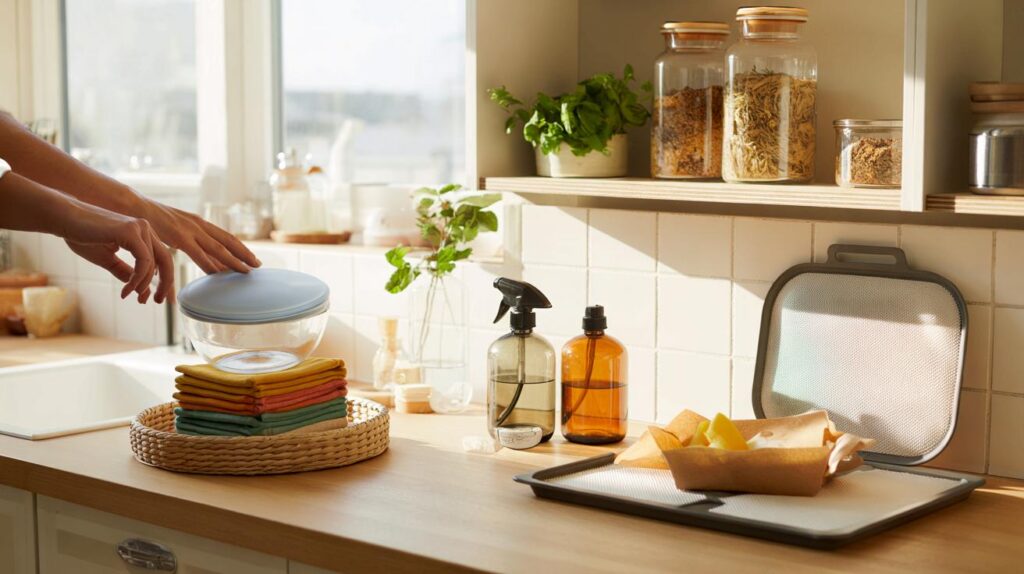
There’s a short, sharp pain that comes with dragging a bin bag to the door and feeling it split. The cling film tangled around a fork. The foil crumpled into shiny balls. The pile of wipes that look harmless, then smell like regret. You want things to feel simpler, not saintly. Less rubbish, fewer refills, easier evenings. That’s what a zero-waste kitchen is really chasing — not perfection, but peace.
The kettle clicked, the toast popped, and a small avalanche of plastic toppled from the cupboard where the wraps live. I watched a neighbour butter bread with one hand and swat a flying scrap of cling film with the other. The bin was already half full before 9am. She laughed, then sighed, and told me she’d started keeping a stack of old tea towels by the hob, “for spills I don’t want to think about.” It was the most ordinary radical act I’d seen all week. I walked home and swapped the kitchen roll for cloths without saying a word. What if waste-free felt easier?
Why calmer kitchens make less waste
A kitchen that uses fewer disposables feels quieter. Less rustle, less tearing, fewer moments where your hands pause mid-air, choosing between plastic and paper. When you reach for the same cloth, the same jar, the same lid, your body learns the route. You stop fiddling with boxes and start cooking. It’s choreography, not a checklist.
WRAP estimates UK households throw away millions of tonnes of edible food each year, much of it from confused storage and tired habits. A friend in Leeds labelled three jars — “End Bits”, “Sauce Saver”, “Herbs To Revive” — and saw her food waste bin go from daily to twice a week. The change wasn’t moral. It was practical. One label turned leftovers into usable ingredients instead of a guilty corner of the fridge.
When we reduce inputs, we reduce decisions. That means less friction at the sink and more attention where it counts: seasoning, timing, the plate in front of you. A handful of durable tools replaces a drawer of single-use options and a dozen tiny choices. Less stuff means fewer decisions. This is why reusable alternatives often feel faster after a week or two. Muscle memory sets in, and the waste stops being the story.
Reusable swaps that actually save time
Set up a clean-and-dry station that works on autopilot. One spray bottle with 1:1 white vinegar and water for glazed tiles and stainless steel, and a second bottle with warm soapy water for sealed stone. Add a stack of eight cloths in a shallow basket, a hook to hang the damp one, and a radiator rail or window rack to finish the dry. Fewer steps, fewer sighs.
Common trap: buying new “sustainable” gear before trying what you already own. Old jam jars beat matching containers on day one. Tea towels outlast kitchen roll by months. People also under-buy cloths and overestimate how often they’ll wash. Eight to twelve is the sweet spot for a small family; rotate by colour so the grim ones head straight for hot wash day. Let’s be honest: nobody does this every day. Keep it forgiving.
We’ve all had that moment when the compost caddy smells like your sins and you swear off peels. A simple fix: line the caddy with used paper from deliveries, freeze scraps in a tub for hot days, and give the lid ten seconds in the sun after washing. Your future self will thank you. Start small, repeat often, and your kitchen will teach you the rest.
“I stopped buying kitchen roll, and within a week I stopped missing it. The cloths felt normal by Wednesday.”
- Starter set: 8 cloths, 3 spare jars, 2 spray bottles, 1 countertop caddy
- Weekly rhythm: wash cloths on hot, refill bottles, refresh labels
- Quick wins: silicone lids, baking mats, bulk herbs in jam jars
Make it stick without trying so hard
Habits last when they’re friendly. Put the compost caddy where your chopping board lives, not under the sink. Store dry goods in clear jars at eye level so your head sees lunch before your appetite does. Give yourself an easy default: cloth on the handle, bottle by the hob, lids where your hands land. *I left the bin bag half-empty for the first time in years.* That felt like progress you can measure in calm.
| Point clé | Détail | Intérêt pour le lecteur |
|---|---|---|
| Cloths replace kitchen roll | 8–12 cotton or microfibre cloths, colour-coded for tasks, washed on hot weekly | Lower spend over a year, fewer shopping trips, cleaner counters with one habit |
| Jars beat new containers | Save pasta sauce and jam jars, add masking-tape labels, stack by size | Zero extra cost, clear view of leftovers, faster meal prep and less waste |
| Compost made easy | Countertop caddy lined with scrap paper, scraps frozen in hot weather | Less smell, fewer trips to the outside bin, visible impact in days |
FAQ :
- Do reusable cloths stay hygienic?Yes, if you rotate them. Use one per task, rinse after use, and wash on hot with a dash of bicarbonate. Dry fully between uses to keep them fresh.
- Are silicone lids and mats safe for baking?Food-grade silicone is oven-safe to typical home temperatures. Use on clean trays, avoid sharp knives, and cool flat so they keep their shape.
- What about vinegar on stone worktops?Skip acid on natural stone. Use warm water with a drop of washing-up liquid. Keep the vinegar mix for stainless steel, tiles, and glass.
- How do I start on a tight budget?Raid your cupboards first. Keep jars, cut old T-shirts into cloths, repurpose delivery paper as caddy liners. Buy one thing only if it solves a daily pain.
- Does zero-waste really save time?Once routines settle, yes. Fewer choices, fewer restocks, and repeatable motions. The first week feels new, then it becomes the easy way.



Loved the ‘less stuff = fewer decisions’ idea—makes zero-waste feel like less brain fog, not more chores. I set up the clean-and-dry station this morning and it actually sped things up. The colour-rotating cloths tip is gold; I always under-bought and then gave up. Cheers for the friendly tone, it feels doable 😊
Real talk: do eight cloths really cut it for a familly of 5? Ours get damp and stinky fast, even with hot wash. Any hack beyond bicarb—vinegar in the wash, sun-drying—without wrecking microfibre or colours?