
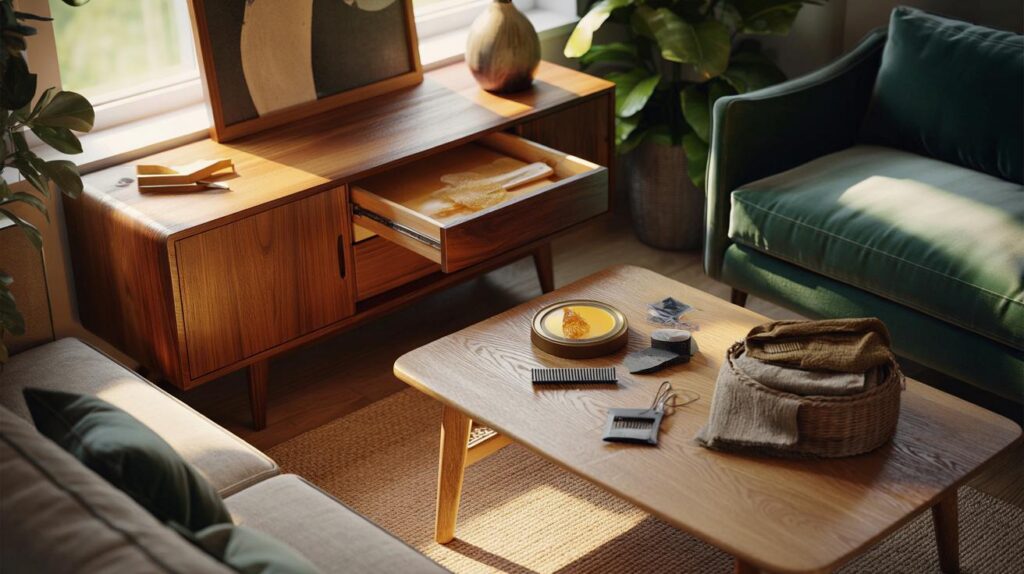
New furniture promises perfection, but perfection can be oddly forgettable. Second-hand is messier, braver, and far more alive. In a world of catalogues and same-day delivery, your living room can still feel singular — like you — through pieces that have already lived a little.
The charity shop door chimed and the smell of beeswax and old paper rolled out like a memory. A battered walnut sideboard stood by the window, thin scratches gleaming like crow’s feet when the light moved. The manager told me it had arrived that morning from a house clearance; she patted it as if it were a dog that had found its way home. Nearby, a child inspected a velvet chair by bouncing, which, frankly, is better than any showroom test I’ve ever seen. The sideboard’s drawer stuck, then slid, then gave, as if deciding to trust me. I felt the room sharpen. What happens when you let your furniture carry a story you can’t buy new?
Why pre-loved pieces transform a living room
There’s an energy to second-hand that new furniture can’t fake. Surfaces hold a gentle patina, like smile lines on a friendly face, and that small imperfection is exactly what relaxes a room. We’ve all had that moment when a pristine space feels like a museum you’re not allowed to touch; a scuffed oak coffee table breaks the spell and invites mugs, elbows, laughter. It changes how people behave. The room loosens.
On the numbers, pre-loved makes sense too. In the UK, estimates suggest millions of pieces of furniture are discarded every year, and a painful share is still usable with small repairs. Charities report thousands of sofas and tables rehomed annually, cutting landfill and raising funds in one move. Keep a solid wood table in use for another five years and its annual carbon cost drops fast, simply because you’re not triggering the footprint of a brand-new one. That’s measurable good, not wishful thinking.
There’s a design logic as well. A single older piece acts like a chord that deepens the whole song, stopping your living room from feeling like a straight lift from a catalogue. Grain, texture, and lived-in colour bring contrast to flat finishes and box-fresh fabrics. Mix a mid-century sideboard with a contemporary sofa and a jute rug, and your space gains a quiet tension that reads as taste rather than trend. Call it **real character** made visible.
How to find, choose and revive second-hand furniture
Start with a plan, then let serendipity do the fine work. Measure your room, doorways, and the lift if you have one, and keep those numbers in your phone. When you’re hunting — charity shops, Facebook Marketplace, Gumtree, Freecycle, boot fairs — use your hands as much as your eyes: run your fingers along joints, rock a chair gently, open and close everything that moves. For sofas in the UK, check that the fire safety label is intact. Take a small torch and a tape measure; a quick check beats a long regret.
Clean-up is part of the pleasure. For wood, gentle soap and water first, then a light sand if needed, then wax or oil to revive the glow. Upholstery responds to a stiff brush, a fabric shaver for bobbles, and a steam clean to lift smells. If a cushion sags, new foam can change everything at low cost. Let’s be honest: nobody really does that every day. So batch the work into one afternoon, put the radio on, and make a ritual of it.
Here’s the mindset that steadies the hand: buy for bones, not for finish. Seek quality construction — dovetail joints, solid timber, sturdy frames — and accept that colour can change later.
“Wood keeps memory,” a restorer in Hackney told me, handing over a cloth that smelled faintly of orange oil. “You don’t erase it. You add your layer.”
- Carry kit: tape measure, torch, furniture sliders, microfibre cloth, scratch cover, light wax.
- Check undersides for wobble and woodworm holes; steady is fixable, crumbling is not.
- Photograph labels and measurements before you pay; future-you will thank you.
- Plan transport upfront — a friend with a hatchback beats a last-minute courier.
- Think palette: one warm wood, one cool texture, one accent to tie the room.
Common pitfalls, gentle fixes, and the art of the mix
Don’t buy because it’s cheap; buy because it speaks. The thrill of a bargain is real, yet the wrong scale will haunt you. Tall armoires dwarf small rooms and narrow tables get lost. Step back, squint, photograph the piece, and imagine it where you live. If you can’t picture it, walk away and keep your budget warm for the right thing. **Planet-first decorating** still needs patience.
Another trap: chasing a matching set. Your living room isn’t a wedding party. Pick one hero — a sideboard with presence, a chair with generous arms, a light with personality — then let everything else play support. Repeat a material once and a colour twice to knit the whole scene. If something feels loud, quiet it with texture rather than paint: a wool throw over an assertive chair whispers the volume down without spoiling the fun.
Worried about cleanliness? That’s normal, and solvable. Hard surfaces clean well with warm soapy water and a soft brush, then a wipe of diluted vinegar for peace of mind. For fabrics, steam works wonders, and sunlight is a free deodoriser on a breezy day. Bedbugs make headlines, but simple checks — seams, tufts, undersides — catch problems early, and buying from reputable charities adds another layer of confidence. **Buy less, buy better** is the quiet rule that never fails.
Putting pieces together so the room tells your story
Think in rhythms rather than rules. A living room built from second-hand has a warmth that comes from pacing: one statement, one rest, one surprise. The statement might be a vintage rug, the rest a low, simple coffee table, the surprise a small ceramic lamp that throws a generous pool of light. If something jars, adjust the spacing and the light before you blame the piece. Sunlight on wood at 4 p.m. can redeem almost anything. And if the room still feels shy, invite people in and see how it behaves; rooms learn with company. Stories start when the doorbell rings.
| Key points | Details | Interest for reader |
|---|---|---|
| Character over catalogue | Patina, mixed eras, tactile materials create depth and ease | A living room that feels personal and lived-in, not staged |
| Waste less, live more | Rehoming sturdy pieces reduces landfill and new production | Practical sustainability without sacrificing style |
| Smart sourcing habits | Measure, test joints, plan transport, clean with simple steps | Confidence to buy second-hand and enjoy the process |
FAQ :
- Where should I look first for good second-hand furniture?Start locally: charity shops, community reuse centres, and Facebook Marketplace show fresh finds daily. Add boot fairs at the weekend and set saved searches on Gumtree for your key terms.
- How do I clean a wooden piece safely?Begin with mild soap and warm water, dry well, then refresh with a thin coat of beeswax or Danish oil. Test any product on the back first to see how the finish reacts.
- Are second-hand sofas safe in the UK?Look for the fire safety label under cushions or on the frame. If it’s missing, treat it as decorative or reupholster with a compliant fabric and barrier cloth.
- How do I avoid bringing pests home?Inspect seams and undersides with a torch, vacuum thoroughly, and use a handheld steamer on fabrics. Quarantine in a hallway or garage for a day if you want extra peace of mind.
- Can I make mismatched pieces feel coherent?Repeat one colour and one material, and keep heights stepping up or down rather than jumping. A shared lampshade fabric or rug tone can pull the whole room together.



Loved this. The bit about patina relaxing a room really clicked. I’m guilty of making my living room feel like a museum piece; time to buy for bones, not for finish. The checklist (torch, tape measure, sliders) is gold, and the ‘repeat one colour, one material’ tip is defintely going in my notes. Also, that image of the sideboard ‘deciding to trust’ you? Chef’s kiss. More of this practical poetry, please.