
Retired Britons are quietly leaving hundreds of pounds with HMRC. A handful of updated and overlooked allowances can flip that story — if you know where to look.
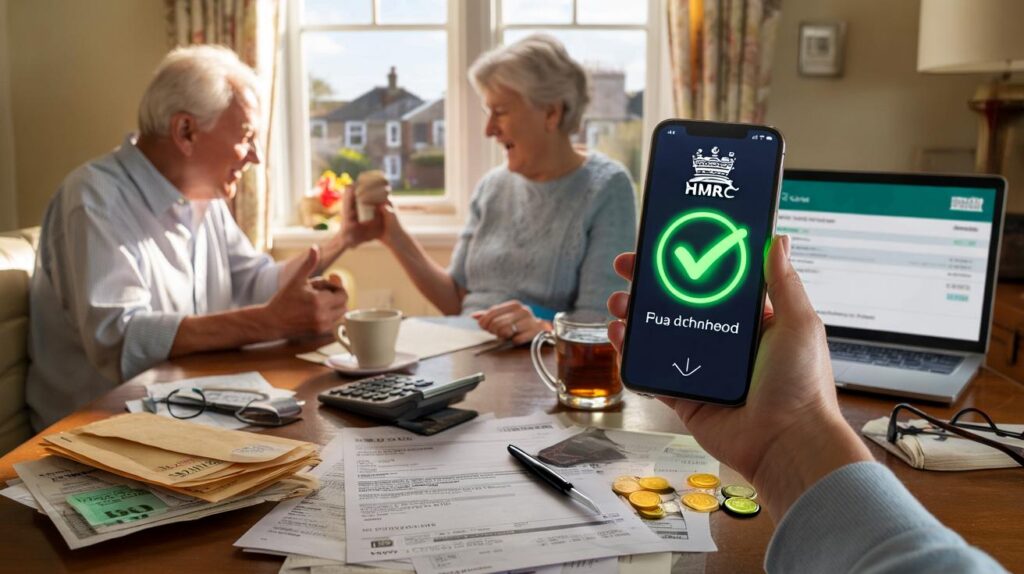
It starts at a kitchen table, with a stack of envelopes and a cup of tea cooling too fast. Peter, 68, has just taken his first flexible pension withdrawal to top up a boiler repair, and the tax on the payslip looks brutal. His wife, Moira, earns nothing now, yet her name sits on a separate letter about a “marriage transfer” she’s never heard of. The laptop pings; interest on their savings has finally climbed, but everyone keeps whispering that interest can be tax free, or not, or sometimes. The rules feel abstract until they land in your bank account.
Peter opens the HMRC app. A line flashes green. He didn’t expect what came next.
Where your refund hides in 2024/25
Tax thresholds are frozen, bills feel stickier, and yet a few allowances have quietly shifted. The **Marriage Allowance** is still worth up to £252 this year, but backdating can lift the total above £1,000. The **Personal Savings Allowance** is unchanged, though higher interest makes it matter again. The little‑known Starting Rate for Savings still exists, and it’s the one that surprises people. There’s also the **Blind Person’s Allowance**, uprated to £3,070 for 2024/25, which many never claim. One result: the gap between what pensioners owe and what they pay has widened. That gap is your opportunity.
Here’s a neat, real‑life style outcome. Elaine draws a modest private pension of £9,200 and has £2,300 of bank interest after a year of hunting decent rates. She transfers 10% of her Personal Allowance to her husband via the **Marriage Allowance** and backdates for four years. The couple pockets a refund of just over £1,000, and her interest stays tax free thanks to the Starting Rate for Savings. It felt like a windfall; it was simply the rules, properly applied. *It feels like free money, yet it’s just the rules finally working for you.*
Here’s the logic that unlocks it. Every UK taxpayer (outside Scotland’s different income bands) has a £12,570 Personal Allowance. If your non‑savings income — wages or pensions — is below that, you can also get up to £5,000 at a 0% “Starting Rate for Savings”. On top sits your **Personal Savings Allowance**: £1,000 for basic‑rate taxpayers, £500 for higher‑rate, nothing for additional‑rate. Stack them and, in the right circumstances, as much as £18,570 of interest can be tax free. If your pension income is low, the Starting Rate protects a lot of interest. Many retirees never apply it — and HMRC won’t guess for you.
Practical moves that can put cash back in your pocket
Start with the big, fast wins. If you’ve taken your first flexible pension withdrawal, you were likely taxed on an “emergency code”. Use HMRC’s online forms — P55, P53Z or P50Z depending on your situation — to trigger a refund in days, not months. Next, check the HMRC app or “Personal Tax Account” for your PAYE code if you have multiple pensions; codes get scrambled. Then apply for the **Marriage Allowance** on GOV.UK if one of you is a non‑taxpayer and the other pays at 20%. Finally, if low pension income meets healthy savings interest, submit form R40 to reclaim tax on interest or to set things straight for the year.
Common slip‑ups cost real money. People forget that State Pension is taxable yet paid without any tax taken off, which can skew codes and trigger arrears. Others assume banks still deduct tax from interest; they stopped in 2016, which means you must claim if you’re due reliefs like the Starting Rate. Scottish taxpayers face different income rates, so basic‑rate assumptions may miss. We’ve all had that moment when a brown envelope triggers a small spike of dread. Let’s be honest: nobody actually does that every day. A once‑a‑year check usually does the job.
“For many pensioners, the biggest wins are hidden in plain sight — codes, forms and allowances that were never explained at retirement,” says chartered financial planner Jas Dhaliwal. “Spend an hour on the HMRC app and you can save a year’s energy bill.”
- Backdate **Marriage Allowance** up to four years for a four‑figure refund.
- Combine Starting Rate for Savings with the **Personal Savings Allowance** to shelter interest.
- Use P55/P53Z/P50Z after first flexible drawdown to reverse emergency tax quickly.
- Claim **Blind Person’s Allowance** (£3,070 in 2024/25) if eligible; you can transfer it to a spouse if you don’t need it.
- Don’t forget £7,500 Rent‑a‑Room relief and the £1,000 trading/property allowances for small side incomes.
What this means for your money — and your peace of mind
The theme here isn’t loopholes. It’s visibility. Tax in retirement lives in small print and shifting boxes on a payslip, then shows up as cash you either keep or lose. One tidy action, like moving £1,260 of allowance to a spouse or correcting a tax code, can produce a refund that feels like a pay rise. If you’re sharing a home, share the admin: who has the spare allowance, who has the interest, who’s on the wrong code. The rest is rhythm. A yearly sweep, a short list, a sense check with someone you trust. Tell a friend who’s just retired — they’re exactly where you were.
| Key points | Details | Interest for reader |
|---|---|---|
| Marriage Allowance backdating | Transfer 10% of Personal Allowance; worth up to £252 this year, and backdate up to four years | Possible £1,000+ refund paid by HMRC |
| Savings tax stack | Use Personal Allowance + £5,000 Starting Rate for Savings + Personal Savings Allowance | Little or no tax on interest even at higher rates |
| Pension withdrawal refunds | First flexible drawdowns often taxed on emergency code; reclaim via P55/P53Z/P50Z | Cash back in days, not months — often hundreds |
FAQ :
- Who can claim the Marriage Allowance?The lower‑earning spouse must have income below their Personal Allowance (£12,570), and the other must be a basic‑rate taxpayer. Claims can be backdated four years.
- How does the Starting Rate for Savings work with my pension?If your non‑savings income (including pensions) is below £12,570, you can get up to £5,000 of savings interest at 0%. It tapers away as your non‑savings income rises.
- I took a one‑off pension lump sum and got heavily taxed. Can I fix it?Yes. Use form P55, P53Z or P50Z on GOV.UK depending on your situation. Refunds typically arrive within a couple of weeks.
- What is the Blind Person’s Allowance and can I transfer it?It’s an extra £3,070 tax‑free amount in 2024/25 for those registered blind or severely sight impaired. If you don’t need it, you can transfer it to your spouse or civil partner.
- Do I need Self Assessment to reclaim tax on savings interest?Not always. If you don’t usually file a return, you can use form R40 to claim a repayment for interest that falls within your allowances.



Followed this and used P55 after my first drawdown — refund hit my account in 8 days 🙂 Also backdated Marriage Allowance and got £1,002 (who knew!). Cheers for explaining the Starting Rate in plain English — HMRC never made that clear.