
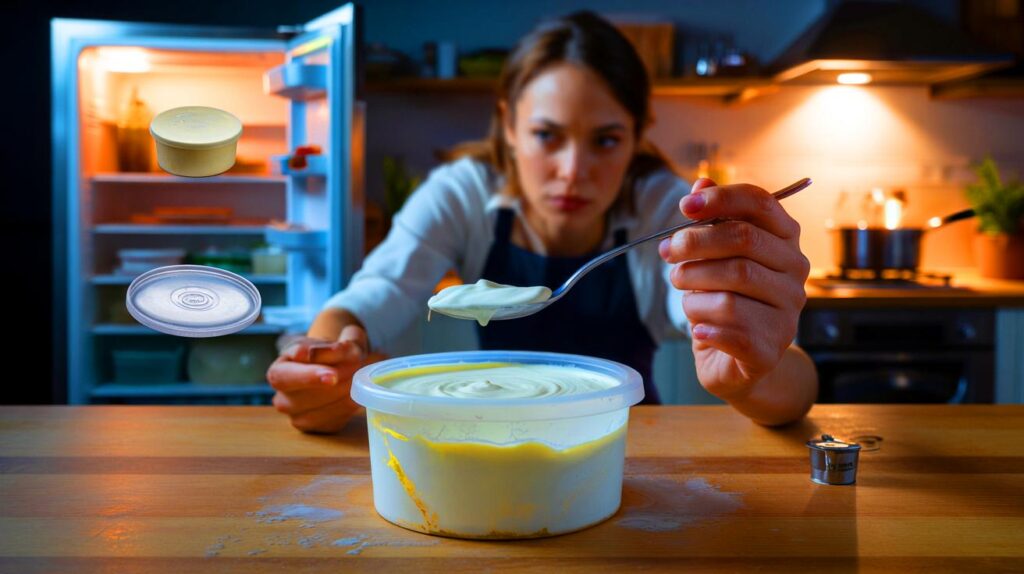
A forgotten tub hides at the back of the fridge. Dinner is late, nerves fray, and the label suddenly matters again.
The clock says “serve now”, the pot says “past it”, and your nose isn’t sure. Here’s how to judge the risk, the rules behind the labels, and the small kitchen habits that keep you out of trouble without binning food needlessly.
What the dates actually mean on cream
Crème fraîche in the chilled aisle usually carries a use-by date. That mark is about safety, not taste. Once it passes, risk climbs because microbes can multiply even in the cold. Some cooks will stretch unopened tubs beyond the date if they look and smell normal, yet food safety guidance warns that the margin quickly narrows.
Processing changes the built-in shelf life before opening. Raw cream lasts days. Pasteurised cream lasts weeks. UHT cream, heat-treated in a sealed pack, lasts months at room temperature until opened. After opening, the clock runs faster for all types.
| Type | Typical unopened life | After opening (fridge 0–4°C) | Label you might see |
|---|---|---|---|
| Raw cream | About 7 days in the fridge | 3–4 days is the safe window | Use-by |
| Pasteurised crème fraîche | About 30 days in the fridge | 3–4 days; some stretch to 10–15 days at their own risk | Use-by |
| UHT/sterilised cream | Up to 4 months unopened in the cupboard | 3–4 days once opened and chilled | Often best-before or use-by, check pack |
Use-by means “eat by or bin it”. Best-before is about quality. After opening, aim for 3–4 days in the coldest part of the fridge.
The quick test: sight, smell, texture
Crème fraîche is cultured and naturally tangy, so a gentle acidity is normal. What is not normal is rancidity, strong sulphur notes, or visible growths.
Look closely
- Colour shift: a clean white is expected; a yellow tinge signals fat oxidation and age.
- Mould flecks: blue, green, black or pink dots, even small ones, mean contamination in soft dairy.
- Surface separation: a little whey is common; thick curds or grainy splitting suggests breakdown.
- Swollen lid: gas from microbes can bloat a pot; treat that as a red flag.
Use your nose and spoon
- Odour: sharp, cheesy tang is fine; harsh, bitter, or “old fridge” smells point to spoilage.
- Texture: crème fraîche should be silky and spoonable; a ropey or gritty feel signals it has turned.
Mould on soft dairy is a deal-breaker. Removing the top does not guarantee safety because microscopic roots can spread below the surface.
Can cooking make it safe again?
Heat reduces many live bacteria, and cooking crème fraîche into a hot dish often improves the texture of borderline pots. Risk remains if heat-stable toxins are present. Staphylococcus aureus and Bacillus cereus can leave toxins that survive boiling. That means a spoiled tub stays a gamble even in a stew.
Use heat as a quality tool, not as a safety cure. If the cream only looks a touch separated but still smells clean and is in date, a gentle simmer in a sauce can bring it back. If it smells harsh or shows mould, it belongs in the bin, not in dinner.
How long does an opened tub really last?
Once the seal breaks, contamination is your main enemy. Airborne spores, crumbs from the worktop, or a spoon that touched raw meat can seed bugs. The safest guidance sits at 3–4 days in the fridge at 0–4°C. Some cooks report using crème fraîche up to two weeks after opening if it stays cold, sealed and spotless. That tolerance narrows if your fridge runs warm, the lid sits loose, or the pot lingers on the counter during prep.
After 10 days open, taste and texture often decline and the risk of an unhappy stomach rises fast.
Storage habits that buy you time
- Keep it cold: 0–4°C on the back shelf, not in the warm door.
- Seal firmly: press film back onto the surface and close the lid tight.
- Use clean tools: a fresh, dry spoon each time; no double dipping.
- Work tidy: don’t let breadcrumbs, herbs or meat juices fall into the tub.
- Flip the pot upside down in the fridge: this can reduce surface exposure to air and slow growth.
- Mind the clock: two hours is the outer limit at room temperature; less in a hot kitchen.
Freezing: does it help or hurt?
Freezing crème fraîche protects it from microbes but punishes texture. Ice crystals break the emulsion and can leave it grainy or split when thawed. If you freeze it, use the thawed cream for cooking, not for spooning over fruit or stirring into cold desserts. Freeze in small portions, thaw in the fridge, and whisk with a splash of fresh cream to improve the sauce finish. Never freeze cream that already smells wrong or has sat long past its date.
What the risks really look like
Most spoilage brings short-lived gut upset: cramping, vomiting, diarrhoea. Sensitive groups—pregnant people, older adults, very young children, and anyone with a weakened immune system—face higher stakes. Listeria can grow at fridge temperatures. Crème fraîche is acidic, which slows many microbes, but that acid does not guarantee safety. The UK sees millions of foodborne illness cases a year; dairy mistakes play a part.
Your kitchen decision tree
- Unopened, one day past use-by, looks and smells normal: risk exists; many will discard, some will cook with it and accept the risk.
- Opened, 3–4 days, clean smell, smooth texture: fine to eat cold or hot.
- Opened, 8–10 days, stored cold and spotless, no off odour: safer used in a hot dish; skip for uncooked toppings.
- Any mould, strong odour, yellowing, swollen lid, or bitter taste: bin it.
Why crème fraîche behaves differently from plain cream
Crème fraîche is cultured. Lactic bacteria acidify the cream to a pH around the mid-4s, which thickens it and gives the tang. That acidity stabilises sauces and helps it resist curdling when heated. The same acidity slows many spoilage microbes, yet it does not stop cross-contamination or toxin formation if mishandled. Treat it as a sturdy ingredient, not an invincible one.
Money, waste and peace of mind
The price of a small tub often sits below the cost of a missed day’s work. If you hesitate, your body is already telling you the risk feels wrong. Plan small: buy the size you can finish in three days, portion leftovers into cooking, and keep one UHT carton in the cupboard for emergencies. That approach cuts waste without pushing safety margins.
When the label says use-by and your senses say “maybe”, remember: food is replaceable, your health is not.
Extra tips for safer, smarter use
Consider recipe choices when a pot nears its limit. Stir crème fraîche into a bubbling soup or pan sauce where it fully heats through, not into a raw dressing. If a dish needs a cool dollop, switch to yoghurt the day you empty the tub and keep crème fraîche for cooking. For batch cooking, build cream into the final minutes to avoid long warm holds that invite bacterial growth. Keep a fridge thermometer inside the door; many home fridges sit at 6–8°C unless adjusted, which shortens safe windows.



Brilliant breakdown. The use-by vs best-before clarificaiton + the 3–4 day rule after opening is gold. I’d seen the yellowing before and thought it was fine—didn’t know it signals oxidation. Thanks for the clear “bin it” red flags.
I’m a bit sceptical about “some stretch to 10–15 days” even unopened. Listeria can grow cold, right? Felt like that line might embolden risky habits. Could you add a bolder disclaimer for pregnant folks and immuno‑compromised readers?