
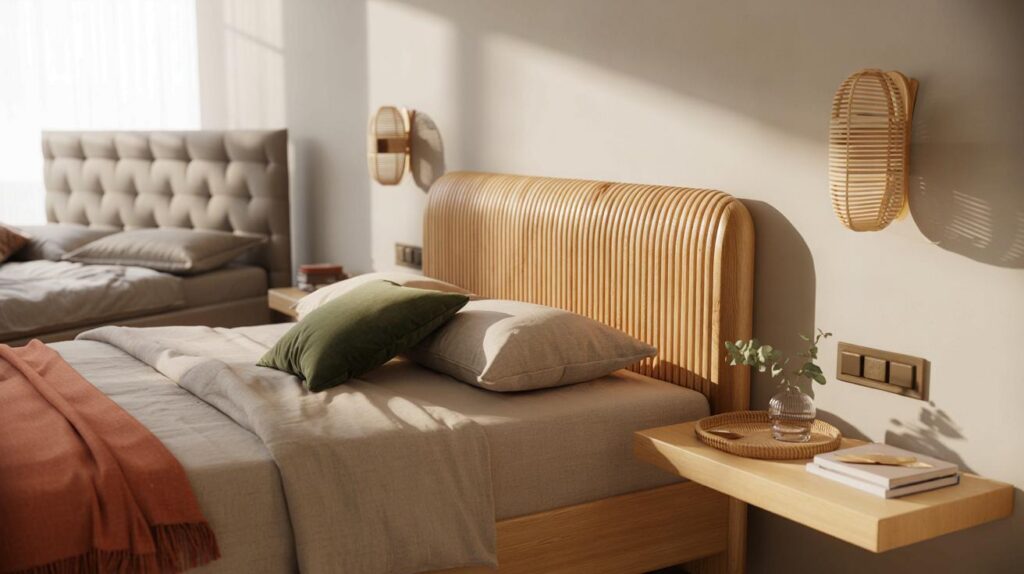
Autumn promises softer bedrooms without upheaval. One tactile switch is quietly reshaping how Britons sleep and style their space.
For years, tufted headboards meant hotel polish and padded comfort. Designers now say the look feels heavy, dusty and hard to pair with the calmer palettes many households want. Natural wood and honest fabrics are taking the spotlight, offering warmth, texture and a cleaner line without turning the bedroom into a building site.
Why tufted headboards are losing their shine
Buttoned upholstery added drama when maximal schemes ruled. Tastes have shifted. People ask for rooms that breathe, let light travel and soothe after long days. Thick foam and deep buttons fight that mood. The large volumes feel bulky in smaller rooms. The quilting gathers dust. Cleaning around tufts takes time and delicate tools.
Designers also note a practical gap. Many upholstered models date quickly. The fabric fixes the palette for years, and reupholstery costs more than most planned. Minimal wood or fabric panels adapt faster, accept fresh paint, and work with quieter bedding.
Designers report a decisive swing: light timber and washable textiles are replacing tufting in new bedroom briefs.
The materials taking over: pale woods and honest textiles
Three woods lead the change in British bedrooms: oak, acacia and beech. Each brings soft grain, stable tone and a calm silhouette. A single plank set behind the bed delivers a strong line. Shaped edges or ribbed profiles add craft without fuss. Wax or hard oil finishes keep touch inviting and reflect warm light.
On the textile side, washed linen is back with quiet authority. It falls beautifully, moves with air, and sits well with cotton drill, heavy canvas or felted wool. Natural fibres absorb sound and soften hard walls. They arrive in grounded shades that flatter skin and timber: terracotta, greige beige, pale mustard and forest green.
Colour moves that flatter the new look
- Walls: nude or clay white for calm shadows and easy pairing.
- Accents: terracotta or forest green cushions for autumn depth.
- Metal: small brass touches on switches or frames for warmth.
- Timber: blond oak or beech to keep the room bright on short days.
What the pros are recommending for 2025
Decorators talk about slower decorating and less waste. Clients ask for change without mess, extra dust or long lead times. That points to modular panels, clip-on slats and simple wall textiles that install in an afternoon. French collections from Les 3 Suisses and La Redoute Intérieurs show the same push: certified wood, recycled fibres and linen-heavy ranges. The shift is not a fad. It aligns with better maintenance, easy washing and calmer acoustics.
No builder, no noise, no skip: a new headboard line can be fitted in one afternoon for under £120.
Five quick swaps under £120
- Fix a recycled plank as a headboard, sanded and oiled. Typical spend: £35–£80.
- Hang a cotton or jute rug as a panel. Add a timber dowel. Typical spend: £45–£95.
- Use a linen throw as a soft backdrop. Wash and steam when needed. Typical spend: £40–£70.
- Fit rattan or woven fibre wall lights on each side. Typical spend: £50–£110 per pair.
- Layer textures: washed linen pillowcases, pale wood shelf, tiny brass pull on the bedside.
Care, allergies and day‑to‑day life
Bedrooms collect dust fast. Tufting traps particles and pet hair in folds. Allergy sufferers feel that. Wood panels wipe down in minutes. Linen covers go in the machine. Fewer seams means fewer hiding spots for mites. Sound softens too, so the room stays quiet without heavy textiles everywhere.
| Option | Typical cost (£) | Install time | Cleaning | Sound | Allergy risk |
|---|---|---|---|---|---|
| Tufted headboard | 120–380 | 30–45 min | Vacuum seams, spot clean | Good absorption | Higher (dust in tufts) |
| Solid wood plank | 60–200 | 45–90 min | Wipe with damp cloth | Moderate | Lower |
| Linen or cotton panel | 40–140 | 20–40 min | Machine wash or steam | Good absorption | Lower if washed |
How to get the sizing right
Measure your mattress width, then add 5–10 cm on each side for a balanced frame around pillows. If you choose a wall panel, mark the top at 110–120 cm from the floor for a double, 120–130 cm for a king. Keep bedside sockets clear by at least 6 cm. If you fit wall lights, plan the switch at reachable height from the pillow, around 60–70 cm above the mattress top.
Fixings that stay put
- Use suitable wall plugs for plasterboard or masonry and check load ratings.
- For textiles, a baton or rail spreads the weight and keeps fabric flat.
- Leave 10–15 mm from skirting to avoid wobbles and hidden dust lines.
- Finish timber edges with a soft round-over to prevent knocks.
Sustainability and where to spend
Look for FSC or PEFC labels on oak or beech. Reclaimed timber brings character and trims cost. Linen from European flax needs fewer inputs than many fibres and lasts with gentle washing. Spend on touchpoints you handle daily, such as the finish on wood and the quality of wall plugs. Save on brand-led trims that date quickly.
Three budgets, three routes
- £50: linen throw on a dowel, painted wall in a nude shade, second-hand timber shelf as ledge.
- £120: beech plank with oil finish, pair of woven wall lights, two linen pillow shams.
- £300: ribbed oak panel system, dimmable brass switches, wool runner for foot warmth.
What designers are pairing with the new headboard look
Muted walls set the stage. A nude or clay paint makes timber glow. Quilted covers move aside for textured throws with lighter fill. Bedside clutter drops into woven trays. Prints shift to botanical sketches or quiet abstracts that echo the linen weave. The result feels purposeful and still personal.
Soft grain, washable fibre, fewer seams: the headboard becomes a calm line, not a dust trap.
Pitfalls to avoid
- Moisture: keep fabric off cold exterior walls or add a breathing gap to stop damp patches.
- Finish: avoid high-gloss on headboards; satin oil hides fingerprints and keeps the grain alive.
- Safety: fire-safe bulbs and proper cable routes for wall lights near textiles.
- Scale: very tall panels can dwarf low ceilings; keep proportions gentle.
Beyond the bed: the ripple effect
The same materials reshape more than the headboard. Slim timber ledges can replace bulky bedside tables in tight rooms. A short linen runner mounted horizontally works as a soft gallery rail above a desk in a studio. Small changes stack up to a bedroom that stores less, breathes more and costs less to maintain.
If you want to test the look first, tape a paper template to the wall to feel the height and width for a week. Try a spare throw as a mock panel with removable hooks. Track how the room sounds and how your lighting reads surfaces at night. A quick experiment beats guesswork and reduces waste.



Allergy household here and this totally tracks. Our tufted headboard hoards dust and cat hair, and spot-cleaning is a pain. A beech plank with satin oil + washed linen sounds like the calm update we need. I’m definately in the 64% this autumn.
Honest question: how’s the comfort against a wooden panel when you sit up to read? Does a linen panel plus pillows match the sound absorption of tufting, or do rooms feel echo‑y in smaller spaces? The table says “moderate”—any tips to soften without going bulky again?