
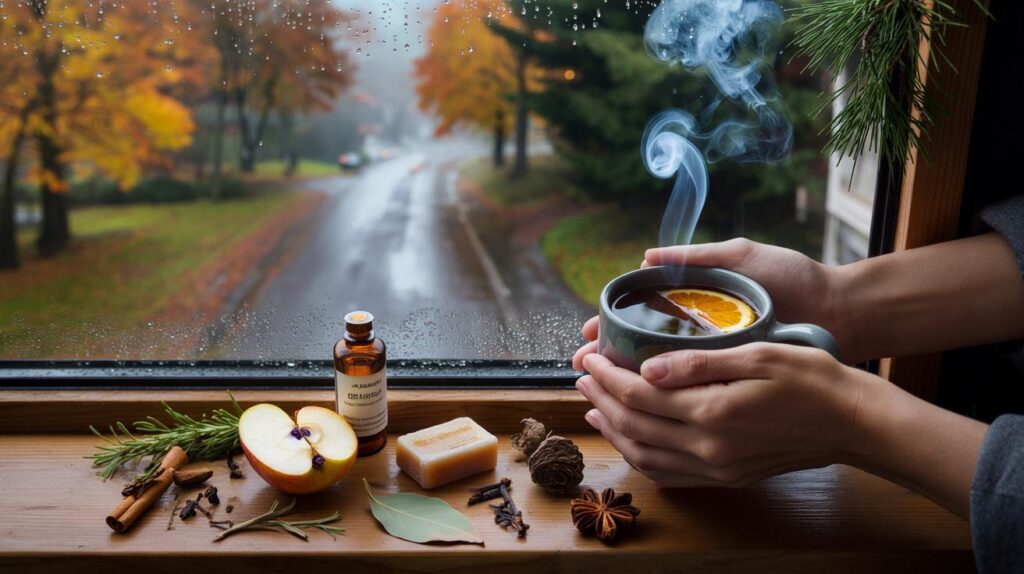
Stress spikes don’t always come with sirens. They arrive as a crowded train, a Slack ping at 6.42pm, the quiet weight of a to‑do list that won’t sit still. When your head feels busy and your chest feels loud, relief needs to be instant and simple. Autumn brings something rare: familiar smells that steady the mind without effort. No apps. No lectures. Just air.
The morning starts with a hush you can actually hear. Pavements gleam like fish scales after a light drizzle, and a neighbour’s chimney gives off a ribbon of woodsmoke that curls over the street. A bakery door swings open and the cinnamon hits before the heat — sweet, warm, a little sticky around the edges. Somewhere nearby, a park keeper shakes out a bag of damp leaves and the scent is woody, green, almost tea-like. In one breath, your pace slows. In two, your shoulders drop. Everything softens.
Why autumn smells soothe faster than a breathing app
Smell doesn’t ask for your attention; it takes it. The nose carries messages straight to the brain’s emotional centre, skipping the long checks and balances that other senses use. Autumn specialises in notes that feel safe and known: woodsmoke, baked apples, resinous pine, that after-rain petrichor. They’re quiet, low to the ground, earthy. They ground you, literally. If summer is a brass band, autumn is a single cello note in a cool room. It finds you where you are and brings you back to yourself.
On a Tuesday in Leeds, a bus driver told me he keeps a small bag of dried orange peel in his jacket. He said the citrus, kept company by a stub of cinnamon stick, helps on the last loop when traffic gets fractious. A nurse I met in Bristol taps a drop of lavender on a tissue and tucks it into her watch strap before night shift. We’ve all had that moment when a smell pulls us out of the spiral and back into our body. It’s not magic. It only feels like it.
There’s a logic to the comfort. Many autumnal scents are built on chemicals your brain recognises as friendly: vanillin in vanilla, cinnamaldehyde in cinnamon, eugenol in clove, terpenes in cedar and pine. These molecules travel fast, brushing the amygdala and hippocampus, which is why one sniff can unlock a calm memory before a thought forms. Petrichor — the smell of rain on dry ground — comes from geosmin released by soil bacteria, a signal tied to renewal. Your mind reads those cues as “harvest, shelter, food, heat”, and tension ebbs.
How to bring autumn calm into your day in minutes
Try a 3‑2‑1 scent reset. Three breaths over warmth: cup a mug of spiced tea, inhale with your eyes closed, let the steam carry notes of cinnamon and ginger. Two crushes: roll a sprig of rosemary between your fingers, then a bay leaf; smell your fingertips, slow and steady. One outside moment: open a window after rain or stand under a tree and breathe in the leaf‑moss‑bark cocktail for 30 seconds. That’s it. No gear. No guilt. Just a tiny ritual that tells your nervous system the weather has changed and you can, too.
Be gentle with intensity. Over-scenting a room can feel cloying and noisy, like wearing headphones that are too loud. Start light, then layer. Mix no more than two notes — say, cedar and orange — and keep windows cracked for fresh air. Candle lovers, trim the wick and give the room a minute before you judge the throw. Let’s be honest: nobody does that every single day. Aim for small, repeatable moments that don’t require a mood board. You’re not trying to impress your house; you’re trying to calm your brain.
Some days, you only need a faint whiff of woodsmoke to feel okay again. A perfumer once told me the right autumn blend should feel like a warm jumper you forgot you owned.
“Smell is the shortcut to memory — nudge the right one, and the body follows.”
- Mini calm kit: a cinnamon stick, a sprig of rosemary, a small vial of cedarwood oil
- Five-minute brew: black tea with a slice of orange and a clove
- Doorway trick: hang a small bunch of eucalyptus where air moves
- Post‑rain walk: 400 steps under trees, phone on silent
What lingers after the leaves fall
The best thing about autumn scents is how they outlast the season. A jar of cloves in a cupboard, a bar of cedar soap in a drawer, a baked apple on a cold Sunday — small anchors you can drop any time the sea gets choppy. There’s no badge, no dashboard. Just a private switch that says “calm now” in a language your body trusts. You might start noticing tiny things: the sweetness hiding inside damp leaves, the clean, minty thread in crushed sage, the whisper of vanilla in a new book. Share the smell that steadies you with someone who needs it. Watch what happens next.
| Point clé | Détail | Intérêt pour le lecteur |
|---|---|---|
| Autumn’s scent palette | Woodsmoke, cinnamon, clove, cedar, petrichor, baked apple | Quick options to test without shopping sprees |
| Fast ritual | 3‑2‑1 reset: breathe steam, crush herbs, step outside | Works in kitchens, offices, bus stops |
| Keep it light | One or two notes, open a window, short sessions | Avoids overwhelm and scent fatigue |
FAQ :
- Which autumn scent calms most people fastest?Lavender and vanilla are widely reported as soothing, while cinnamon and cedar bring cosy focus. Test a couple and let your nose decide.
- Can I use kitchen spices instead of pricey oils?Yes. Warm a cinnamon stick in a dry pan, stud an orange with cloves, or bruise rosemary. The aroma release is gentle and cheap.
- Are candles or diffusers better for calm?Neither is “better”; they’re different. Candles add glow and warmth, diffusers give a cleaner, lighter trail. Use what fits your space.
- Is there a way to make petrichor at home?You can’t bottle rain, but a bowl of damp moss or a sprinkle of water on dry terracotta comes close to that earthy note.
- Do autumn scents help with sleep?Many people find a hint of lavender, vanilla, or cedar at dusk helpful for unwinding. Keep it subtle and stop diffusing before lights out.



Loved the 3‑2‑1 reset—did it at my desk and my shoulders actually dropped 🙂 This is defintely going into my afternoon routine. Quick Q: is rosemary safe to crush on skin daily? I get a tiny tingle.